
Where to Source Lighting? The Ultimate Global Hub Guide
Where to Source Lighting? The Ultimate Global Hub Guide
By Vivian Pi, CEO — Select Trade
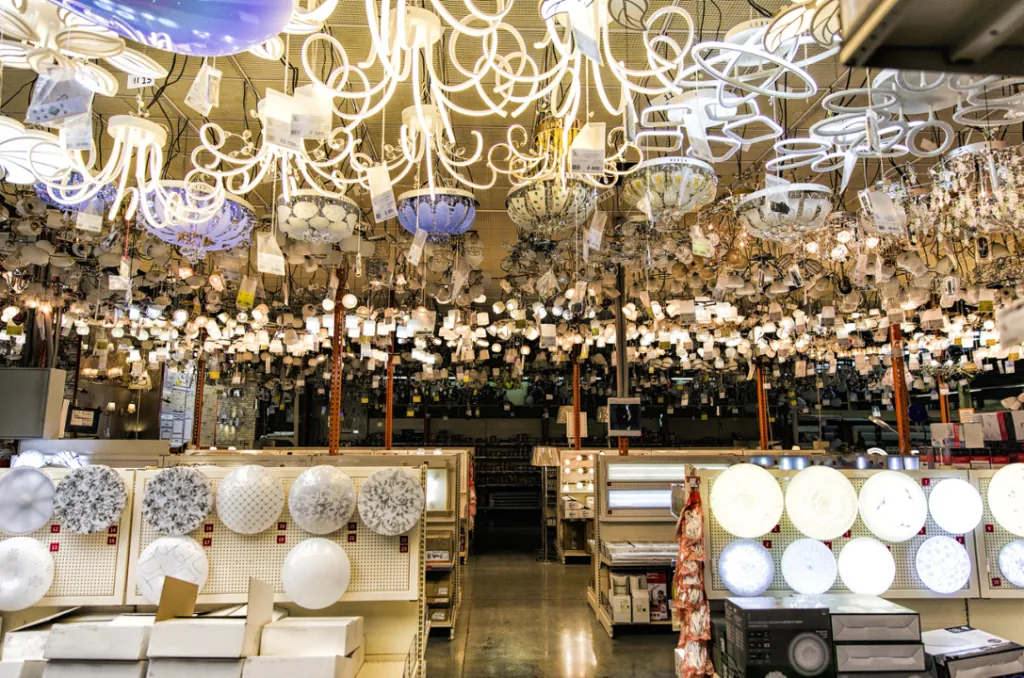
China’s lighting industry is not one market. It is a set of regional clusters, each built over decades around a specific product type, a specific supply chain, and a specific kind of buyer. If you are a small or medium importer, the most important sourcing decision you will make is not which supplier to use — it is which cluster to buy from. Choose the wrong city and you will spend weeks filtering factories that were never a fit. Choose the right one and a usable shortlist builds itself.
This guide covers the four clusters that matter most for export buyers: Zhongshan in Guangdong, the Ningbo group in Zhejiang, Changzhou in Jiangsu, and the Xiamen–Zhangzhou corridor in Fujian. For each one you get what it is genuinely good at, what to source there, how to vet suppliers, and the mistakes that cost first-time buyers real money.
Zhongshan (Guangdong) — The World’s Lighting Capital
Zhongshan is split into three zones that behave almost like separate industries. Understanding the split is what stops you from asking a chandelier factory to quote you street lamps.
Guzhen — Decorative and Home Lighting
Guzhen cranks out roughly 70% of China’s home lighting and nearly half of the world’s, and the concentration shows. You can walk a single showroom district and compare hundreds of chandeliers, ceiling lights, pendants, and decorative fixtures in one afternoon. This is the strongest cluster in the country for anything a consumer sees and judges on looks.
What to source here: chandeliers, crystal and modern ceiling lights, pendant lights, wall sconces, decorative and lifestyle fixtures for home decor, hotels, and mid-market retail programs.
How to vet suppliers: decorative lighting is where “looks great, fails in the field” happens most often. Ask for the driver separately — brand, model, and its own certification, not just the fixture’s. Confirm the light source rating (CE for the EU, UL or ETL for North America, RoHS for restricted substances) applies to the complete assembled product you will actually ship. Push on the lm/W claim: a decorative fixture sold on looks can hide a low-efficiency LED module behind a beautiful shade, and your customer will notice the electricity bill before they notice the design.
Sample policy: always order a production sample, not a showroom sample. Showroom units are hand-selected and cleaned; production units are what you sell. Test one for color temperature consistency against the next, because batch drift in warm-white tone is the number one complaint on decorative orders.
Common pitfalls: mismatched drivers across a batch, decorative shades that chip in transit because the inner packaging was designed for a different shape, and finish inconsistency between the sample and the reorder.
Henglan — LED Commercial Lighting
Henglan specializes in LED commercial fixtures: panel lights, street lamps, and outdoor floodlights. The cluster is more engineering-driven than Guzhen and more tolerant of technical questions, which makes it a good fit for buyers who care about performance specs.
What to source here: LED panel lights, linear commercial fixtures, street lamps, high-bay and low-bay lights, and outdoor floodlights for commercial and municipal-style projects.
How to vet suppliers: for street lamps and floodlights, the housing is the product. Ask about the heat sink material and mass, not just the wattage — a lightweight, undersized heat sink is the classic way to hit a low price while quietly shortening the fixture’s life. Require an IP rating test report for outdoor models and confirm the rating matches the actual gasket and sealing design, because mislabeled IP ratings are common. For panels, ask for the driver’s isolated versus non-isolated design, and request the lm/W figure from a test report rather than a brochure.
Sample policy: for engineered fixtures, ask for a sample with the exact driver and heat sink you intend to order, then have it tested independently if the volumes justify it. A sample with a better driver than the production run is a bait-and-switch you only find out about after your customer installs it.
Common pitfalls: wattage that is met on paper but not in light output, weak heat sinks on high-wattage models, drivers that fail early under heat, and IP ratings that do not survive real weather exposure.
Xiaolan — Parts, Bases, and Fittings
Xiaolan is the go-to zone for hardware parts, lamp bases, sockets, and fittings. It is less about finished products and more about completing an order — the components that make a fixture shippable.
What to source here: lamp bases, sockets, connectors, metal and plastic fittings, wiring components, and the smaller parts you need to assemble or complete a lighting program.
How to vet suppliers: component quality is where safety risk hides. Confirm the base and socket are rated for the voltage and wattage you are selling into, and that insulation and pin dimensions meet the destination market’s standard. Ask for material certificates — buyers routinely discover that a “ceramic” socket is porcelain-grade that cracks under heat, or that a metal finish corrodes in humid markets. Ordering parts from a different supplier than your finished-goods factory is also a coordination risk: mismatched threads and tolerances are a frequent cause of assembly delays.
Sample policy: buy a small quantity of each component and physically match it against your finished fixture before committing to a bulk order.
Common pitfalls: tolerance mismatches with the assembly factory, finishes that fail in humid climates, and components ordered without matching the destination market’s electrical standard.
Freight note for all of Zhongshan: the three zones are close enough to consolidate. Chandeliers, panels, and parts can be collected into one shipment with one forwarder, which usually beats running three separate lanes. Plan packaging early — decorative fixtures need inner protection designed for their exact shape, and a consolidation point is where poorly packed cartons get crushed.
Ningbo / Yuyao / Cixi (Zhejiang) — Branded Commercial Lighting
This cluster leads in branded commercial lighting: industrial fixtures, street lamps, and high-volume LED exports. Big names like Opple and Sunshine Lighting have bases here, and that presence shapes the whole region. You get more consistent quality, more tech-driven design, and factories that are used to working with documented specifications and export standards.
What to source here: industrial and commercial fixtures, street and area lighting, high-volume LED product lines, and specs-driven programs where consistency across large batches matters more than novelty.
How to vet suppliers: this is the cluster where you can reasonably ask for documentation up front. Request the driver brand and its certification, the lm/W from a test report, and the CE, UL, or RoHS documentation for the exact model you will buy. Because brands operate here, factory staff are usually fluent in spec sheets — use that. If a supplier cannot answer in engineering terms, they may be trading rather than manufacturing, which changes your pricing and your quality control options.
Sample policy: for branded-style commercial programs, ask for a golden sample and have it signed off as the reference for the production run. Keep it. When a batch feels off, the golden sample is the only objective way to settle the dispute.
Common pitfalls: paying a brand-adjacent price without getting brand-adjacent consistency, driver substitution on reorders, and spec sheets that describe an aspirational model rather than the one shipping.
Freight note: Ningbo is one of the country’s busiest export ports, and this cluster is wired for container-level logistics. If your order is large and your destination has good port coverage, the port advantage here is real. Consolidate street lamps and panels together where the volumes allow, and confirm carton dimensions early, because industrial fixtures are bulky and dimensional weight quietly erodes margin.
Changzhou (Jiangsu) — Outdoor and Engineering Focus
Zhouqu in Changzhou shines for heavy-duty outdoor lights: street lamps, garden fixtures, and industrial workshop lights. This is a wholesale powerhouse for large-scale projects, from parks to factories, where the buyer is specifying a whole site rather than a shelf product.
What to source here: street and roadway luminaires, garden and landscape fixtures, industrial workshop and warehouse lighting, and project-scale outdoor programs.
How to vet suppliers: engineering buyers should lead with durability questions. Ask for the heat sink design and the IP rating’s test basis, then confirm the housing material suits the climate you are selling into — coastal salt air, desert heat, and northern cold all stress a fixture differently. For any outdoor fixture, insist the IP rating applies to the sealed unit you will ship, not a stripped-down test configuration. Confirm CE, UL, or RoHS documentation covers the model and the driver, and ask how the factory handles driver replacement if a batch fails after installation.
Sample policy: prototype first. For engineering orders, request a single unit that matches production and test it in a representative environment before scaling. On project work, one failed fixture type is far more expensive to fix than a slow sample phase.
Common pitfalls: undersized heat sinks on high-wattage outdoor fixtures, IP ratings that are mislabeled or only partly tested, drivers that are not rated for the temperature swing the housing sees, and finishes that fail within the first season outdoors.
Freight note: outdoor and engineering fixtures are heavy and often long. Confirm packing orientation, pallet limits, and container loading plans before production, and consolidate with your other Jiangsu suppliers where the schedules line up.
Xiamen / Zhangzhou (Fujian) — Export OEM
Ideal for export OEM orders, these hubs specialize in outdoor lighting and bulk LED production, with streamlined supply chains built to ship globally. If your goal is a private-label program with your own branding and packaging, this corridor is a natural fit.
What to source here: outdoor lighting, bulk LED production runs, and OEM and private-label programs with custom housing, branding, and packaging.
How to vet suppliers: OEM relationships live or die on documentation and communication. Confirm the factory can handle your logo, labels, packaging, and manuals to the destination market’s requirements, and that the certifications you need apply to your branded version — a generic CE or UL claim does not always transfer to a modified product. Ask for the driver spec, the lm/W basis, and the RoHS position on the exact OEM configuration. Because these factories are export-oriented, they are usually strong on paperwork; test that strength early with a sample order.
Sample policy: run a full packaging sample, not just a product sample. For OEM orders, the retail experience is part of the product, and packaging failures sink more launches than fixture failures do.
Common pitfalls: certification that does not cover the rebranded model, packaging that protects the product but not the brand, and quality drift between the golden sample and later production runs.
Freight note: this corridor is built for export, so port options and documentation flow are strong. If your program spans Zhejiang and Fujian, keep the OEM order as its own lane to protect branding and packaging, and consolidate the lower-value accessories elsewhere.
Hub Comparison at a Glance
The table below summarizes the four clusters so you can match your product to the right region before you start contacting factories.
| Cluster | Location | Strength | Typical products | Best for |
|---|---|---|---|---|
| Zhongshan | Guangdong | Scale and design breadth across three zones | Chandeliers, ceiling lights, decorative fixtures, LED panels, street lamps, floodlights, lamp bases and fittings | Home decor and mixed commercial orders that can be consolidated into one shipment |
| Ningbo / Yuyao / Cixi | Zhejiang | Branded, tech-driven commercial lighting at high volume | Industrial fixtures, street lamps, high-volume LED lines | Spec-driven commercial programs where consistency matters most |
| Changzhou | Jiangsu | Heavy-duty outdoor and engineering lighting | Street lamps, garden fixtures, industrial workshop lights | Large-scale projects such as parks and factories |
| Xiamen / Zhangzhou | Fujian | Export OEM and bulk LED production | Outdoor lighting, bulk LED, private-label programs | OEM orders with your own branding and packaging |
How to Vet a Lighting Supplier Before You Commit
Across every cluster, the same vetting logic applies, and it comes down to a short list of questions the supplier should be able to answer without hesitation.
- Certifications: does the CE, UL, or RoHS documentation cover the exact model and driver you will buy, for the market you are selling into?
- Driver quality: which driver brand and model is used, and is it certified on its own?
- Efficiency claims: what is the lm/W, and is it backed by a test report rather than a brochure?
- Heat sink: what material and mass does the housing use for the wattage you are ordering?
- IP rating: for outdoor fixtures, does the rating apply to the sealed unit, and is it tested?
- Batch consistency: what is the process for keeping color temperature, finish, and driver consistent across reorders?
- Samples: will the sample match production, and can it be signed off as a golden reference?
Suppliers who answer these clearly are worth shortlisting. Suppliers who deflect or answer with marketing language are the ones who generate the after-sales problems.
Common Pitfalls in Chinese Lighting Sourcing
Most sourcing losses come from a handful of recurring problems rather than exotic ones.
- Inconsistent drivers across a production batch, which causes flicker and early failures that customers blame on your brand.
- Weak heat sinks on high-wattage fixtures, which hit a lower price point at the cost of lifespan.
- Mislabeled IP ratings, where the rating on the box does not match the sealing design on the unit.
- Samples that are built to a higher standard than the production run.
- Packaging designed for a different product shape, leading to transit damage on decorative fixtures.
- Certification that covers a generic model but not your rebranded or modified version.
None of these are unknowable at the quoting stage. Each one shows up in the questions you ask before you place the order.
Frequently Asked Questions
Which cluster should I choose for decorative home lighting?
Start with Guzhen in Zhongshan. It is the deepest cluster for chandeliers, ceiling lights, and decorative fixtures, and the showroom density lets you compare many options quickly. If your design is more commercial or performance-driven, cross-check Henglan in the same city.
What certifications should I require for export markets?
For the EU, ask for CE and RoHS. For North America, ask for UL or ETL. For outdoor products, confirm the IP rating applies to the sealed unit you will actually ship. In every case, make sure the documentation covers the exact model and driver in your order, not a generic product.
How do I avoid inconsistent drivers in a batch?
Ask for the driver brand, model, and its own certification before ordering, then sign off a golden sample that includes that exact driver. Treat any substitution in a reorder as a change you must approve in writing.
Are lm/W claims reliable?
Only when they are backed by a test report. Treat a brochure figure as a claim and a test report as evidence. If a supplier cannot provide the test basis, discount the number when you compare options.
What is the right sample policy for a first order?
Order a production sample, not a showroom unit, and ask the factory to confirm it comes off the same line as your bulk order. For OEM work, extend this to a full packaging sample. Where the order value justifies it, have the sample tested independently.
Can I combine orders from different clusters into one shipment?
Yes, and it is often worth doing. Zhongshan’s zones consolidate easily, and Jiangsu suppliers can be grouped where schedules line up. If you are running an OEM program with your own branding, keep that lane separate to protect packaging, and consolidate lower-value accessories elsewhere.
Work With Select Trade
Finding factories is the easy part. Filtering them to the handful that can actually deliver your product, at your standard, for your market is where most buyers lose time and money. Select Trade works with importers sourcing lighting from Zhongshan, Ningbo, Changzhou, and the Xiamen–Zhangzhou corridor, and we match you to factories we would place our own orders with.
Send us your product type, target market, and the certifications you need, and we will come back with a curated factory shortlist instead of a list of names. Reach out through the contact page on our website and tell us whether your focus is home decor, commercial, or outdoor — that one detail determines which cluster we start with.
