
China’s Top Wedding Dress Factories: Where to Source Gowns
China’s Top Wedding Dress Factories: Where to Source Bridal Gowns — Suzhou, Chaozhou, Dingji, and Guangzhou
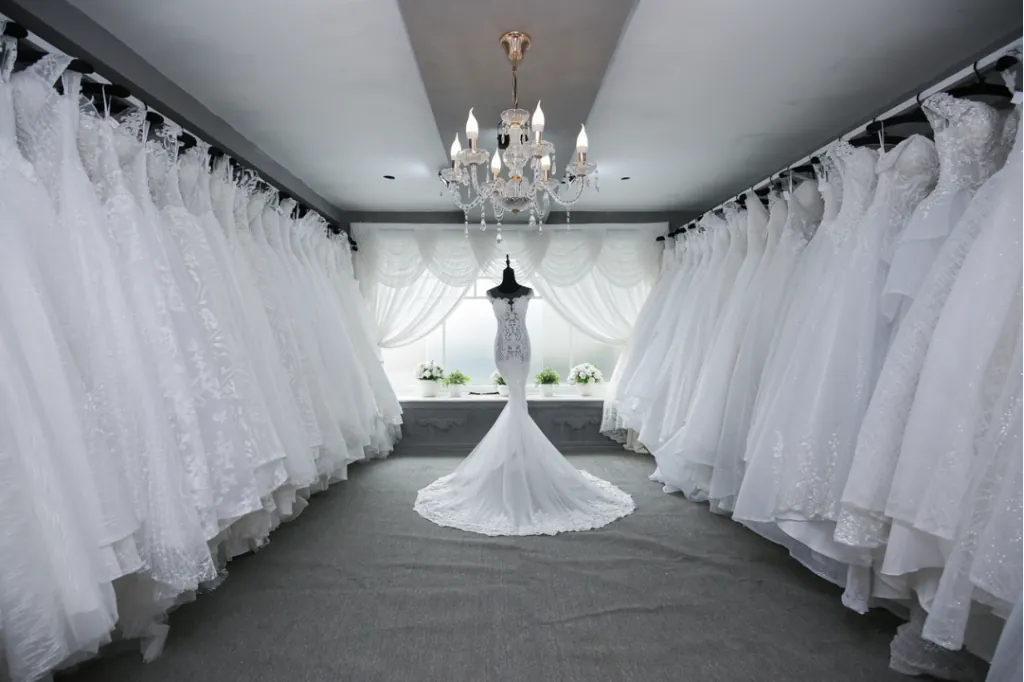
When it comes to wedding dresses, China’s manufacturing hubs dominate global supply, each with a unique focus. Whether you’re hunting for luxury lace gowns, budget-friendly styles, or intricate beaded designs, these four regions have you covered. Because bridal is one of the most fit-sensitive, handwork-heavy categories in apparel, this guide also covers MOQ logic, cost drivers, labeling rules, and the inspection points that decide whether a gown pleases or disappoints in person.
Suzhou, Jiangsu: The World’s Largest Bridal Hub
Suzhou’s Huqiu District isn’t just a market. It’s a wedding dress empire. Home to 5,000+ core businesses and 12,000+ related suppliers, it generates over 28 billion yuan in annual output, making it China’s top — and the world’s biggest — bridal distribution center.
What draws buyers here? Versatility. Suzhou specializes in mid-to-high-end wholesale and custom gowns, spanning Western-style dresses, traditional embroidered “xiuhe” (bridal robes), and evening wear. Its strength lies in a complete supply chain: from fabric and lace to embroidery and accessories, every component is produced locally. For retailers who want to touch, feel, and compare samples in person, Huqiu’s physical markets are hard to beat. Our wholesale wedding dresses from China page shows how these product lines are typically organized.
Chaozhou, Guangdong: Handmade Beaded Gowns for Global Exports
Chaozhou is the go-to for drama. Towns like Jinshi and Caitang are packed with thousands of workshops crafting heavily beaded, sequined, and embroidered wedding dresses and evening gowns.
This region thrives on craftsmanship. Skilled artisans hand-sew pearls, crystals, and intricate lace — styles that sell big in Europe, America, and the Middle East. If you’re sourcing statement pieces for luxury boutiques or destination weddings, Chaozhou’s factories deliver the “wow” factor.
Dingji Town, Lu’an, Anhui: Budget-Friendly, E-Commerce Ready
Dingji is all about affordability and speed. With 500+ enterprises producing nearly 5 million pieces yearly (2.4 billion yuan in output), it’s the hub for budget wedding dresses, “xiuhe” robes, and toasting gowns.
Perfect for online sellers: Dingji specializes in small-batch, quick-turnaround orders, ideal for e-commerce platforms and live-stream sales. Prices here are competitive, making it a favorite for startups or retailers targeting price-sensitive markets.
Guangzhou, Guangdong: Luxury Custom & High-End Exports
Guangzhou’s Panyu and Nancun districts cater to discerning buyers. This is where you’ll find high-end custom gowns, designer collaborations, and couture pieces tailored for Western markets.
Factories here focus on quality fabrics, precise tailoring, and unique designs — think silk satin, French lace, and personalized details. Many work directly with overseas bridal boutiques, ensuring compliance with international sizing and quality standards.
Quick Guide to Choosing
- Wholesale, in-person shopping? Suzhou (Huqiu) is your spot.
- Beaded/embroidered exports? Head to Chaozhou.
- Budget-friendly online orders? Dingji delivers.
- Luxury custom for Europe/America? Guangzhou has you covered.
How Wedding Dress MOQs Work
Bridal is unusual: sample intensity is high, but production MOQs can be surprisingly friendly because dresses are cut-and-sew items without injection tooling.
- Stock designs. Wholesale gowns in existing patterns can often be ordered in small quantities per style and size, since the pattern and lace sourcing already exist.
- Custom designs. The cost concentrates in pattern-making and sampling — each new style typically needs one or two sample rounds before bulk. MOQs follow once the sample is approved.
- Beaded gowns. Handwork is the constraint. Beading workshops schedule by hand-hour, so lead planning matters more than MOQ; elaborate beadwork also narrows the pool of workshops that can hold quality at volume.
- Size runs. Bridal sizing runs long (many sizes per style). Decide early how many sizes you will stock, because each size is a separate cutting job.
Through our service, sample orders and trial purchases can start from a single piece (custom tooling projects are the exception), which suits bridal perfectly: approve the sample gown before any volume commitment.
What Actually Drives the Cost of a Gown
- Fabric and lace. Silk satin vs polyester satin, and French lace vs domestic lace, are the two biggest visible cost levers — and the two easiest places for a careless factory to quietly substitute.
- Handwork hours. Beading, sequins, and embroidery are priced largely in labor hours. A heavily beaded bodice can carry more labor value than the entire rest of the dress.
- Construction. Boning, cup construction, inner corsetry, train length, and hem finishing all add real cost that flat product photos never show.
- Sampling rounds. Each additional sample iteration costs money and calendar time — tight communication during sampling is the cheapest cost control available.
- Labels and packaging. Custom woven labels, size tags, garment bags, and retail boxes are small items worth agreeing early.
Compliance and Labeling for Bridal Wear
- Fiber labeling. The US Textile Fiber Products Identification Act and the EU textile regulation both require accurate fiber content and (in the US) country of origin. “Satin” is a weave, not a fiber — the label must state the actual fiber, such as polyester or silk.
- Care labeling. Both markets expect care instructions; bridal fabrics and beadwork often need special-care wording, so agree it during sampling.
- EU GPSR. The EU’s General Product Safety Regulation adds traceability duties — a responsible person in the EU and correct product information. Apparel is in scope, and our EU GPSR explainer walks through what importers must arrange.
- Trims safety. Small decorative parts (pearls, crystals) should be securely attached; loose parts are both a quality complaint and a safety question for children’s items in the same shipment.
As a rule on all projects we handle, third-party testing fees are extra costs, confirmed with you in advance — along with freight — before anything is booked.
How Wedding Dresses Are Inspected
- Measurements against the size spec. Bust, waist, hip, length, and train measured per gown and compared to the approved spec — bridal returns are overwhelmingly fit-driven, so this is the highest-value check.
- Bead and sequin attachment. Pull tests on decorative elements at defined points; count-based density checks against the approved sample.
- Construction. Seam integrity, zipper quality (a top complaint category), boning stability, lining completeness, and hem evenness.
- Fabric verification. Confirm bulk fabric matches the approved sample by hand-feel and weight, not just by eye.
- Finishing. Loose threads, glue residue on lace, wrinkle condition after packing, and label accuracy.
How inspection works with us, in three clear tiers. First, as part of our standard service, goods that arrive at our Guangzhou warehouse go through a receiving check — quantity, packaging, and visible defects, within the scope agreed for your order. Second, factory audits, during-production checks, and pre-shipment inspection are available as optional services, quoted per project and delivered with reports and photos. Third, external costs — freight and third-party testing — are always confirmed upfront.
Common Pitfalls When Sourcing Bridal Gowns
- Sample fabric swapped in bulk. The classic bridal issue. Specify fabric weight, composition, and lace sourcing in writing, and verify bulk against the golden sample.
- Underestimated handwork variance. Beading density varies between workers. Agree a reference density and check production against it, not against memory.
- Sizing charts mismatched to your market. Confirm the exact measurement chart per size before bulk; “EU size” assumptions cause returns.
- Zipper and closure failures. Cheap zippers ruin an otherwise good gown; specify zipper grade during sampling.
- Packing that crushes beadwork. Folding method and garment-bag thickness matter for hand-beaded pieces — agree the packing method before shipment.
Frequently Asked Questions
Can I order one sample gown before committing to bulk?
Yes. Sample orders through our service can start from a single piece (custom tooling projects excepted), and bridal is exactly the category where a sample-first approach pays for itself.
Which hub should I choose?
Suzhou for wholesale breadth and in-person comparison; Chaozhou for hand-beaded statement pieces; Dingji for budget e-commerce volumes; Guangzhou for luxury custom work aimed at Western boutiques.
What labels do wedding dresses need for the US and EU?
Accurate fiber content and origin labeling (US), fiber composition labeling (EU), care instructions, and — for the EU — GPSR traceability with an EU responsible person. Our GPSR guide covers the details.
How is gown quality checked?
In three tiers: a receiving check at our Guangzhou warehouse is included in our standard service (quantity, packaging, visible defects, per the agreed scope); factory audits, during-production checks, and pre-shipment inspection are optional services quoted per project with reports and photos; external costs are confirmed upfront.
What does a sourcing company charge?
Our service fee starts at 5% — the full breakdown is published on our pricing page.
Talk to a Team That Sources in These Clusters
Since 2021, Select Trade has supported 798+ buyers across five continents, drawing on 1,500+ factory resources across China’s manufacturing clusters and 5,815+ products sourced. If you are building a bridal line, add us on WhatsApp: 008613202073761. Let us know you’re sourcing wedding dresses and where you found this guide — we’ll help you pick the right hub and get samples that predict the bulk order.
