
China’s Sportswear Factories: Where to Source Custom Jerseys
China’s Soccer, Basketball & Sportswear Factories: Where to Source Jerseys for Every Need
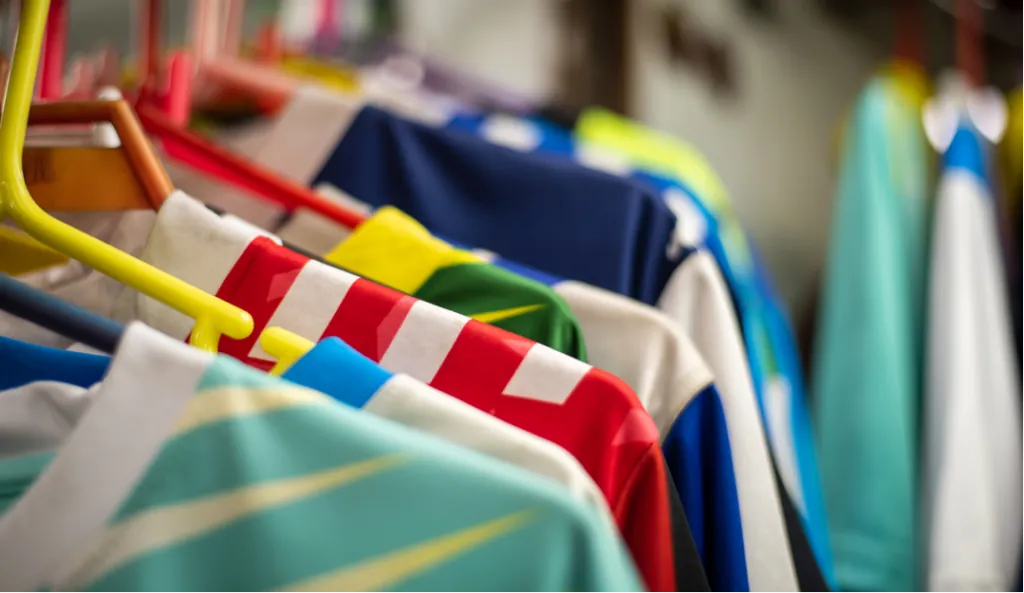
If you’re hunting for soccer jerseys, basketball uniforms, or custom sportswear, China’s regional hubs have you covered. Four areas dominate production, each with a focus that fits different budgets and goals. This guide walks through what each hub does best, then covers the practical layer most articles skip: how MOQs work, what drives cost, which compliance rules apply to apparel, and how sportswear should be inspected. Here’s your guide.
Guangdong (Guangzhou, Dongguan, Foshan): High Quality & Fast Turnaround
The Pearl River Delta is the go-to for premium sportswear. Factories here excel in high-end fabrics, sharp digital printing, and heat transfer technology — perfect for detailed team logos or custom designs.
What sets them apart? Flexibility. They handle small batches (even 50–100 units) with quick turnaround, making them ideal for boutique brands or export orders. Whether you need pro-level soccer jerseys or sleek basketball kits, Guangdong delivers quality that stands up to global standards. See our wholesale sportswear from China page for how these items are typically structured.
Fujian (Jinjiang, Shishi, Quanzhou): Brand-Grade & Reliable
Fujian is the heart of China’s sportswear giants, home to Anta, Li-Ning, and other big names. Factories here specialize in licensed jerseys, with strict quality control and large-scale production capabilities.
If you’re after licensed team merchandise or need to meet strict brand guidelines, this is your spot. They’re pros at consistent sizing, durable stitching, and matching exact color codes — critical for licensed merchandise. One caution for everyone else: unlicensed replicas of club or national team jerseys carry real takedown and seizure risk in major markets. If you do not hold the license, build your line around original designs instead.
Guangxi (Mule Town, Guiping): Budget-Friendly Bulk Orders
For low-cost, high-volume sportswear, Mule Town is hard to beat. This small town produces basketball uniforms, school sportswear, and basic jerseys at very competitive prices — a fit for youth leagues, wholesalers, or price-sensitive markets.
Know what you’re buying: simple designs, standard fabrics, and minimum orders of 500+ units. For filling shelves or outfitting a large team on a tight budget, it delivers.
Zhejiang (Yiwu, Shaoxing): Fan Gear & Export Focus
Yiwu shines for fan merchandise — team scarves, novelty sportswear, and accessories. Its wholesale markets are packed with suppliers handling big export orders to Europe, Southeast Asia, and beyond.
Nearby Shaoxing adds to the mix with top-tier fabric dyeing and printing, ensuring vibrant, long-lasting designs. If you’re targeting sports fans or need custom prints in bulk, this combination is a strong one.
How Sportswear MOQs Work
- Sublimated and digitally printed jerseys. The most small-order-friendly category: fabric is printed per panel, so factories in Guangdong can run 50–100 piece batches without dedicated tooling. Per-unit cost falls as volume rises, but there is no hard tooling barrier.
- Cut-and-sew team kits. Pattern-making and size-set sampling come first; MOQs then depend on how many sizes and colors you split the order across. Each added size-color combination multiplies cutting complexity.
- Knitted or woven with custom trims. Custom collars, cuffs, jacquard fabrics, and woven labels need trim minimums from the trim suppliers, which flow into your MOQ.
- Basic uniforms in bulk. Guangxi-type volume lines run efficiently at 500+ units; the trade-off is design freedom, not legality or basic quality.
Through our service, sample orders and trial purchases can start from a single piece (custom tooling projects are the exception), so you can check fit, fabric hand-feel, and print quality before committing to volume. One more practical note: when comparing quotations between hubs, make sure each factory prices the same size-color spread, the same decoration method, and the same trim set — otherwise the numbers are not comparable, and the cheaper quote usually hides the missing pieces.
What Actually Drives the Cost of a Jersey
- Fabric. Interlock, mesh, honeycomb, and moisture-wicking blends sit at different price points, and GSM (fabric weight) moves cost visibly.
- Decoration method. Sublimation, heat transfer, embroidery, and appliqué differ sharply in per-unit price, durability, and look. Sublimation is cheapest at complexity; embroidery is the most durable but priced per stitch count.
- Size and color spread. A 300-piece order across 6 sizes and 3 colors costs more per unit than 300 pieces of one size and color, because cutting and changeovers multiply.
- Trims and packaging. Custom neck tapes, woven labels, poly bags, and retail hangtags are small line items that add up on tight-margin products.
- Compliance testing. Fabric testing is billed per fabric type and color family — see below.
Compliance: Apparel Rules for the US and EU
- Fiber labeling. The US requires fiber content and country-of-origin labeling under the Textile Fiber Products Identification Act; the EU requires fiber composition labeling under its textile regulation. Care labels for washing temperature and method are expected in both markets.
- Chemical safety. The EU’s REACH framework restricts azo dyes and other substances in textiles that touch skin. Many buyers also request OEKO-TEX-style testing as evidence of chemical safety for fabrics and prints.
- Flammability. US general wearing apparel must meet flammability standards under 16 CFR 1610 — mostly routine for knit sportswear, but worth confirming for plush or pile fabrics.
- IP discipline. Club crests, player names, and federation logos are licensed property. Selling unlicensed replicas can trigger marketplace takedowns and customs seizures regardless of product quality.
As a rule on all projects we handle, third-party testing fees are extra costs, confirmed with you in advance — along with freight — before anything is booked.
How Sportswear Is Inspected
- Measurement against the size spec. Each size is measured at defined points (chest, length, sleeve) and compared to the approved spec — the most common failure point when factories work from memory instead of the spec sheet.
- Colorfastness. Wash, rub, and perspiration tests on both fabric and prints; sublimation should survive washing without bleeding or fading.
- Stitching and construction. Seam strength, stitch density, bar-tacks at stress points, and collar/cuff symmetry.
- Shrinkage. A wash test comparing pre- and post-wash measurements, agreed against a tolerance in writing.
- Print and trim quality. Logo position, heat-transfer adhesion, and label accuracy (size, fiber content, care symbols, country of origin).
How inspection works with us, in three clear tiers. First, as part of our standard service, goods that arrive at our Guangzhou warehouse go through a receiving check — quantity, packaging, and visible defects, within the scope agreed for your order. Second, factory audits, during-production checks, and pre-shipment inspection are available as optional services, quoted per project and delivered with reports and photos. Third, external costs — freight and third-party testing — are always confirmed upfront.
Common Pitfalls When Sourcing Sportswear
- The sample was made by the pattern master; bulk was cut by the line. Without a signed size spec and golden sample, measurements drift. Fix both in writing.
- Unlicensed replica jerseys. The fastest way to lose a listing or a shipment. Build on original designs unless you hold the license.
- Color variation across fabric batches. Dye lots differ; agree a color tolerance and check bulk fabric against the approved swatch, not against memory.
- Sizing inconsistent with your market. Asian and Western size charts differ; confirm the base size chart in writing rather than assuming a “medium” means the same thing everywhere.
- Print cracks after five washes. Agree the wash-cycle count to be tested before production, not after the complaint.
Frequently Asked Questions
Can I order custom jerseys in small quantities?
Yes — sublimated and digitally printed jerseys are the most small-batch-friendly category, and Guangdong factories routinely handle 50–100 piece runs. Our service also supports sample orders starting from a single piece (custom tooling excepted).
Which hub is right for my order?
Guangdong for premium small-batch and fast turnaround; Fujian for brand-grade licensed production; Guangxi for large budget runs; Zhejiang for fan gear and export-oriented printed goods.
What compliance documents do sportswear shipments need?
Fiber content and origin labels plus care instructions for both the US and EU; chemical-safety evidence (REACH-relevant testing or OEKO-TEX-style reports) for the EU; flammability conformance for US apparel. Testing fees are confirmed in advance before booking.
How is jersey quality checked?
In three tiers: a receiving check at our Guangzhou warehouse is included in our standard service (quantity, packaging, visible defects, per the agreed scope); factory audits, during-production checks, and pre-shipment inspection are optional services quoted per project with reports and photos; external costs are confirmed upfront.
What does a sourcing company charge?
Our service fee starts at 5% — the full breakdown is published on our pricing page.
Talk to a Team That Sources in These Clusters
Since 2021, Select Trade has supported 798+ buyers across five continents, drawing on 1,500+ factory resources across China’s manufacturing clusters and 5,815+ products sourced. If you are planning a jersey line or outfitting a team, add us on WhatsApp: 008613202073761. Let us know you’re sourcing sportswear and where you found this guide — we’ll help you pick the right hub and compare quotations on equal terms.
