
China’s Kitchenware Hotspots: Home and Commercial Gear
China’s Kitchenware Hotspots: Where to Source Home & Commercial Cooking Gear
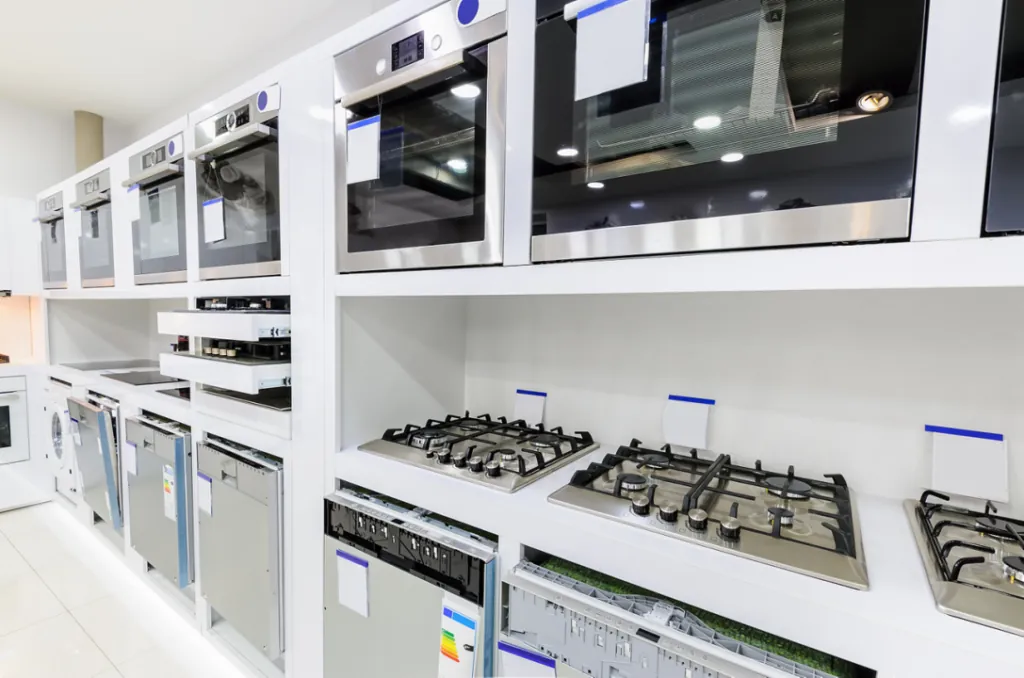
From sleek microwaves to heavy-duty restaurant stoves, China’s kitchenware industry is split into specialized hubs. Whether you need home appliances, commercial equipment, or stainless steel cookware, these regions deliver. This guide maps the hubs, then covers the layer that decides whether your order goes smoothly: MOQ logic, cost drivers, the compliance rules for food-contact and electrical products, and how kitchen gear should be inspected. Here’s your guide.
Guangdong: The King of Kitchen Appliances & Exports
The Pearl River Delta dominates home and small kitchen appliances, with two star players:
- Shunde (Foshan): Known as “China’s Home Appliance Capital,” its Beijiao Town produces microwaves, range hoods, and water heaters at scale. Giants like Midea and Galanz are based here, and 60%+ of production is exported globally.
- Zhongshan (Nantou & Huangpu Towns): Specializes in gas stoves, water heaters, and small appliances (blenders and kettles). Brands like Vatti and Vanward thrive here, backed by a dense supplier network that keeps costs low and production fast.
Bonus: Yangjiang (Guangdong) is the “Knife & Scissors Capital,” making 70% of China’s kitchen knives and scissors — sharp, durable, and exported worldwide.
Zhejiang: Pots, Panels, and Integrated Stoves
The Yangtze River Delta shines for cookware and niche appliances:
- Yongkang: A “Hardware Capital” with 5,000+ factories producing stainless steel pots, thermal mugs, and kitchen hardware. Its full supply chain means you can source everything from raw materials to finished products in one place — see how these lines fit into wholesale kitchenware from China.
- Cixi (Ningbo): A global hub for small appliances — rice cookers, induction cookers, and electric kettles. It’s also home to Fotile, a top brand for high-end kitchen gear.
- Shengzhou (Shaoxing): “China’s Kitchenware Capital” and the king of integrated stoves (combining hobs, ovens, and range hoods). It supplies over 60% of the country’s integrated stoves, with brands like Robam and Sifone leading the pack.
- Ruian (Wenzhou): A go-to for stainless steel cookware and tableware, with many factories producing OEM work for IKEA and other global retailers.
Shandong Boxing: Commercial Kitchens’ One-Stop Shop
If you’re equipping restaurants, schools, or hotels, Xingfu Town (Boxing County) is hard to beat. Known as “China’s Commercial Kitchenware Capital,” it hosts 2,800+ businesses generating 30 billion yuan annually, supplying 40% of China’s commercial kitchen gear.
What you’ll find: heavy-duty stoves, steam cabinets, stainless steel worktables, and cafeteria equipment, exported to 60+ countries. Nearby Zhoucun (Zibo) adds electric cookers and cast-iron pans to the mix.
Honorable Mentions & Quick Reference
- Hefei (Anhui): A rising star for integrated kitchen appliances, with Midea, Haier, and Gree operating large factories here.
- Xinghua (Jiangsu): The source of stainless steel raw materials, feeding cookware factories across the country.
- Home appliances/exports → Guangdong (Shunde, Zhongshan)
- Integrated stoves → Zhejiang Shengzhou
- Commercial gear → Shandong Xingfu Town
- Knives/scissors → Guangdong Yangjiang
- Stainless steel cookware → Zhejiang Yongkang, Ruian
How Kitchenware MOQs Work
- Stainless cookware. Driven by material minimums (steel coils, handles, lids) and pressing schedules. Stock bodies with standard handles carry moderate MOQs; new body dies or custom lids raise them.
- Small appliances. Two MOQ layers: the housing tooling and the certification scope. A stock model with your branding is flexible; a new housing means injection tooling plus safety re-testing.
- Commercial equipment. Often made to order in configurations, so “MOQ” matters less than engineering confirmation — drawings, power supply, and installation constraints need to be fixed in writing before production.
- Knives. Forging and grinding lines favor volume; stock blade profiles with your logo are the flexible path.
Through our service, sample orders and trial purchases can start from a single piece (custom tooling projects are the exception), so you can test cooking performance and build quality before any volume commitment.
What Actually Drives the Cost of Kitchenware
- Material thickness and grade. 304 stainless vs 201, tri-ply vs single-ply bottoms, and gauge thickness are the biggest cost levers in cookware — and invisible in product photos.
- Coating. Nonstick coatings differ widely by brand tier and layer count; PFOA-free claims are standard expectations in major markets and are testable.
- Electronics and certification. For appliances, motors, heating elements, and the required safety testing shape cost as much as the housing.
- Finish and handle quality. Mirror polishing, riveted vs welded handles, and glass lid grades show up immediately in hand-feel and in returns.
- Packaging. Cookware is heavy and dent-prone; edge protection and drop-rated cartons add cost that thin quotes will not show.
Steel and aluminum prices move with the market, so reconfirm quotations in writing for each new order instead of reusing last season’s numbers.
Compliance: Food Contact and Electrical Safety
- Food contact. Materials touching food must meet FDA food-contact requirements for the US and the EU food-contact framework (with LFGB often requested) for Europe. Nonstick coatings and stainless grades are testable claims — ask for reports matching your material group.
- Electrical appliances. For the EU: CE marking under the Low Voltage and EMC directives plus RoHS. For the US: UL or ETL listing is the common marketplace expectation. Plug types and voltage must be specified for the destination market — a 220V kettle cannot be relabeled into a 120V market.
- Gas appliances. Gas stoves and heaters carry destination-specific certification and connection standards; confirm the target market’s gas type and regulator requirements before ordering.
- Knife shipping rules. Some carriers and destinations restrict knife shipments; check logistics rules before quoting delivery promises.
As a rule on all projects we handle, third-party testing fees are extra costs, confirmed with you in advance — along with freight — before anything is booked.
How Kitchenware Is Inspected
- Material verification. Stainless grade testing (spectrometer or spot chemistry), coating thickness, and base flatness for pans — a warped base wobbles on induction hobs and generates returns.
- Cooking performance. Heat distribution, boiling time, and nonstick release tests against agreed methods.
- Electrical safety. Hi-pot (dielectric strength), earth continuity, power draw, and function tests on every sampled unit range; plugs and cords checked against the destination standard.
- Handles and rivets. Torque and load tests on handles and lids — the most common mechanical failure in cookware.
- Finish and packaging. Scratches, polish quality, and carton drop performance for this heavy category.
How inspection works with us, in three clear tiers. First, as part of our standard service, goods that arrive at our Guangzhou warehouse go through a receiving check — quantity, packaging, and visible defects, within the scope agreed for your order. Second, factory audits, during-production checks, and pre-shipment inspection are available as optional services, quoted per project and delivered with reports and photos. Third, external costs — freight and third-party testing — are always confirmed upfront.
Common Pitfalls When Sourcing Kitchenware
- Steel grade substitution. Quoted 304, shipped 201. Specify the grade in the contract and verify by spot testing, not by trusting the stamp.
- Nonstick that fades in weeks. Agree the coating tier and the abrasion/food-release test method before production.
- Wrong plug or voltage. A last-minute discovery that strands a whole batch. Fix the destination standard in writing on day one.
- Certification certificates that predate your model. Electrical certificates must cover your product’s actual construction; verify scope, not just existence.
- Transit dents. Cookware ships heavy; thin cartons dent edges in container transit. Agree drop-test performance for the actual carton.
Frequently Asked Questions
Which hub should I choose?
Shunde and Zhongshan for home appliances and exports; Yongkang and Ruian for stainless cookware; Shengzhou for integrated stoves; Xingfu Town for commercial kitchens; Yangjiang for knives.
What certificates do kitchen appliances need?
EU: CE marking (LVD, EMC) plus RoHS. US: UL or ETL listing is the common expectation. Food-contact surfaces need FDA (US) or EU/LFGB-aligned testing. Gas appliances need destination-specific certification. Third-party testing fees are confirmed in advance.
Can I order samples first?
Yes. Sample orders through our service can start from a single piece (custom tooling projects excepted) — for cookware this is the cheapest way to judge base flatness, handle strength, and coating quality.
How is kitchenware quality checked?
In three tiers: a receiving check at our Guangzhou warehouse is included in our standard service (quantity, packaging, visible defects, per the agreed scope); factory audits, during-production checks, and pre-shipment inspection are optional services quoted per project with reports and photos; external costs are confirmed upfront.
What does a sourcing company charge?
Our service fee starts at 5% — the full breakdown is published on our pricing page.
Talk to a Team That Sources in These Clusters
Since 2021, Select Trade has supported 798+ buyers across five continents, drawing on 1,500+ factory resources across China’s manufacturing clusters and 5,815+ products sourced. If you are sourcing cookware, appliances, or commercial kitchen equipment, add us on WhatsApp: 008613202073761. Let us know you’re sourcing kitchenware and where you found this guide — we’ll point you to the right cluster and help you compare quotations on equal terms.
