China’s 2026 Solar and Energy Storage Sourcing Hubs
China’s 2026 Solar & Energy Storage Hubs: Where to Source Modules, Inverters & Batteries
By Vivian Pi, CEO — Select Trade
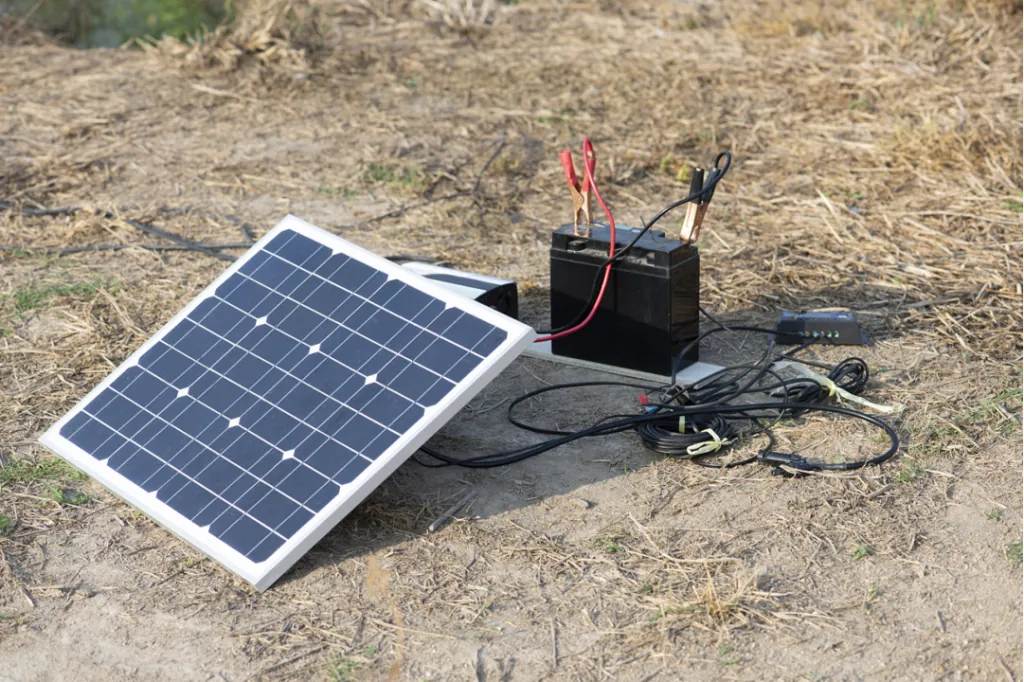
If you’re sourcing solar components or energy storage solutions, China’s regional clusters lead the global market, each with specialized strengths. Here’s your 2026 guide to the top production hubs — and, just as important, what to verify before you wire a deposit. This guide is written for small and mid-sized importers who are not buying in utility-scale volumes: you still need the right region, the right paperwork, and a supplier whose export documents match the name on the invoice.
China’s solar and storage supply chain is not spread evenly. It concentrates in a handful of provinces, and each province specializes. Modules come from Jiangsu and, to a lesser degree, Zhejiang and Anhui. Inverters split between Hefei for large-scale equipment and Shenzhen for exports. Cells and battery systems cluster around a few very large factories in Fujian, Sichuan, Guangdong, and Hubei. Knowing which region does what saves you weeks of supplier-chasing and a great deal of freight money.
Solar Modules: Jiangsu Reigns Supreme
Jiangsu Province dominates solar module production, with the most robust supply chain in the world. If you need volume, reliability, and a mature export infrastructure, start here.
- Changzhou: Home to Trina Solar, a global leader.
- Wuxi & Suzhou: Major manufacturing hubs with decades of expertise.
- Yancheng: Tongwei’s largest module base, a key player in exports.
Zhejiang (Yiwu, Jiaxing with JinkoSolar) and Anhui (Hefei, Chuzhou with JinkoSolar, GCL, Longi) follow, but for volume and reliability, Jiangsu is hard to beat. Zhejiang and Anhui are worth keeping on your shortlist because they give you a credible second option when a Jiangsu factory is fully booked or when a specific cell format is easier to find inland.
Quick tip: For modules, focus on Changzhou, Wuxi, or Yancheng. Export-ready options thrive here.
What to check before you buy modules. Certifications come first, because they are not interchangeable between markets. For Europe, look for IEC 61215 and IEC 61730 test reports plus a CE declaration of conformity issued by the manufacturer. For the United States, ask for UL listings under the relevant UL module standards, and confirm the listing covers the exact model and power class you are ordering — not a sibling model. For other destinations, ask which local grid or building-code approvals the factory already holds, and treat “we can certify it later” as a cost you will pay, not a promise you can bank on.
Verifying the exporter matters as much as verifying the product. Ask for the business license and compare the registered legal name with the name that appears on the certificates and on the invoice. If the certificate holder, the manufacturer, and the seller are three different companies, you are buying from a trading layer, which is not automatically bad, but you need to know who is responsible for warranty claims. Request the factory address, then have a third-party inspector confirm production there. Ask for flash test data with serial numbers so the panels you receive can be traced to the batch that was tested. A supplier who resists any of this is telling you something useful.
Warranty and spares deserve the same attention. Modules normally carry both a product warranty and a longer performance warranty, and the terms that matter are who administers the claim, whether the warranty document names your company, and who pays freight on a replacement. Get the warranty text in English before you order, not after. For larger projects, keep a small number of spare modules from the same batch so a damaged panel does not force a mixed array.
Inverters: Hefei Leads, Shenzhen Exports
Inverters, the “brains” of solar systems, cluster in three powerhouses:
- Hefei (Anhui): the world’s largest base for large-scale inverters. Sungrow, which makes 30% of the world’s inverters, is based here, ideal for utility-scale projects.
- Shenzhen (Guangdong): King of exports. Huawei Digital Energy and GoodWe dominate here, specializing in residential and energy storage inverters shipped worldwide.
- Wuxi/Suzhou (Jiangsu): Shangneng Electric and GoodWe focus on string inverters, perfect for commercial setups.
Quick tip: Big projects? Hefei. Exporting to homes? Shenzhen.
What to check before you buy inverters. Inverters are the component most likely to fail a customs or grid-connection review, because the rules are set per country and per utility. For the EU, confirm IEC 62109 safety compliance, a CE declaration, and the grid-code certificate that applies in your destination country. For the US, ask for the UL listing that applies to the inverter type, including the interconnection standard your utility will ask about. For hybrid and storage-ready units, ask explicitly whether the firmware supports the battery brands you intend to pair with it, and whether that support is documented.
Then verify support. Inverters are software products as much as hardware, and the practical questions are whether the monitoring platform works in your region, whether firmware updates are still being issued for the model, and how a warranty replacement is handled across borders. Ask who the local service partner is, if any exists in your market, and whether spare boards or a replacement unit can ship quickly. A cheap inverter with no service path is the most expensive part of a system.
Match the inverter class to the job. Utility-scale and large ground-mount work belongs with the central and large-scale manufacturers around Hefei. Residential and storage-heavy systems fit the export-oriented manufacturers in Shenzhen. Commercial and industrial rooftop installations are usually best served by string inverters from Wuxi and Suzhou, where the focus is on that product family.
Energy Storage Batteries: Ningde is the Giant
For energy storage batteries, these hubs deliver scale and innovation:
- Ningde (Fujian): CATL’s global headquarters, produces more energy storage and EV batteries than any other single location.
- Huizhou (Guangdong): EVE Energy’s hub for large storage cells, with strong export logistics.
- Jingmen (Hubei): EVE’s massive 60GWh super factory, the largest single storage facility in China.
- Yibin (Sichuan): Sichuan Times (CATL subsidiary) combines storage and EV battery production.
Quick tip: Core cells come from Ningde; big-scale production thrives in Sichuan and Hubei.
Battery paperwork is where most first-time battery importers get stuck. Lithium cells and packs are regulated dangerous goods, and the document that clears the path is the UN38.3 test report, which proves the cell or pack survives the standard transport safety tests. You will also be asked for a material safety data sheet and for a transport test summary. Your forwarder needs all three before booking, and they need them for the exact pack configuration you are shipping, not just for the bare cell.
On the transport side, lithium batteries ship under Class 9 dangerous goods rules. In plain terms: the shipment needs a declaration, the packaging must meet a stated standard, the state of charge is limited for air freight, and many carriers and airlines accept only limited quantities or refuse the cargo outright. Not every forwarder handles Class 9 cargo. Before you agree to any delivery term, confirm in writing that your forwarder takes Class 9 dangerous goods on the specific routing you want, and check whether the port or airport you are using accepts lithium shipments at all. It is far cheaper to fix this before production than after the goods are sitting in a warehouse.
Verifying a battery supplier follows the same logic as modules, with two additions. First, ask whether the supplier is selling cells, modules, or complete systems, because the warranty and the transport classification differ for each. Second, ask what the warranty actually covers: capacity retention, cycle life, or a replacement-only remedy, and for how long. Get the answer in writing with the serial number range covered. Battery warranty claims are rarely resolved by shipping a pack back to China, so agree in advance on who tests a failed unit in your country and who pays for that testing.
Consolidation and Logistics Notes
Modules, inverters, and batteries rarely come from one factory, so most small importers end up consolidating. Two practical points. First, modules are large, light, and fragile, and they normally ship in full container loads or on pallets sized to a container; mixing them with dense goods wastes volume and increases breakage risk. Second, batteries cannot travel with every other cargo class, so a battery order often needs its own booking and its own documentation even when the rest of your shipment is combined.
Keep the paperwork consistent across the whole chain. The exporter name on the invoice, the shipper on the bill of lading, the certificate holder, and the warranty provider should be reconcilable. Where they differ, ask for a written explanation and keep it on file. This single habit prevents most of the disputes that surface months later when something fails in the field.
Finally, plan for spares. A small allowance of spare modules, one spare inverter, and any proprietary connectors or mounting hardware specific to your chosen model will cost far less than a second shipment of one item. If a factory cannot supply spares for a model, treat that as a signal about how long the model will be supported.
2026 Comparison Table
| Category | Leading hub(s) | Anchor companies | Best for |
|---|---|---|---|
| Solar modules | Jiangsu (Changzhou, Wuxi, Suzhou, Yancheng); Zhejiang and Anhui as secondary | Trina Solar, Tongwei, JinkoSolar, GCL, Longi | Volume module programs, rooftop and ground-mount arrays, export-ready orders |
| Large-scale / utility inverters | Hefei, Anhui | Sungrow | Utility-scale and large ground-mount projects |
| Residential & storage inverters | Shenzhen, Guangdong | Huawei Digital Energy, GoodWe | Home systems, hybrid and storage-ready installations for export |
| String inverters | Wuxi and Suzhou, Jiangsu | Shangneng Electric, GoodWe | Commercial and industrial rooftop systems |
| Storage cells & battery systems | Ningde, Fujian; Yibin, Sichuan; Huizhou, Guangdong; Jingmen, Hubei | CATL, Sichuan Times, EVE Energy | Grid storage, commercial storage, container-scale builds |
2026 Quick Reference for Sourcing
- Modules → Jiangsu (Changzhou, Wuxi, Yancheng)
- Inverters → Anhui Hefei + Guangdong Shenzhen
- Storage batteries → Fujian Ningde + Sichuan Yibin + Hubei Jingmen
Frequently Asked Questions
Which region should I start with if I am ordering my first container of modules?
Start with Jiangsu, and within Jiangsu look at Changzhou, Wuxi, and Yancheng. That is where module production, component suppliers, and export experience are densest, which means faster quotes and fewer surprises on documentation. Zhejiang and Anhui are reasonable second choices when a Jiangsu factory cannot take your order or when you need a backup supplier for the same project.
Which certifications should I ask for before placing an order?
Ask for the certification that applies to your destination market, not a generic certificate. For Europe that means IEC test reports and a CE declaration of conformity. For the United States it means the relevant UL listing covering the exact model you are buying. For inverters, add the grid-code approval required by the country or utility where the system will be installed. Always confirm the certificate names the model you are ordering.
How do I tell whether a supplier is a factory or a trading company?
Compare the business license, the certificates, and the invoice. If the registered legal name of the seller does not match the certificate holder or the stated factory, you are likely dealing with a trading layer. That is not disqualifying, but you need a written answer on who handles warranty and who the shipper will be. A factory audit or a third-party inspection at the production address settles the question quickly.
What documents do I need to ship lithium batteries?
You need a UN38.3 test report for the exact cell or pack configuration you are shipping, a material safety data sheet, and a transport test summary. Because lithium batteries are Class 9 dangerous goods, the shipment also needs a dangerous goods declaration and packaging that meets the required standard. Confirm with your forwarder in writing that they accept Class 9 cargo on your route before production starts.
How should I handle warranty on modules, inverters, and batteries?
Get the warranty text in English before you order, confirm that the document can name your company, and agree on who pays return freight and who tests a failed unit. Modules typically carry both a product warranty and a performance warranty. Inverters depend on software and service support, so ask who services the model in your market. For batteries, insist on written terms covering capacity, cycle life, and the serial number range.
Can I consolidate modules, inverters, and batteries into one shipment?
Sometimes, but not always. Modules are bulky and fragile, so they are usually best shipped on their own pallets or in full container loads. Batteries are Class 9 dangerous goods and frequently require a separate booking and separate documentation. Plan the shipment around those two constraints rather than assuming everything from different factories can travel together on one bill of lading.
Need factory shortlists, production capacity data, or export specs for a specific market? Select Trade works with small and mid-sized importers on exactly this: matching your target market and order size to the right hub, checking supplier credentials before you commit, and getting the certification and dangerous goods paperwork right the first time. Visit our contact page at gzstrade.com and tell us the product, the destination country, and your expected volume. We will send back a shortlist of factories worth talking to and the export specifications you will need to quote the job properly.