
Wholesale 40 Litre Hiking Backpacks from China
The forty litre pack is the size the hiking trade calls the weekend bag: big enough for an overnight list, small enough for carry on debates. For importers it is the volume item in the outdoor bag category, and the quality spectrum inside the size is wider than any other bag line, because a pack is a load bearing garment with a zipper problem.
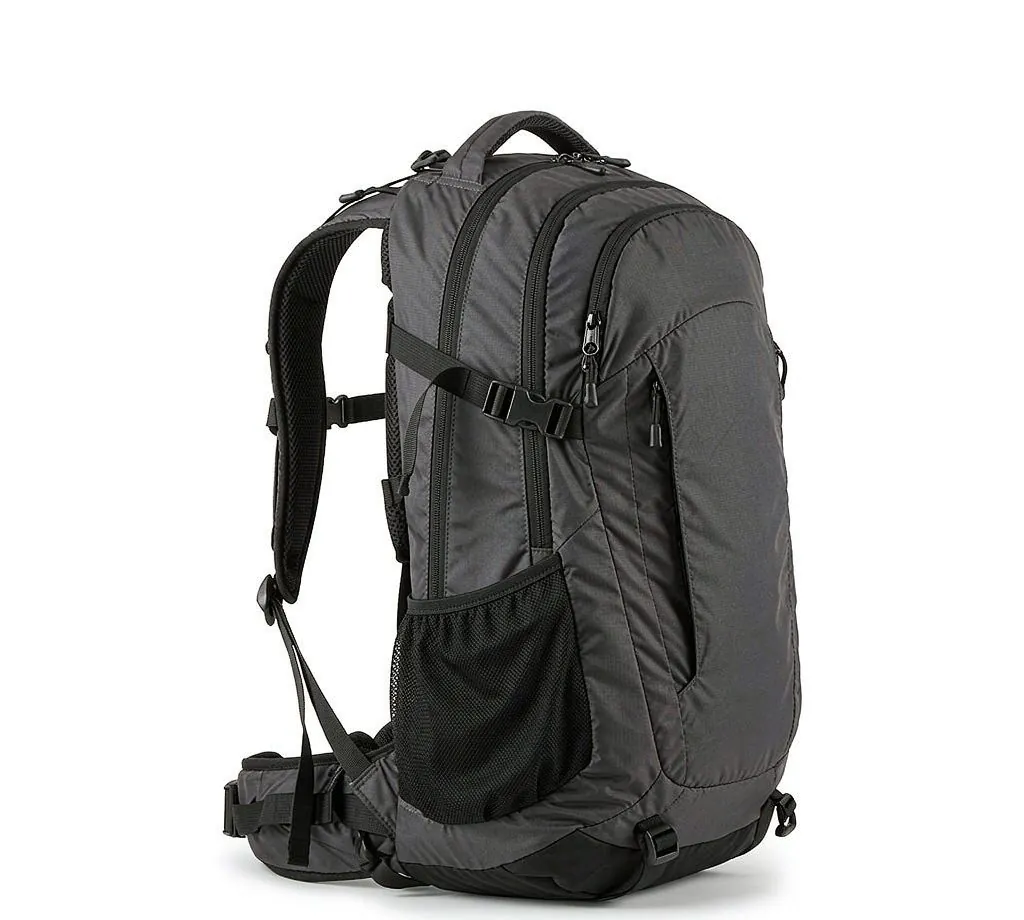
The failures: the harness transfers load to the shoulders instead of the hips because the frame sheet and hip belt were value engineered away, a main buckle breaks on a cold morning, or the stitching at the shoulder blade attachment lets go on week three. Every one of these is a specification line before it is a complaint.
All three are testable. The cluster context is in our wholesale outdoor products overview.
Fabric, harness and the load path
Shell fabric is ripstop nylon or polyester, judged by denier and coating; the floor panel and the bottom of the side pockets deserve a heavier denier than the body because they take the abrasion. The load path is the engineering core: a framed or frame sheet back panel moves weight into a padded hip belt, and the shoulder straps are for balance, not carrying. A pack that carries on the shoulders is a missing structure, not a stiff strap.
Buckles, zips and webbing are the components that fail. Buckle grade varies enormously at the same shape; main zips should be a coil grade with a storm flap for this use; and the stitching density at attachment points, back tacks included, is where a sewing line’s discipline shows.
Specifications and minimum order
Fabric and hardware prices move with polymer markets, so live figures come with the quotation. Fix these points.
| Specification | What to confirm before you order |
|---|---|
| Shell | Nylon or polyester ripstop, denier per panel, heavier on the base |
| Back system | Frame sheet or internal frame, with the channel design |
| Hip belt | Padded, load bearing, with the buckle grade named |
| Zips | Grade per opening, storm flap on the main compartment |
| Webbing | Tensile grade and the stitching density at attachments |
| Load test | The carried weight and drop protocol the pack must pass |
| Pedido mínimo | Hundreds per colourway in practice, set by cutting and sewing runs |
Our minimum order is 1 piece, so a loaded sample is carried and approved before any production commitment. The production minimum follows the cutting run, and we confirm it against your colourway. Our sourcing service screens the bag plants, which cluster in a few regions and vary widely in hardware sourcing.
Hip belts sell the pack twice
A buyer who tries a loaded pack feels the load path in ten seconds, which makes the harness the sales tool as much as the fabric. Value engineering the hip belt saves a small amount per unit and removes the feature the category is judged on. We size the harness to the load the pack is rated for and test the transfer on a loaded bulk unit.
Hardware cold behaviour is the second issue: buckles and adjusters that work in a warm showroom crack in spring mountains. A cold chamber test on the main buckles is a small cost that removes the seasonal failure. Our quality assurance service writes both into the order.
What belongs in the purchase order
- Shell fabric with denier per panel and the base reinforcement
- Back system structure and the hip belt specification
- Buckle and adjuster grades, with the cold test requirement
- Zip grades per opening and the storm flap detail
- Webbing tensile grade and stitching density at load attachments
- Load and drop protocol with a pass standard, plus the rain cover spec
Checks that catch the repeat failures
- Loaded carry. Load a bulk pack to the rating and carry it; where the weight sits tells you if the load path exists.
- Strap pull. Hang the pack and pull each strap attachment hard; lifting stitching shows at once.
- Buckle cycle. Click and load the main buckles fifty times, then cold test a sample.
- Zip cycle. Run the main zip fifty times over the storm flap; cheap coils skip and split here.
- Seam and bar tack audit. Count stitch density at the hip belt and shoulder blades against the specification.
These checks are standard work in a pre shipment inspection, and our factory inspection service covers bag plants as a category. For the cluster map, see our travel gear hubs guide.
Preguntas frecuentes
Why do packs fail at the shoulder attachment?
Because the load passes through those stitches with every step, and the attachment is a bar tack and webbing problem, not a fabric one. The fix is specified webbing grade and stitching density, both verified by counting stitches on bulk units.
Is a rain cover worth including?
For the hiking market, yes: it is a low cost accessory that completes the product, and its absence shows up as a feature complaint rather than a defect return. We quote it as a spec line with the pack. Our minimum order is 1 piece for sampling.
How do I compare quotes that look similar?
Compare the harness structure, the buckle grades and the fabric denier per panel. The silhouette is free; those three lines are where the money was saved or spent, and they are exactly the lines a quotation will not volunteer.
Request a quotation
Send the volume, the load rating and your market. We come back with fabric and harness options plus the workable minimum within two business days.
