
Wholesale LED Panel Lights 600×600 from China
The 600×600 panel is the office ceiling of the world. It drops into the same grid the old fluorescent troffer occupied, and it sells on three things an installer notices in the first week: whether the light is even across the diffuser, whether it hums on the dimming circuit, and whether it still looks new after a year in a heated ceiling void.
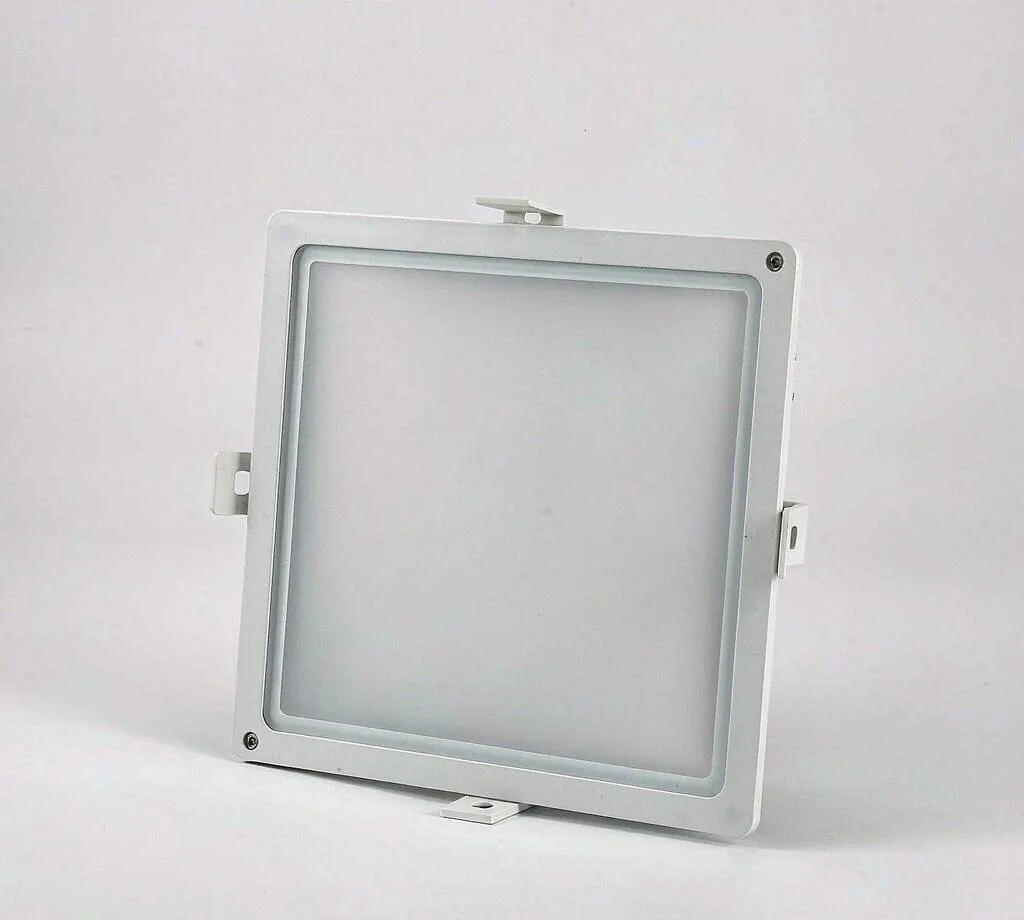 The photograph shows a representative panel from the category. Driver type, dimming and frame finish follow the order sheet, and the image is illustrative rather than a picture of your goods.
We have sourced panels out of Zhongshan and Jiangmen for five years. Three failures keep coming back. A light guide plate made from regrind material yellows within months and shows it around the edges first. A panel shipped with the quoted driver brand arrives with a generic one, which is invisible until the dimming circuit misbehaves. And a panel that tested evenly at the sample stage shows dark corners in bulk because the guide plate changed supplier.
This page covers what the optics and driver words mean, what belongs on the order sheet, and the checks that catch a weak lot. The cluster map behind the category is in our wholesale lighting overview.
Optics, driver and frame: the three decisions
The light guide plate is the panel’s optical heart. Light from the edge-lit LEDs travels inside a PMMA sheet whose pattern spreads it evenly downward. A virgin-material guide plate stays clear; a regrind plate yellows and develops edge glow. The difference is invisible on day one and obvious after a summer in a warm ceiling, which makes the guide plate the first item to pin down in writing.
The driver is the second decision and the one installers notice first. A branded driver with a dimming protocol agreed in advance behaves on the circuit; a substitution does not, and dimming complaints are the most common warranty call in this category. The driver also carries the panel’s safety approval in most builds, which means a driver swap can invalidate the certificate that shipped with the goods.
The frame is the third decision and the cheapest to get right. An anodised or powder-coated aluminium frame resists the yellowing that painted frames show under UV. Recessed, surface-mounted and suspended builds share the same panel but need different mounting kits, and the kit list belongs on the order sheet rather than in an email.
Specifications and minimum order
Our minimum order is 1 piece, so you can start with a single unit and scale up once the sample is approved. Every line below changes what the factory builds. We do not print prices or schedules here, because chip and driver prices move; send us the size, the dimming protocol and the quantity, and we come back with a live quotation and a firm production slot.
| Specification | What to confirm before you order |
|---|---|
| Light guide plate | virgin PMMA named, with regrind excluded explicitly in writing |
| Driver | the brand and model named, since substitutions break dimming and approvals |
| Dimming protocol | fixed, triac, 0-10V or DALI, agreed before the sample round |
| Glare | the UGR requirement if the panel serves offices, stated as a number |
| Colour temperature | kelvin with a tolerance, checked against the sealed sample |
| Mounting kit | recessed, surface or suspended, itemised with the panel |
| Minimum order | stated per driver and colour temperature, since each is its own build |
Minimums in panels are driven by driver procurement and guide plate production, and a single driver and colour combination is the most consistent first order. Our sourcing service covers the factory screening, the sample round and the verification tests below.
What the glare and uniformity words mean
Uniformity is what the eye sees before it reads a number. An even panel has no bright spots over the LED edge and no dark corners; a poor one announces itself in a finished ceiling. The check is visual and immediate: light the panel against a plain wall and look at the corners and the centre. Any regrind or layout problem shows there.
Glare is the number that office specifications are written around. A panel with a micro-prism diffuser achieves a lower glare rating than a plain opal diffuser, at a cost. If the panel serves offices where a lighting designer is involved, the glare requirement belongs on the order sheet as a figure, because it decides the diffuser and the diffuser decides the price.
Two practical points complete the picture. Panels ship flat and stack well, but corner damage in transit is the most common arrival claim, and corner protection is a packing decision. And a panel that will be wired to an emergency circuit needs the emergency variant agreed at order time, not discovered by the electrician.
What belongs in the purchase order
One page attached to the PO is what protects the reorder. Cover these points:
- Guide plate specified as virgin material, with regrind excluded in writing
- Driver brand and model, with the dimming protocol agreed
- Colour temperature and tolerance, referenced to the sealed sample
- Glare rating requirement where offices are the end use
- Mounting kits itemised, and corner protection specified for the carton
- A penalty clause if the bulk lot differs from the approved sample
Inspection points that catch a weak lot
These checks find what a product photograph cannot:
- Light it against a wall. Check uniformity across the diffuser and at the corners. Edge glow and dark corners show immediately.
- Verify the driver. Open one panel from the bulk and read the driver label against the order. Substitution here is common and consequential.
- Check the frame. Look for paint defects and bare aluminium at the joints, which is where cheap frames fail first.
- Run an hour test. Burn a sample and re-check uniformity and colour. A stressed guide plate or driver shows itself.
- Inspect the packing. Check corner protection inside a carton from the middle of the stack. Corner dents are the arrival claim.
An independent inspection before loading is where all five are cheap to catch, and the driver check alone has saved more panel programmes than any other single step. Factory inspection covers this category, and the freight side of protecting flat goods is set out in our shipping service.
Frequently asked questions
Recessed, surface-mounted or suspended?
Follow the ceiling rather than the catalogue. A standard grid ceiling takes the recessed kit and nothing else. Solid ceilings need the surface frame, and open-plan offices wanting a designer look use the suspension kit. All three share the panel, but the kit and the wiring access differ, so the choice belongs at order time.
Why does the panel flicker on the dimmer?
Almost always a driver that was substituted or never matched to the dimming protocol. Dimming compatibility is a pairing between the driver and the circuit, so both have to be named. A panel sold without a named driver and protocol is a warranty call waiting to happen.
Do panels yellow over time?
Regrind light guide plates do, and they show it at the edges first. Virgin PMMA guide plates stay clear for the life of the panel. The specification costs a little more and is the single most important line in the panel order, because yellowing is not repairable.
Request a quotation
Send the size, the dimming protocol, the colour temperature and the quantity you need, plus the market you sell into. We come back with factory options and current bands within two business days.
