
Wholesale Lace Front Human Hair Wigs from China
Lace front human hair wigs are where the hair trade’s price ceiling sits. The category serves salons, private-label wig brands and resale traders who need a finished unit that reads natural at the hairline, and the factory work involved is much finer than any weft-cap product: individual hairs ventilated into lace, a hairline bleached knot by knot, density matched across the crown. It is also the category with the widest gap between what a listing photograph shows and what a carton contains.
We have sourced lace fronts out of Xuchang and Guangzhou’s Baiyun district for five years. The same three failures come back. Density runs visibly lighter than the sample. The lace is a coarser gauge than the grade on the invoice. Hair sold as remy turns out to be brushed-out non-remy that mats within weeks. Every one of these is invisible in a product photo and obvious on a paying customer.
This page explains what the lace and hair grades actually mean, what belongs on the order sheet, and the checks that catch a substitution before the goods ship. It sits inside our wholesale wigs programme alongside our human hair bundles line, and the factory clusters behind this category are mapped in our guide to the hairpiece hubs.
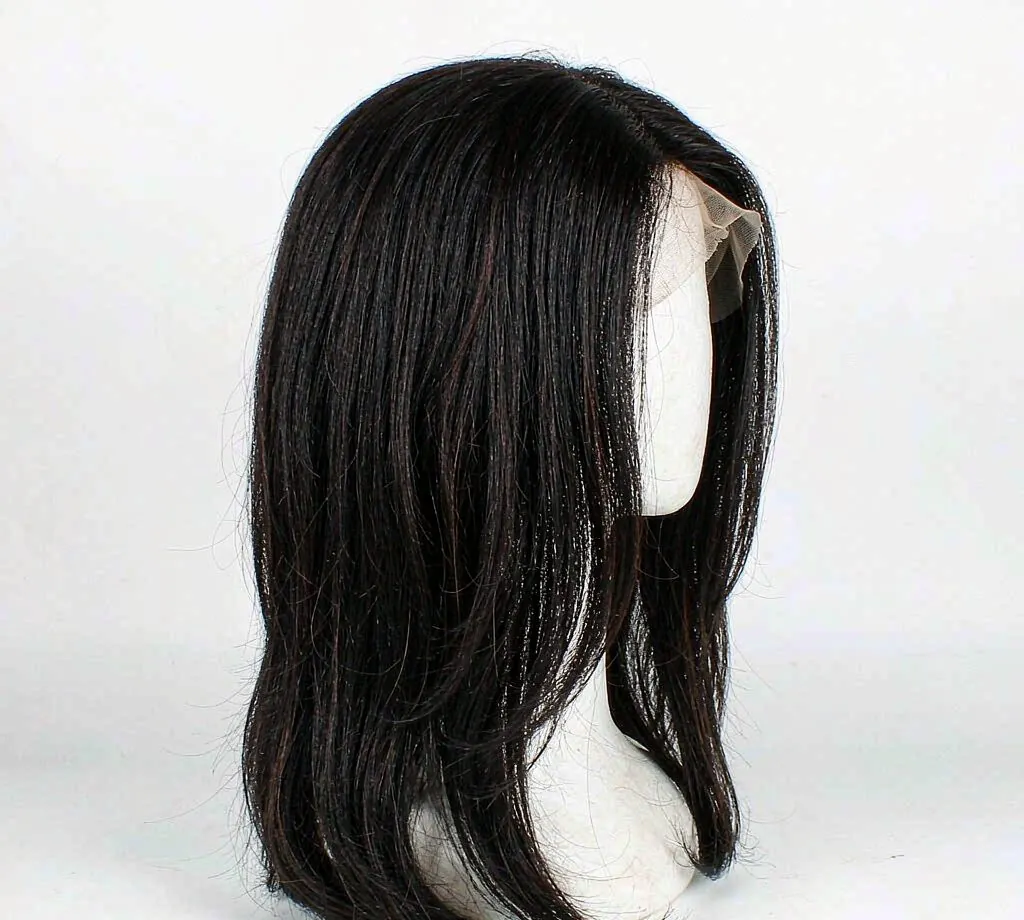 The photograph shows a representative unit of the category. Your lace type, density and grade follow the order sheet, and the image is illustrative rather than a picture of your goods.
Lace types and what they cost the factory
The lace is the headline feature, and it comes in recognisable tiers. Standard Swiss lace is the durable everyday base with a visible but soft edge. French lace is slightly thicker and longer-wearing. HD lace is a much finer, more transparent mesh that melts against most skin tones, and it is genuinely more fragile, which is why honest factories quote it as a premium with a handling caveat rather than a free upgrade. What matters on the order sheet is that the lace is named, because a coarser mesh substituted for HD is invisible until the wig is on a customer’s forehead.
The hairline itself is judged on ventilation. A natural hairline has hairs of varied direction and slight irregularity at the edge; a machine-dense hairline reads as a wig instantly. Knots should be small and, for most markets, bleached so they do not read as dots against the skin. Bleaching quality varies enormously between factories and is one of the first things a salon customer notices.
Specifications and minimum order
Our minimum order is 1 piece, so you can start with a single unit and scale up once the sample is approved. Every line below changes what the factory builds, so each belongs on the order sheet in writing. We do not print prices or schedules here, because hair supply and factory calendars both move; send us the lace type, grade, density and quantity, and we come back with a live quotation and a firm slot.
| Specification | What to confirm before you order |
|---|---|
| Lace type | Swiss, French or HD, named on the invoice rather than shown in a photo |
| Hair grade | remy, virgin or raw, with the word defined in the contract rather than assumed |
| Density | the percentage the factory fills to, with the tolerance you will accept |
| Hairline | pre-plucked or full, and whether knots are bleached |
| Cap size | average, petite or large, measured on the approved sample |
| Colour | natural shade or numbered colour, referenced to a sealed sample |
| Minimum order | stated per spec, since density and lace type each change the build |
Minimums in this category are moderate for human hair because units are built one at a time rather than cut from bulk. The constraint is ventilation labour, not machine setup, so a complex spec costs the factory more bench time than a simple one. Our sourcing service covers the factory screening and sample rounds this category needs.
What the hair grades mean in practice
Remy means the cuticle runs in one direction from root to tip, which is what keeps the hair from matting. Virgin means it has never been dyed or chemically treated. Raw means single-donor hair with the cuticle intact, the top of the market and the word most abused on mid-range goods. A wig invoiced as raw should behave like raw: it should survive repeated washes without tangling, and a burn or cuticle test on the bulk lot should support the claim.
Density is the number most often fudged. It is quoted against a baseline, and a 150% cap sold at a 130% fill is the most common quiet substitution in the category. The check is mechanical: weigh the unit against the approved sample and count ventilation rows at the crown. Numbers, not photographs, settle density disputes.
What belongs in the purchase order
One page attached to the PO protects every reorder. Cover these points:
- Lace type and origin of the hair, both named, with the grade defined in the contract
- Density percentage with a tolerance, and the reference sample both sides keep
- Hairline treatment: pre-plucked shape, knot bleaching, parting direction
- Cap size and strap type, measured on the approved sample
- Packaging that protects the lace in transit, since crushed lace is a claim
- A penalty clause if the bulk differs from the approved sample
Inspection points that catch a switch
These are the checks that find what photographs hide:
- Weight against sample. Weigh bulk units against the approved sample. A lighter unit is lighter density, whatever the label says.
- Cuticle direction. Draw a wet strand root to tip and back. Resistance one way is remy behaving as invoiced.
- Lace gauge. Hold the lace against the sample in daylight. A coarser mesh is a downgrade you can see.
- Hairline ventilation. Inspect the edge for varied direction and small knots. A machine-dense hairline reads as a wig instantly.
- Wash test. Wash one bulk unit and comb it through. This is the only test that exposes acid-stripped or non-remy hair before the customer does.
An independent inspection before loading costs a small fraction of what a rejected batch costs in this category. Factory inspection covers lace-front work, and the checks above mirror the buyer’s-eye method in our wig-quality walkthrough.
Frequently asked questions
Which lace type should a new brand choose?
Swiss lace is the safer first order: it is durable enough to survive shipping, handling and a customer learning to install, while HD lace reads slightly better but is easier to tear. Brands serving experienced wearers move to HD; brands serving first-time buyers usually stay on Swiss and spend the difference on density consistency.
What density reads most natural?
Most retail markets sit comfortably between a light and a medium fill; the exact number matters less than the factory hitting it consistently. Density that varies between units in one batch is what customers notice, so the tolerance line on the order sheet is more important than the headline percentage.
Can I order a custom hairline?
Yes, and established factories will work from a reference. A bespoke hairline adds ventilation bench time, so it raises the minimum and the schedule. It is worth doing for a flagship style, but for a first order it is usually smarter to approve a factory’s standard pre-plucked shape and reserve custom work for the reorder.
Request a quotation
Send the lace type, grade, density and quantity you need, plus the market you sell into. We come back with factory options and current bands within two business days.
