Wholesale Basic Synthetic Wigs from China
Basic synthetic wigs are the everyday workhorse of the wig trade: bob cuts, layered styles and straight falls sold in volume to beauty supply retailers and online brands. Because the price point is low and the styles are familiar, buyers sometimes treat the category as a commodity and order on photographs alone. That is where the trouble starts. Two wigs with the same silhouette can differ enormously in cap construction, fibre grade and how long they look acceptable on a paying customer.
We have sourced synthetic wigs out of Heze and Qingdao for five years. The same three failures keep appearing. Caps arrive with wefts stitched so loosely they shed within a fortnight. Fibre described as heat friendly will not take a curl at the temperature printed on the box. A style approved as a sample comes back in bulk with visibly shinier, coarser fibre. None of this shows in a listing photo, and all of it shows on the customer.
This page explains what separates a repeatable basic wig from a one-star one, what belongs on the order sheet, and the checks that catch a substitution before shipping. It sits inside our wholesale wigs programme, next to our human hair bundles line.
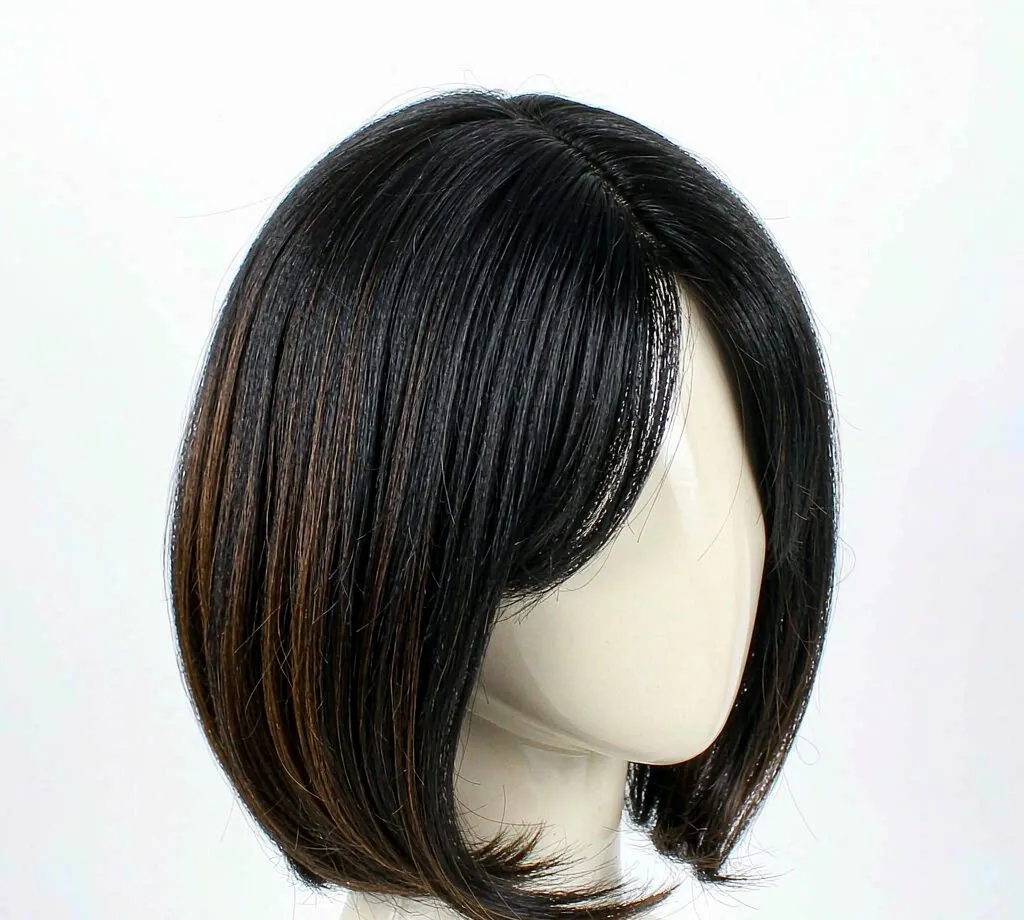 The photograph shows a representative style of the category. Your style, colour and cap type follow the order sheet, and the image is illustrative rather than a picture of your goods.
Cap construction: where basic wigs succeed or fail
The cap is the product. A basic weft cap has machine-stitched wefts sewn onto stretch netting, with an elastic strap at the back for fit. This is the construction nearly all volume sellers use, and its quality lives in details a photograph cannot show: weft stitch density, how the wefts are anchored at the crown, and whether the elastic is sewn or simply glued. A cap that fails in any of these sheds, stretches out of shape, or rides up at the nape.
Above the basic weft cap sit partial lace and full lace options, where a lace panel at the part or hairline lets the wearer style the hair away from the crown. These add real cost at the factory and are worth specifying precisely, because a factory under pressure will quietly substitute a weft cap with a lace-look strip if the order sheet does not name the construction.
Specifications and minimum order
Our minimum order is 1 piece, so you can start with a single unit and scale up once the sample is approved. Styles, sizes and fibre all interact, so the table below is the minimum set of lines that should be fixed in writing before a deposit moves. We do not print prices or schedules on this page, because resin costs and factory calendars both move; send us the style, colour and quantity, and we come back with a live quotation and a firm slot.
| Specification | What to confirm before you order |
|---|---|
| Style reference | a named style code plus the sealed sample, not a screenshot |
| Cap type | basic weft, partial lace or full lace, named on the order rather than shown in a photo |
| Cap size | average, petite or large, measured on the sample and repeated on the bulk |
| Fibre grade | standard or heat friendly, and if heat friendly, the temperature it holds on the pack label |
| Colour | shade number referenced to a sealed sample kept by both sides |
| Density look | the fullness the style reads at, because two 100% density caps can still look different |
| Minimum order | stated per style and colour, since each new style opens a new setup |
Minimums are driven by style count: one style is one setup, and a colour variant inside that style is a smaller increment. Retailers launching several styles at once do better phasing the launch than running every colour of every style in the first order. Our sourcing service covers the factory screening and sample coordination this category depends on.
What the fibre words mean in practice
Heat friendly is the phrase worth pinning down. Genuine heat-resistant fibre holds a styled curl at the temperature printed on the retail label, usually somewhere in the range a home stylist can reach. Untreated fibre will relax at those temperatures. The test is simple and belongs in every inspection: curl a strand from the bulk lot at the labelled temperature and see whether the set holds after cooling. A factory that refuses the test has answered the question.
Shine is the other tell. Cheap fibre reflects light in a hard, plastic-looking sheet, which customers read as fake the moment they open the box. Better fibre diffuses the reflection. Photographs flatten this difference, which is why the sealed sample matters more than the listing image.
What belongs in the purchase order
One page attached to the PO protects every reorder after it. Cover these points:
- Style code and the sealed sample reference held by both sides
- Cap construction and cap size, named, with the elastic attachment described
- Fibre grade and the heat-friendly temperature that will print on your label
- Shade numbers and carton markings, so mixed lots can be sorted on arrival
- Retail packaging, hangtags and insert cards, if the units ship shelf-ready
- A penalty clause if bulk differs from the approved sample
Inspection points that catch a switch
Carton-level checking will not find the failures that generate reviews. These will:
- Weft pull test. Tug a weft near the crown. Loose stitching sheds in the box and gets worse on the customer.
- Heat test. Curl a strand at the labelled temperature. A set that falls out means the fibre is not what the invoice says.
- Shine check. View the bulk under daylight next to the sample. Hard plastic shine is the classic substitution tell.
- Cap fit. Pull the bulk cap onto a mannequin block of the stated size and check the strap. Caps that ride up at the nape come from stretched netting.
- Comb test. Comb a wig from root to tip and count what sheds. A cap that loses hair in the factory loses more at the customer.
An independent inspection at the packing stage costs a small fraction of what a returned batch costs. Factory inspection covers this category, and for a buyer’s-eye view of grading fibre see how to check wig quality.
Frequently asked questions
Can basic synthetic wigs be dyed?
Synthetic fibre will not take conventional hair dye, because there is no cuticle to lift. Colour has to be chosen at the factory from shade rings, which is one more reason the sealed sample matters. Some heat-friendly fibres accept fabric dyes in limited cases, but the result is unpredictable and never suitable for a retail promise.
How long should a basic synthetic wig last?
With daily wear and reasonable care, a well-made weft-cap wig holds its look for weeks of regular use before the fibre shows wear. The variables are fibre grade and cap construction, which is exactly why those two lines carry the most weight on the order sheet. A wig that sheds from the wefts will disappoint long before the fibre does.
What is the smallest order you can place?
Stock styles in standard colours start small enough to judge a factory properly. A new style, a new cap construction or a bespoke colour each raise the minimum, because each opens a setup at the factory. Ask for the factory’s own figure against the exact specification rather than a generic number.
Request a quotation
Send the styles, colours and quantities you need, plus the market you sell into. We come back with factory options and current bands within two business days.