Wholesale Sublimated Jerseys from China
Sublimated jerseys are how small teams and new brands get professional kit. The design is printed into the fabric rather than onto it, so the colours never crack or peel, and the cost of a custom design is a print run rather than a factory conversation. That is also why the category’s failures are quiet ones: the fabric weight thinned between sample and bulk, a print that fades in the sun, and a roster of names printed one letter off from the approved artwork.
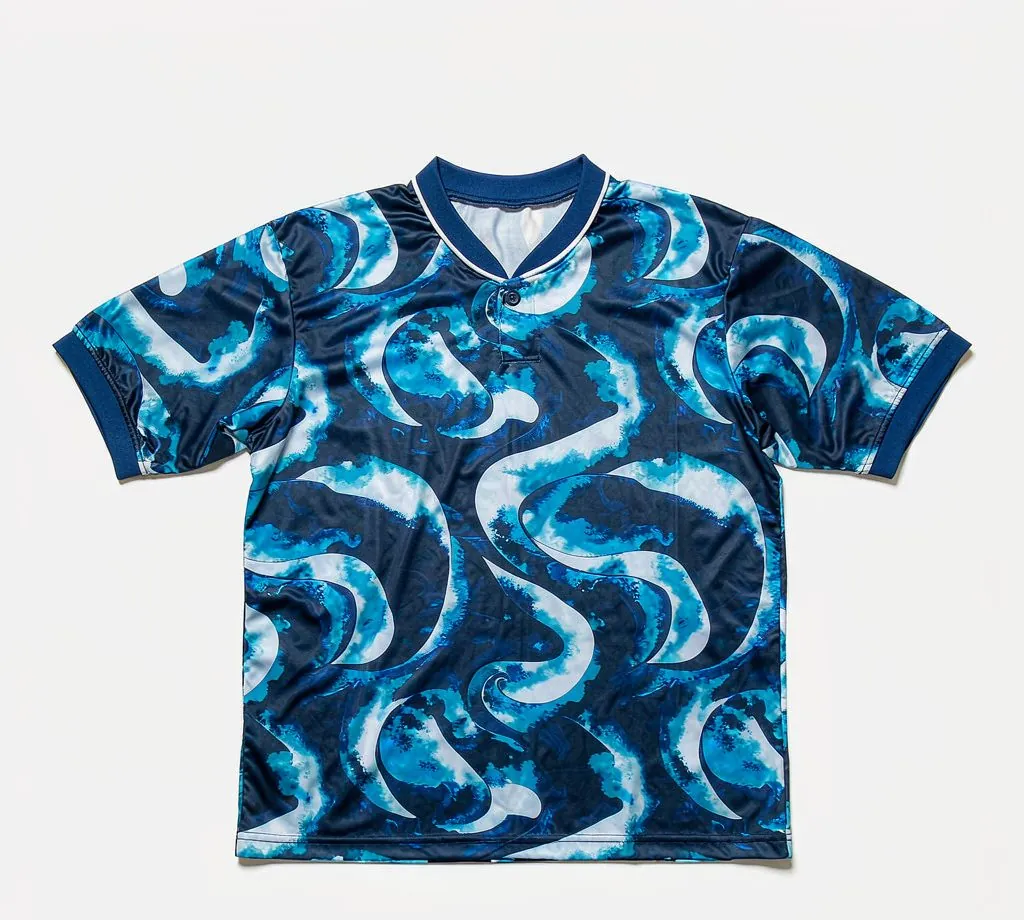 The photograph shows a representative jersey from the category. Colours, names and numbers follow the approved artwork, and the image is illustrative rather than a picture of your goods.
We have sourced sublimated kit out of the Jinjiang cluster for five years. The same three failures come back. A jersey sold at one fabric weight arrives a grade lighter, which reads as a cheap shirt the first time it is held. A print that survived the factory check fades in a season of outdoor play. And a name set that was approved on a spreadsheet arrives with typos baked into hundreds of shirts.
This page covers what the fabric and print words mean, what belongs on the order sheet, and the checks that catch a weak lot. The factory towns behind the category are in our wholesale sportswear overview.
Fabric, print and the artwork chain
The fabric is a polyester knit engineered to take sublimation, and its weight in grams per square metre is the number that separates a proper jersey from a costume. Heavier knits hold shape and read professional; lighter ones dry fast and cost less. The weight belongs on the order sheet, and weighing a cut swatch from the bulk is how it is verified.
Sublimation printing turns dye into gas and bonds it inside the fibre, which is why the print cannot crack. What can fail is the paper, the pressing and the design: a colour that reads differently on fabric than on screen, a press temperature that under-fixes the dye, and a print alignment that drifts across a panel. The checks are physical: wash a bulk shirt, leave one in the sun for a week, and compare colours against the approved sample.
The artwork chain is where rosters fail. Names and numbers move from spreadsheet to print file to shirt, and every hand-off is a chance for a typo. The honest process locks the artwork as a numbered file both sides approve, and treats any change after that as a new approval. A name printed wrong on a hundred shirts is the most expensive typo in team sport.
Specifications and minimum order
Our minimum order is 1 piece, so you can start with a single unit and scale up once the sample is approved. Every line below changes what the factory prints. We do not print prices or schedules here, because fabric and ink inputs move; send us the design, the roster and the quantity, and we come back with a live quotation and a firm production slot.
| Specification | What to confirm before you order |
|---|---|
| Fabric weight | grams per square metre, named, verifiable by weighing a swatch |
| Print fastness | the wash and light behaviour the print must survive |
| Artwork | the locked design file, numbered and approved by both sides |
| Roster | names and numbers as a checked list, matched to the locked artwork |
| Cut | the size range and the fit block, referenced to a physical sample |
| Collar and trim | styles itemised, since trims change the look and the price |
| Minimum order | stated per design, since each artwork is its own print run |
Minimums in sublimation are driven by print setup, and a single design across a size range is the most consistent way to start. Our sourcing service covers the factory screening, the sample round and the inspections below.
What the fastness words mean in practice
Wash fastness is the property the customer tests first. A sublimated print that under-fixes loses colour at the folds and collar edges within a few washes, and the failure is specific enough to photograph. The wash test on a bulk shirt, twice through a real cycle, is what catches it before the team does.
Light fastness matters for outdoor sport. A jersey that fades in a season of Saturday games reads as a bad buy, and light fastness is a property of the dye and the fixing, not the design. A week in a sunny window is a crude but honest test that any inspection can run.
Two practical points complete the picture. Colour on fabric differs from colour on screen, and the honest reference is a printed swatch rather than a monitor. And the cut is the part players judge: a jersey that matches the design but fits like a box generates the fit complaints no print quality can offset.
What belongs in the purchase order
One page attached to the PO is what protects the reorder. Cover these points:
- Fabric weight in grams per square metre, named
- The locked, numbered artwork file and the roster list checked against it
- Print fastness requirements for wash and light
- Size range and fit block, referenced to a physical sample
- Collar and trim styles, itemised
- A penalty clause if the bulk run differs from the approved sample
Inspection points that catch a weak lot
These checks find what a product photograph cannot:
- Weigh the fabric. Weigh a cut swatch from bulk shirts against the grammage claim. Thinning is the classic quiet change.
- Check the roster. Compare every name and number on bulk shirts against the locked artwork. Typos are the most expensive failure here.
- Wash one. Run a bulk shirt through two wash cycles and compare the print against a fresh one.
- Sun test one. Leave a bulk shirt in direct sun for a week and compare colour against an unwashed piece.
- Check the cut. Measure the bulk sizes against the fit sample, because fit is what players judge.
An independent inspection before loading catches all five at the cheapest point, and the roster check is the one that saves an entire shipment. Factory inspection covers this category, and the supply towns behind it are mapped in our sportswear factory guide.
Frequently asked questions
How many designs should one order carry?
One or two. Each design is its own print run with its own setup, and a spread of designs multiplies the chances of colour drift between runs. A home and away design in a tight size range ships more consistently than a launch across five designs.
Who owns the artwork?
Whoever is named in the agreement, and that is worth writing down. The design file travels through the factory’s print system, and a buyer who wants to reorder next season, or move factories, needs the file and the right to use it as a term of the deal.
Will sublimation print fade?
A properly fixed print does not crack or peel, but light fastness varies with the dye and the fixing process. A week in a sunny window at inspection tells you more than any claim, and it is a test the factory can run before the container is packed.
Request a quotation
Send the design, the roster, the size range and the quantity you need, plus the market you sell into. We come back with factory options and current bands within two business days.