
Wholesale LED Strip Lights from China
LED strip is the lighting category with the shortest distance between factory and failure. It sells by the metre into coves, kitchens, retail displays and signage, and it fails in ways the buyer discovers after installation: a strip that runs dimmer at the far end, a colour that will not match between two reels, or an adhesive that gives up in the first summer.
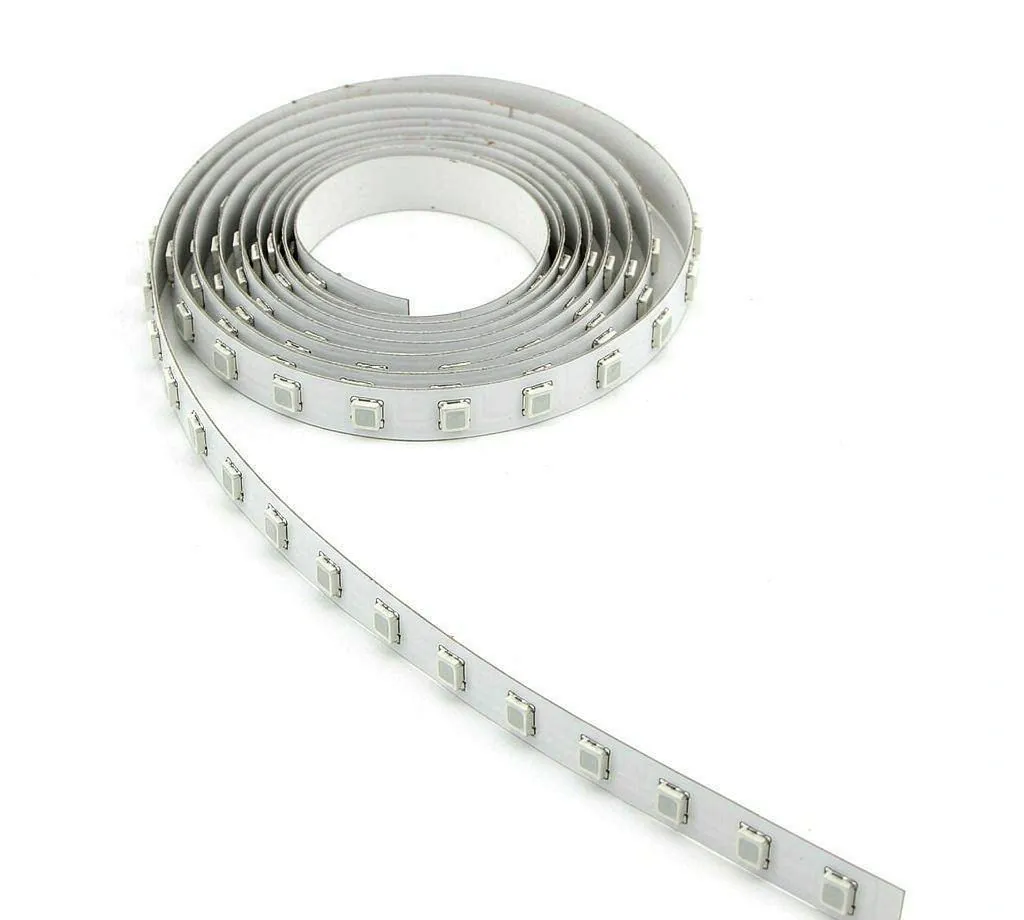 The photograph shows a representative strip from the category. Chip type, density and waterproofing follow the order sheet, and the image is illustrative rather than a picture of your goods.
We have sourced strip out of Zhongshan and Shenzhen for five years. The same three failures come back. A strip sold at one chip density arrives with fewer chips per metre, which is invisible until it is lit next to the sample. Copper in the circuit board is thinned to save cost, and the far end of a five-metre run glows visibly dimmer. And a waterproof coating that stayed clear on the sample yellows over the chips within a year.
This page covers what the chip and voltage words mean, what belongs on the order sheet, and the checks that catch a weak reel. The wider cluster map is in our wholesale lighting overview.
Chips, density and the circuit board
The chip number describes the package, and the two families dominate the trade. The smaller package is the workhorse for cove and accent lighting, efficient and cheap at high densities. The larger package carries more light per chip and suits shorter runs and brighter applications. What matters on the order sheet is not the number alone but the chips per metre stated with it, because density is the specification most often quietly reduced.
The circuit board is where cost hides. Copper thickness decides how much current the strip carries without a voltage drop, and a thinned board shows itself as a dim far end on any run longer than a few metres. The board colour and quality also decide how well the strip sits on its adhesive in warm rooms.
Voltage is the third decision and it decides the run length. A twelve-volt strip loses brightness over distance faster than a twenty-four-volt one on the same board, which is why longer runs should be specified at the higher voltage. The power supply and the strip have to be specified together, because a mismatch shows up as flicker or as an early death.
Specifications and minimum order
Our minimum order is 1 piece, so you can start with a single unit and scale up once the sample is approved. Every line below changes what the factory builds. We do not print prices or schedules here, because chip prices move; send us the chip type, the density and the quantity, and we come back with a live quotation and a firm production slot.
| Specification | What to confirm before you order |
|---|---|
| Chip type and density | the package and the chips per metre, both stated and verifiable |
| Voltage | twelve or twenty-four volts, matched to the run lengths you install |
| Power per metre | the figure claimed, with the right to verify it on bulk samples |
| Colour temperature | kelvin with a tolerance, and the bin matching between reels |
| Waterproofing | indoor, coated or sleeved, with the coating’s UV stability named |
| Adhesive | the tape grade on the back, since adhesives fail in warm rooms |
| Minimum order | stated per colour temperature and waterproofing, since each is its own run |
Minimums in strip are driven by binning and coating runs, and a single colour temperature in one waterproofing grade is the most consistent first order. Our sourcing service covers the factory screening, the sample round and the verification tests below.
What the binning and coating words mean
Binning is how tightly the factory sorts chips by colour and brightness. Loose binning costs less and shows itself as visible colour differences between reels on the same wall, which is the complaint that ends retail programmes. Asking for the bin tolerance, and checking reels side by side on arrival, is what keeps a cove looking like one continuous light instead of a patchwork.
Waterproofing comes in three honest tiers. An uncoated indoor strip is cheapest and fine inside dry coves. A coated strip survives splashes and bathrooms. A sleeved strip handles outdoor and wet zones, but the sleeve costs light output and it must be UV-stabilised to stay clear. A coating that yellows is not a quality issue that improves; it is permanent, which is why the material belongs in the specification.
Two practical points finish the picture. Power per metre is a claim that a power meter verifies in seconds, and a factory with nothing to hide will welcome the check. And the adhesive is the failure that installers complain about most, because a strip that peels off a warm cabinet has to be refixed with something the customer buys themselves.
What belongs in the purchase order
One page attached to the PO is what protects the reorder. Cover these points:
- Chip package and chips per metre, both stated as verifiable numbers
- Voltage and power per metre, matched to the run lengths and power supplies you use
- Colour temperature with the bin tolerance between reels agreed
- Waterproofing tier with the coating’s UV stability named
- Adhesive grade and reel length per carton
- A penalty clause if the bulk reels differ from the approved sample
Inspection points that catch a weak reel
These checks find what a product photograph cannot:
- Count the chips. Count chips over a measured length on bulk reels. Density substitution is the most common quiet change.
- Read the power. Connect a metre of strip to the stated supply and measure the draw. A shortfall shows in the first minute.
- Check the far end. Light a full reel and compare brightness at both ends. A visible drop means thinned copper in the board.
- Compare reels. Light reels from different cartons side by side. Colour mismatch between reels is the complaint that ends programmes.
- Peel the adhesive. Lift the backing and test the tape on a warm surface. Weak adhesive fails in the customer’s kitchen, not in the carton.
An independent inspection before loading catches all five at the cheapest point, and the reel-to-reel colour check is the one that retail buyers notice first. Factory inspection covers this category, and the same discipline is set out in our inspection guide.
Frequently asked questions
Twelve volt or twenty-four volt strip?
Twenty-four volts for anything longer than a couple of metres, because the voltage drop over distance is half what a twelve-volt strip suffers on the same board. Twelve volts suits short runs and vehicle use. The strip and the power supply have to be specified together either way.
Why do two reels of the same strip look different?
Loose binning. Chips are sorted by colour and brightness at the factory, and a loose tolerance means two reels can sit visibly apart on the same wall. Specify the bin tolerance and check reels side by side at inspection; it is the cheapest colour insurance in the category.
How do I stop strip peeling off cabinets?
Specify the adhesive grade rather than accepting whatever is on the reel, and prepare the surface honestly: dust and grease defeat any tape. For warm or textured surfaces, a mechanical channel is the dependable answer and costs little at the factory stage.
Request a quotation
Send the chip type, the density, the voltage and the quantity you need, plus the market you sell into. We come back with factory options and current bands within two business days.
