
Wholesale Canvas Totes from China
Canvas totes look like the simplest product in the catalogue and behave like one of the trickiest. The unit price is low, the order quantity is high, and the whole value of the bag sits in two things that are hard to see in a photograph: the weight of the canvas and the strength of the handle attachment.
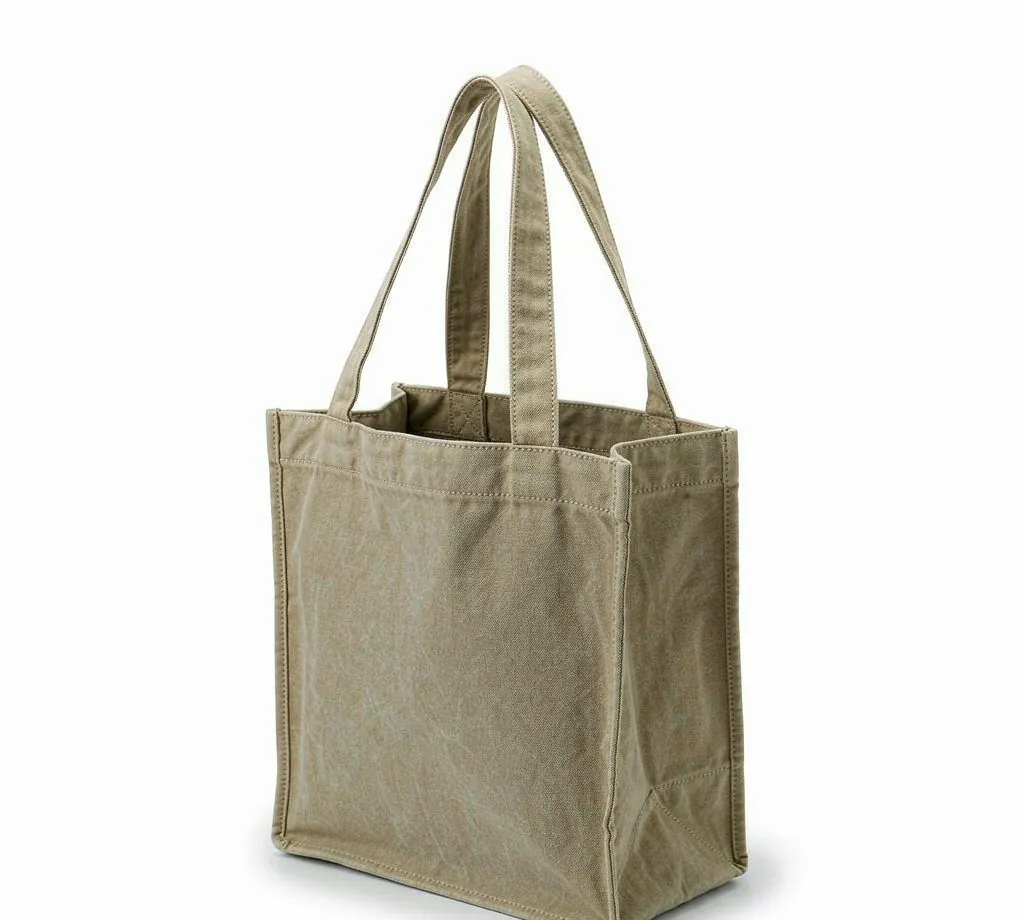 The photograph shows a representative tote from the category. Canvas colour, handle style and print follow the approved sample, and the image is illustrative rather than a picture of your goods.
We have sourced promotional and retail totes out of the Zhejiang and Jiangsu clusters for years. Three failures repeat. A ten ounce canvas arrives at eight ounces, and the bag that stood up on the sample flops over empty. A handle stitched at the seam rather than through the body tears at the top corner within a month of daily use. And a print that was crisp on a flat swatch blurs once it is applied to a woven surface at volume.
This page covers what the canvas and handle words mean, what belongs on the order sheet, and the checks that catch a weak lot. The supply base behind the category is in our wholesale bags and luggage overview.
Canvas weight, handles and the print
Canvas is sold by weight per unit area, and the weight is the number that decides how the bag feels to a customer. A heavier canvas holds a shape, stands upright when empty and takes print cleanly; a lighter one folds into a flat square and shows the weave through the ink. The weight belongs on the order sheet, and the bulk is verified by weighing a cut square.
Handles are the structural part. Two construction choices matter: whether the webbing runs the full height of the bag or stops at the top edge, and how many rows of stitching hold it. A full height handle carries the load in the fabric of the body; a handle stitched only to the top hem carries the whole weight on a short seam.
The print is where a good bag is spoiled. Canvas is a textured surface, so ink sits on the yarn rather than in a smooth film. Screen printing gives the most durable result on a heavy canvas, heat transfer suits fine detail better, and embroidery adds weight and cost. The method belongs on the sample, with a wash test behind it.
Specifications and minimum order
Our minimum order is 1 piece, so you can start with a single unit and scale up once the sample is approved. Every line below changes what the factory cuts and prints. We do not print prices or schedules here, because cotton and printing inputs move; send the size, the canvas weight and the quantity, and we come back with a live quotation and a firm production slot.
| Specification | What to confirm before you order |
|---|---|
| Canvas weight | ounces or grams per square metre, named and verifiable by weighing a swatch |
| Canvas grade | cotton or blend, and whether it is pre shrunk or washed |
| Size | finished dimensions after sewing, not cutting dimensions |
| Handles | webbing width, full height or top stitched, and the rows of stitching |
| method, number of colours and the position, agreed on a sample | |
| Lining | whether the bag is lined, and whether it has an inner pocket |
| Minimum order | stated per print design, since each design needs its own setup |
Minimums in printed totes are driven by the print setup rather than the cutting, so a single design across a tight size range holds cost down. Our sourcing service covers the factory screening, the sample round and the inspections below.
What the canvas words mean in practice
Pre shrunk canvas costs more and saves a problem. An untreated cotton bag can shrink on the first wash, which changes the size a customer already paid for and distorts any printed image along with it. If the bag will be washed, that conversation belongs before the order is placed.
Handle length is a specification, not a detail. A tote carried over the shoulder needs a longer strap than one carried in the hand, and the length is measured on the finished bag rather than on the pattern. Getting this wrong is a repeat of the whole order.
Print durability is the last word buyers use loosely. Ink on canvas survives by bonding to the fibre, and the test is a wash or a rub at the print edge. A print that passes a gentle hand rub but fails a stiff brush is a print that will look worn within a season of use.
What belongs in the purchase order
One page attached to the PO is what protects the reorder. Cover these points:
- Canvas weight and grade, with shrinking behaviour named
- Finished size, measured on a sewn bag
- Handle webbing width, construction and finished length
- Print method, colour count, position and artwork reference
- Lining and inner pockets, itemised
- A penalty clause if the bulk run differs from the approved sample
Inspection points that catch a weak lot
These checks find what a product photograph cannot:
- Weigh a swatch. Cut a square from a bulk bag and weigh it against the claim. Thinning is the classic quiet change.
- Hang a loaded bag. Load a bulk tote to its rated weight and lift it by one handle, repeatedly, watching the top corner.
- Check the stitching rows. Count the rows holding the handle and confirm where the webbing ends.
- Wash one. Run a printed bulk bag through a wash cycle and compare size and print against a fresh piece.
- Measure the handle. Take the finished length on a sewn bag rather than trusting the pattern figure.
An independent inspection before loading catches all five at the cheapest point. Factory inspection covers this category, and the wider system is set out in our guide to the sample versus bulk gap.
Frequently asked questions
What canvas weight should I choose?
It follows the use. A bag given away at an event can be lighter; a bag sold as a retail product or carried daily needs a heavier canvas that holds its shape. Fix the weight on the sample and hold it on every reorder, because the weight is the first thing a supplier trims.
Should the handle run the full height of the bag?
For anything that carries real weight, yes. A handle that runs the full height transfers load into the body of the bag and spreads it across a long seam. A handle stitched only to the top hem concentrates the same load on a short join.
Is screen printing or transfer better on canvas?
Screen printing gives the most durable result on a heavy woven surface, and heat transfer handles fine gradients and small detail better. Both need a wash test on the actual canvas before the bulk run, because the same ink behaves differently on different weights and finishes.
Request a quotation
Send the size, the canvas weight, the handle specification, the print artwork and the quantity you need, plus the market you sell into. We come back with factory options and current bands within two business days.
