
Wholesale Plush Toys from China
A plush toy looks like the simplest product in the toy trade and behaves like one of the least forgiving. There is no mould, no electronics and no assembly jig, so almost everything about it is soft, hand-built and hard to standardise, which is exactly why a sample that feels wonderful can arrive as a carton that feels thin and smells of the warehouse.
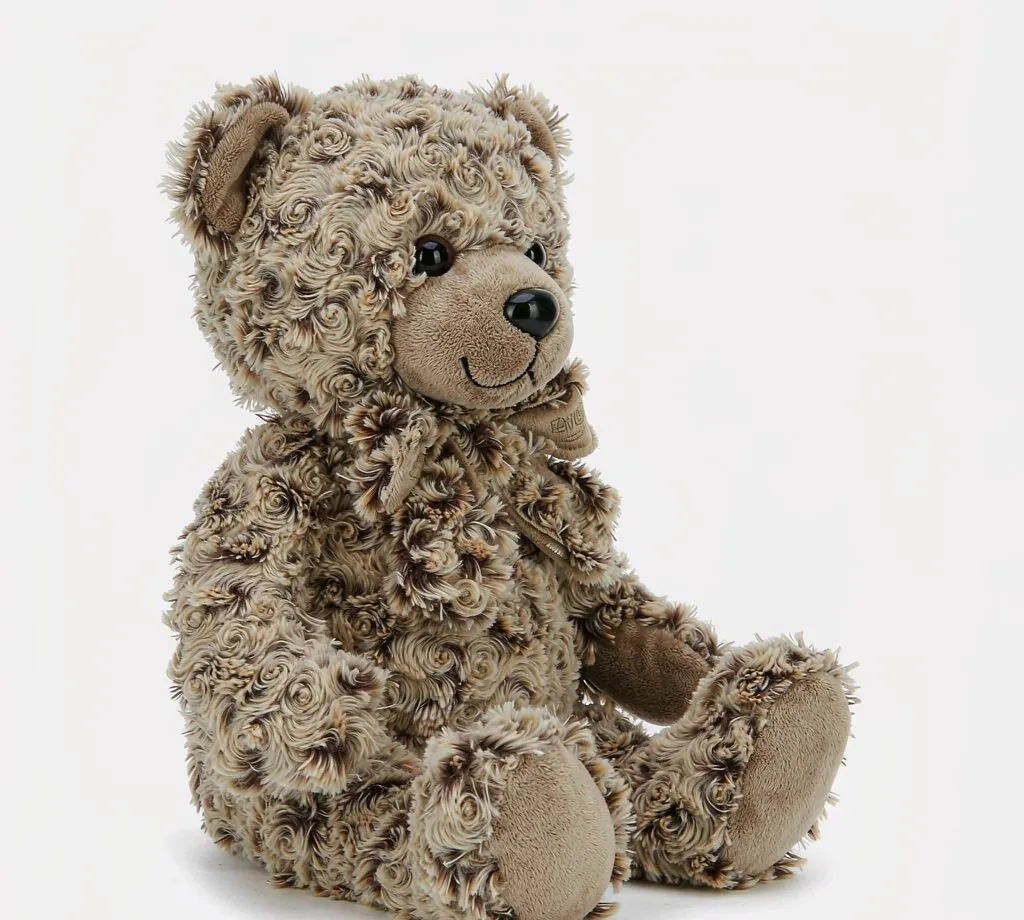 The photograph shows a representative unit of the category. Your fabric, size and trim follow the order sheet, and the image is illustrative rather than a picture of your goods.
We have sourced plush out of the Yangzhou belt and Shandong for five years. The same three failures repeat: filling weight quietly reduced between the approved sample and the bulk run, eyes and noses that come off under a pull a child will apply anyway, and seams that hold at the factory and split after one wash at home.
This page covers what the fabric and safety words mean, what belongs on the order sheet, and the checks that catch a weak lot before it leaves the floor. The wider cluster picture is in our wholesale toys overview.
Fabric, filling and trim: where quality hides
Fabric determines how the toy will look after a year, not on the day it ships. Short-pile plush is the workhorse surface and the easiest to keep clean; the softer long-pile grades photograph beautifully and mat down quickly under handling. Backing weight matters as much as pile height, because a light backing tears at the seam when the toy is stuffed firmly.
Filling is where cost is most easily removed without anyone noticing. A hollow fibre fill has a density measured in grams per cubic centimetre, and a run filled lighter feels flatter while weighing almost the same on a shipping scale. The reliable way to control it is to agree the fill weight per unit for each size and to weigh finished pieces against the approved sample.
Trim decides which age band the toy can carry. Embroidered eyes and noses are the safe route for anything aimed at children under three. Plastic eyes with a locking washer are common above that age, but they carry a pull test that the factory must actually perform, and a washer pressed on with the wrong tool passes a visual check and fails the test.
Specifications and minimum order
Our minimum order is 1 piece, so you can start with a single unit and scale up once the sample is approved. Every line below changes what the factory makes or how the toy is graded. We do not print prices or schedules here, because filling and labour costs move with the season; send us the size, the fabric and the quantity, and we come back with a live quotation and a firm slot.
| Specification | What to confirm before you order |
|---|---|
| Fabric | pile type and backing weight named on the invoice, with a swatch kept by both sides |
| Filling | fill weight per unit for each size, and the material the fill is made from |
| Eyes and noses | embroidered or plastic, with the fixing method and the age band it supports |
| Seam type | stitch density and the closure method on the final seam |
| Size | measured in a stated position, since a sitting toy and a lying toy differ |
| Labels | fabric composition, wash and origin labels, in the markets you actually sell into |
| Pedido mínimo | stated per size and per fabric, because each combination is its own cutting run |
Minimums in plush are driven by cutting and sewing lines rather than by tooling, so a mixed size order costs more to set up than a single size. Our sourcing service covers the factory screening, the sample round and the checks below.
How safety rules shape a plush order
Plush carries three test families. Mechanical tests cover seam strength and the pull and torque tests applied to eyes, noses and any attached part. Flammability tests measure how quickly the surface burns, which is why fabric choice is a compliance decision and not only a design one. Chemical tests cover restricted dyes and formaldehyde in the fabric and trim.
Age grading follows from those tests. A toy aimed below three years needs the smaller-part and pull requirements met in full, and it usually means embroidered features. A toy aimed at older children can carry plastic features, provided the test report says so for that exact configuration.
Two practical points cause most shipment disputes. Shipping a plush toy in a humid container without moisture protection is how a clean lot arrives smelling of damp. And metal detection at the end of the line is what proves no broken needle stayed in the filling, which is a factory discipline worth asking about rather than assuming.
What belongs in the purchase order
One page attached to the PO is what protects the reorder. Cover these points:
- Size measured in a stated position, with a tolerance in centimetres
- Fabric swatch and fill weight per unit, both sealed and retained by each side
- Trim specification with the fixing method and the age band it supports
- Label set for each market, including composition, wash, batch and origin wording
- Packaging that keeps moisture out for a sea container, not just a warehouse shelf
- A penalty clause if the bulk run differs from the approved sample
Inspection points that catch a weak lot
A photograph of a finished plush toy hides every failure that matters. These checks do not:
- Weigh against the sample. Weigh pieces drawn from the bulk. A lighter unit is a lighter fill, whatever the label says.
- Pull and twist the trim. Apply a firm pull and a twist to eyes, noses and bows on pieces from the bulk lot, not the sample room.
- Stress the seams. Pull the closure seam apart by hand. A seam that opens under hand pressure will open in a washing machine.
- One wash test. Wash and dry one bulk piece. This is the only check that exposes matting, colour bleed and shrinking at the same time.
- Smell and moisture. Open a carton deep in the stack and check for damp or odour before the container is sealed.
An independent inspection before loading is the cheapest point at which to catch all five, and the pre-shipment stage is where a defect still costs the factory money rather than yours. Factory inspection covers this category, and the wider method is set out in our quality control walkthrough.
Preguntas frecuentes
What size plush toy sells best?
It depends on the channel rather than on the toy. Small pieces sell as impulse and gift items, mid sizes carry licensed and character ranges, and large pieces sell where a photo has to do the selling on a screen. The reliable approach is to test two sizes in one order and let sell-through decide, which is also why a mixed size order is worth the extra setup.
Are plastic eyes acceptable?
Yes for toys aimed above the under-three band, provided the locking washer is fitted with the right tool and the pull test is carried out and documented. Below that age, embroidered features are the safer and cheaper answer, because they carry no pull requirement at all and never come off.
How do I keep plush toys from arriving damp?
Specify moisture protection in the carton, such as a desiccant and a poly bag over the piece, and ask for it in the purchase order rather than as a favour. Then open a carton from the middle of the stack at inspection. Damp damage shows up there long before it shows up on the top layer.
Request a quotation
Send the size, the fabric, the trim and the quantity you need, plus the market you sell into. We come back with factory options and current bands within two business days.
