Wholesale Team Kits from China
A full kit is two garments that have to behave like one product. The shirt and the shorts are often cut and sewn on different lines, sometimes in different workshops, and the customer judges them together in one dressing room. That structure is where the kit’s specific failures live: colour drift between the pieces, a size curve that pairs an XL shirt with an odd short, and seams that hold on the pitch for a season or not.
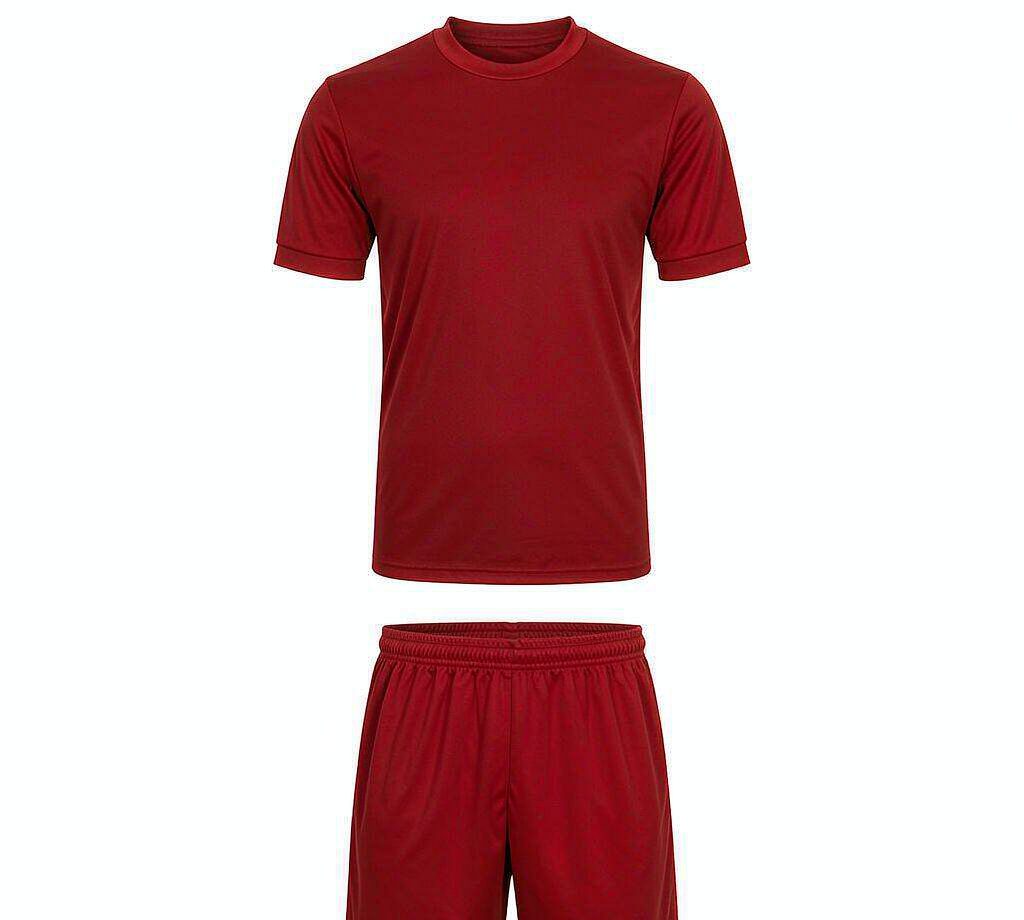 The photograph shows a representative kit from the category. Colours, size curve and branding follow the approved artwork, and the image is illustrative rather than a picture of your goods.
We have sourced kits out of Jinjiang for five years. The same three failures come back. Shorts dyed in a different lot from the shirts, so the kit reads as two shades. A size pairing that assumes every player is the same shape, which no team is. And a hem or a drawstring that survives the match but not the wash.
This page covers what the colour and sizing words mean, what belongs on the order sheet, and the checks that catch a weak lot. The factory towns behind the category are in our wholesale sportswear overview.
Colour lots, size pairing and construction
Colour is the first risk because the pieces travel different paths. A shirt and short dyed in separate lots can sit one shade apart, and the mismatch is visible across a whole team lined up together. The honest fix is to require one dye lot per colour across both garments, or to state a tolerance and verify it at inspection with the pieces side by side.
Size pairing is the second risk. Kits are ordered as sets, and the set logic has to be agreed: how many shirts per size and how many shorts, with the option to order the pieces separately for teams that need it. A fixed pairing that ignores the real distribution of player sizes is how warehouses end up with a wall of XL shorts and no mediums.
Construction is the third. Knit seams at stress points, collar and cuff trims that keep their stretch, and drawstrings that survive a wash all decide whether the kit lasts a season. Each is a line in the specification, and each is testable by hand on bulk pieces.
Specifications and minimum order
Our minimum order is 1 piece, so you can start with a single unit and scale up once the sample is approved. Every line below changes what the factory cuts. We do not print prices or schedules here, because fabric and trim inputs move; send us the design, the size pairing and the quantity, and we come back with a live quotation and a firm production slot.
| Specification | What to confirm before you order |
|---|---|
| Dye lots | one lot per colour across shirt and shorts, or an agreed tolerance |
| Fabric | weight in grams per square metre, named per garment |
| Size pairing | the ratio of sizes ordered, with the option to split pieces |
| Branding | logo methods per position, matched to the locked artwork |
| Trims | collar, cuff and drawstring styles, itemised |
| Care | the wash behaviour the kit must survive |
| Pedido mínimo | stated per design and colourway, since each is its own run |
Minimums in kits track cutting and printing setups, and one colourway across a full size curve is the most consistent way to start. Our sourcing service covers the factory screening, the sample round and the inspections below.
What the care and branding words mean
Care behaviour decides the second season. A kit that pilling-tests badly after three washes reads as cheap, and pilling is a property of the knit and the fibre, not the design. The wash test on bulk pieces, twice through a cycle, is the honest check, and it is cheap to run before the container sails.
Branding on a kit is a set of decisions: the crest, the number set, any sponsor positions. Each has a method, a position defined against a feature of the garment, and an approval that references the locked artwork. A number set printed at a drifting height across a size run is the detail players notice in the team photo.
Two practical points complete the set. Kit cartons travel to clubs, and a mixed carton is a distribution problem, so the packing list by size belongs in the specification. And sock and accessory add-ons change the sourcing scope, so deciding the full kit scope before production avoids a second order for one missing piece.
What belongs in the purchase order
One page attached to the PO is what protects the reorder. Cover these points:
- One dye lot per colour across both garments, or a stated tolerance
- Fabric weight per garment, named
- Size pairing ratios, with the option to order pieces separately
- Branding methods and positions, matched to the locked artwork
- Trim styles and the wash behaviour the kit must survive
- A penalty clause if the bulk run differs from the approved sample
Inspection points that catch a weak lot
These checks find what a product photograph cannot:
- Hold the pieces together. Compare shirts and shorts from bulk cartons side by side in daylight. A shade gap is the team-photo failure.
- Check the size curve. Measure the extreme sizes of both garments against the fit sample.
- Stress the seams. Pull the hems, cuffs and drawstrings on bulk pieces by hand.
- Wash one. Run a kit through two cycles and check pilling, colour and shape.
- Match the branding. Compare crest and number positions against the artwork across several sizes.
An independent inspection before loading catches all five at the cheapest point, and the colour check across pieces is the one that protects the kit’s whole point. Factory inspection covers this category, and the supply towns behind it are mapped in our sportswear factory guide.
Preguntas frecuentes
Can shirts and shorts be ordered separately?
Yes, and most serious programmes do, because player size distributions never match a fixed ratio. Ordering the pieces separately costs nothing in production and saves the wall of unmatched stock that fixed pairings produce.
How do I keep one colour across both garments?
Require one dye lot per colour across the kit, and verify it at inspection with the pieces side by side. Where that is not possible, agree a tolerance in writing, because a shade gap on a team kit is visible from the stand.
Should socks be part of the kit order?
Decide the full scope before production. Socks come from a different supply chain, and adding them after the kit ships means a second order, a second freight cost and a colour match that is harder to control. A full-kit decision early is the clean path.
Request a quotation
Send the design, the size pairing, the branding and the quantity you need, plus the market you sell into. We come back with factory options and current bands within two business days.