
Wholesale Sports Bras from China
The sports bra is the most technical garment in the activewear basket and the one where fit failures are least forgivable. A bra that supports a runner sells itself; one that rides up, digs or slips is returned regardless of how good the fabric looks. The category is built on narrow-gauge knits, elastic engineering and grading that has to hold across a wider size spread than any other garment.
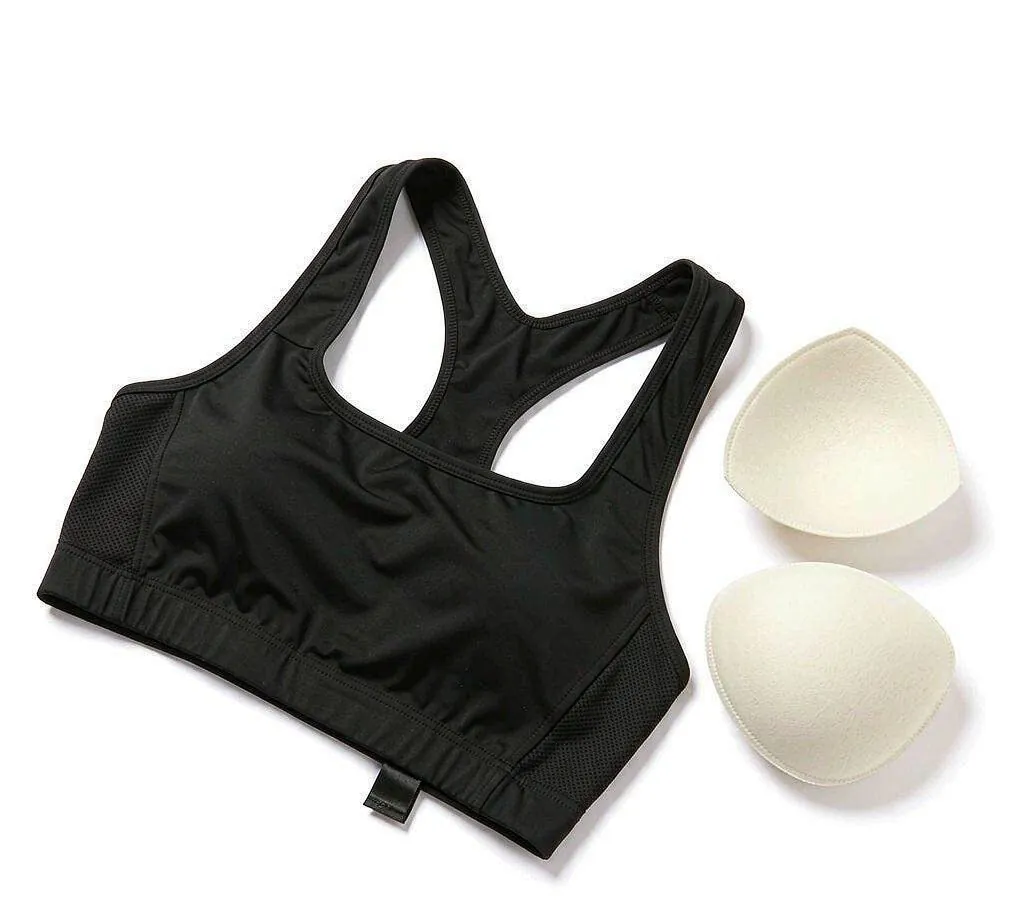 The photograph shows a representative piece from the category. Support level, band construction and colour follow the order sheet, and the image is illustrative rather than a picture of your goods.
We have sourced bras out of the Shantou knit belt for five years. The same three failures come back. An underband that passed the sample loses its recovery in bulk, which is the failure customers feel first. A strap that slipped on the sample slips on every piece, because the elastic spec was never written down. And a size run graded from a small base fits only its middle sizes.
This page covers what the support and elastic words mean, what belongs on the order sheet, and the checks that catch a weak lot. The wider category is in our wholesale sportswear overview.
Support, band and straps
Support level is the design frame. Light support suits yoga and studio work, medium suits training, and high support suits running, and each level is a construction decision, not a fabric colour. Compression builds, encapsulation builds and padded builds behave differently, and the level belongs on the order sheet because the packaging will claim it.
The underband does most of the work. Its elastic has to hold recovery after hundreds of stretch cycles, and a cheap elastic feels identical on the day it ships and dead within a month. The elastic spec, by width and recovery behaviour, belongs in writing, and the pull-and-release test on bulk pieces is how it is verified.
Straps are the comfort surface. A wide, slightly elastic strap spreads load; a narrow strap digs. Whether straps cross, convert or stay fixed is a design choice, but their elastic quality and attachment strength are specifications, because both are testable and both fail predictably.
Specifications and minimum order
Our minimum order is 1 piece, so you can start with a single unit and scale up once the sample is approved. Every line below changes what the factory builds. We do not print prices or schedules here, because elastic and knit inputs move; send us the support level, the size range and the quantity, and we come back with a live quotation and a firm production slot.
| Specification | What to confirm before you order |
|---|---|
| Support level | light, medium or high, named, matched to the construction |
| Underband | elastic width and recovery behaviour, stated and testable |
| Straps | width, elasticity and attachment strength, itemised |
| Cups | moulded or flat, with pad removal behaviour stated |
| Sizes | the range with the measurement chart, graded to fit the extremes |
| Trims | labels and seams positioned away from skin contact points |
| Pedido mínimo | stated per colour and size range, since each is its own knit run |
Minimums in this category track knitting and assembly setups, and one support level across a full size run is the most consistent way to start. Our sourcing service covers the factory screening, the sample round and the inspections below.
What the grading words mean here
Grading is where sports bras are hardest. The garment has to hold the same support behaviour across the whole size range, which means the elastics, the cups and the band all scale, not just the pattern outline. A run graded carelessly supports only its middle sizes, and the review says so in exactly those words. The chart per size, checked at the extremes on bulk pieces, is the honest verification.
Chafe and irritation are the fit failures that return silently. Labels and seams that sit where the band meets the skin, or a pad edge that shows through, read as discomfort rather than defect, and customers solve it by not reordering. Trim placement belongs on the specification.
Two practical points complete the picture. Pads are removed for washing and lost, so pad shape and a spare-set option are worth deciding before production. And the colour range interacts with fabric weight in the same way it does across activewear, so the opacity and see-through check applies to the lightest shade shipped.
What belongs in the purchase order
One page attached to the PO is what protects the reorder. Cover these points:
- Support level named and matched to the construction type
- Underband elastic width and recovery requirement
- Strap width, elasticity and attachment strength
- Cup construction and pad behaviour, with spares if offered
- Size chart per size, with grading verified at the extremes
- A penalty clause if the bulk run differs from the approved sample
Inspection points that catch a weak lot
These checks find what a product photograph cannot:
- Pull and release the band. Stretch bulk underbands repeatedly and watch the recovery. A dead elastic is the first-month failure.
- Stress the strap attachments. Pull straps hard at the join on bulk pieces. A weak attachment fails under load.
- Check the extremes. Measure the largest and smallest sizes against the chart, where grading shortcuts appear.
- Feel the interiors. Check label and seam placement against skin contact points on bulk pieces.
- Check pad fit. Insert and remove pads on bulk pieces and look for show-through and edge marks.
An independent inspection before loading catches all five at the cheapest point, and the underband recovery test is the one that predicts the reviews. Factory inspection covers this category, and the same verification discipline is set out in our pre-shipment guide.
Preguntas frecuentes
Which support level should a first order carry?
Medium. It covers training and studio use, which is where most retail volume sits, and it is forgiving of grading. High support is worth the construction cost for running ranges, and light support suits studio lines, but medium is the dependable first step.
Why does the band lose its grip?
Elastic quality. A band that feels correct on the day it ships can lose recovery within weeks if the elastic was substituted or the dyeing damaged it. The recovery requirement belongs on the order sheet, and the pull test on bulk pieces verifies it.
How wide should the size run be?
As wide as the grading can honestly support. The category’s failure mode is a run that only fits its middle, so it is better to grade a narrower range well than to print a wide range that supports nobody at the edges. The chart and the extremes check keep it honest.
Request a quotation
Send the support level, the size range, the colours and the quantity you need, plus the market you sell into. We come back with factory options and current bands within two business days.
