
Wholesale Stainless Double Pet Bowls from China
The double pet bowl looks like the simplest product in the pet trade and it carries the same hidden specification as human cookware: the grade of the stainless steel that touches food and water, every day, for years. Around that grade sit the details a buyer actually sees reviews about, which are edge comfort, weld quality and whether the bowls stay put when a dog eats enthusiastically.
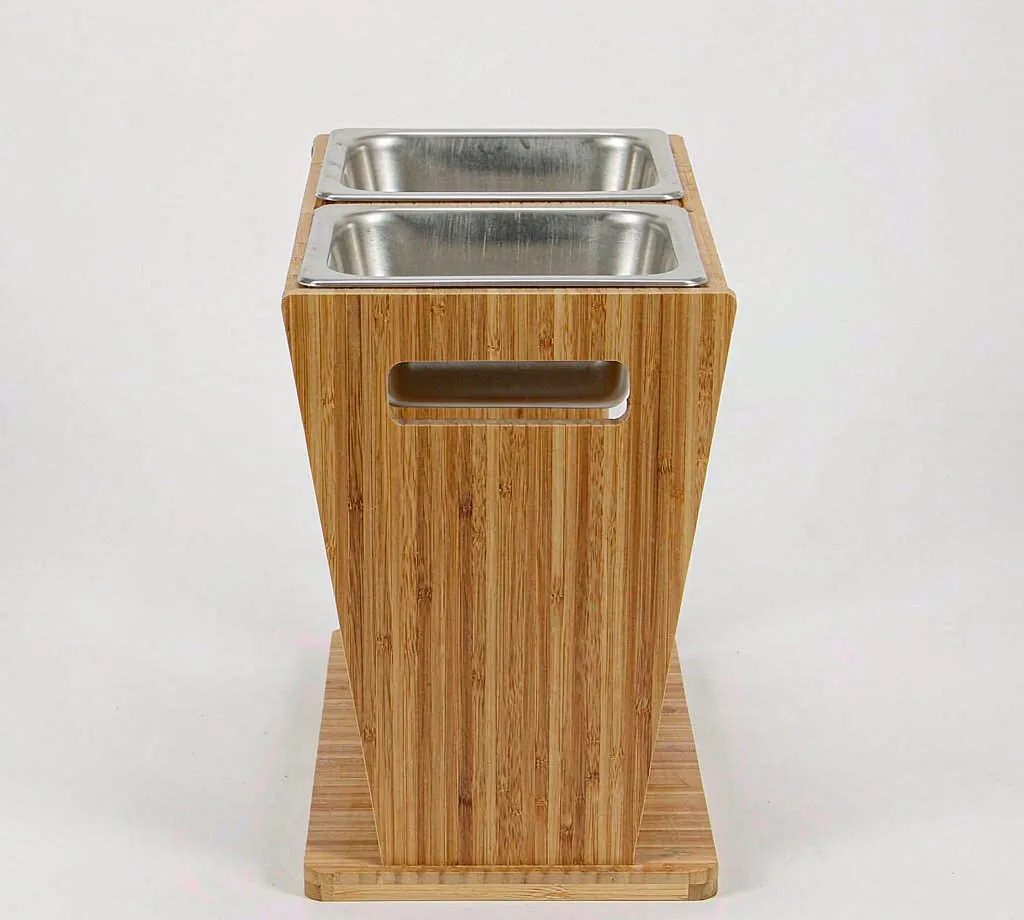 The photograph shows a representative set from the category. Bowl sizes and stand material follow the order sheet, and the image is illustrative rather than a picture of your goods.
We have sourced bowls from the Zhejiang clusters for five years. The same three failures come back. A bowl sold as 304 arrives as 201, which stains and pits within a season of wet food. A rim that was rolled smooth on the sample carries a sharp edge in bulk. And a stand that held the sample bowls grips the bulk ones loosely, so the bowls lift out mid-meal.
This page covers what the grade words mean, what belongs on the order sheet, and the checks that catch a weak lot. The wider category is in our wholesale pet supplies overview.
Grade, rim and stand
The grade is the specification. The 304 grade resists the corrosion that wet food and hard water produce; the 201 grade looks identical, costs less, and pits within a season. The grade belongs on the invoice, and the magnet check is the crude but effective first verification, because 304 is barely magnetic. A food-contact report for the actual grade belongs with the shipment.
The rim is where a pet’s mouth meets the bowl. A rolled rim is smooth and comfortable; a cut rim carries a burr that passes a visual check and scratches a tongue. The finger test along bulk rims is what catches it, and it takes seconds per bowl.
The stand decides the eating experience. Bowl sockets that grip loosely lift out mid-meal, and a stand that rocks on a hard floor does the same job for the dog. Anti-skid rings on the base are the standard answer, and the silicone compound belongs in the specification, because the cheap ones leave marks on floors and harden within a season.
Specifications and minimum order
Our minimum order is 1 piece, so you can start with a single unit and scale up once the sample is approved. Every line below changes what the factory builds. We do not print prices or schedules here, because steel prices move; send us the bowl sizes, the stand and the quantity, and we come back with a live quotation and a firm production slot.
| Specification | What to confirm before you order |
|---|---|
| Bowl grade | 304 named, with the food-contact report reference |
| Bowl sizes | diameter and depth per bowl, itemised |
| Rim | rolled and smooth, stated as a requirement with a finger test |
| Stand | bamboo, steel or plastic, with the socket fit checked against the bowls |
| Anti-skid | the ring material and whether it marks floors |
| Packaging | bowl protection in the carton, since rims dent in transit |
| Pedido mínimo | stated per size set, since each bowl diameter is its own pressing run |
Minimums in this category track pressing and welding setups, and one size set in one stand style is the most consistent way to start. Our sourcing service covers the factory screening, the sample round and the inspections below.
What the weld and finish words mean
The weld is where a bowl meets its mounting or where the stand joints meet, and a porous weld is a trap for food and a starting point for rust. The honest check is visual on bulk pieces under a light, plus a wipe test to feel for roughness. Welds are the detail that separates a bowl that lasts from one that stains at the joint.
Surface finish matters for cleaning. A brushed interior hides water marks and cleans well; a mirror finish shows every spot and looks dirty immediately. Neither is wrong, but the finish belongs on the order sheet because the reorder has to match, and a finish change between orders is a visible product change.
Two practical points complete the set. Bowls dent in transit because steel is thin where it is cheap, so the packing method decides the arrival quality. And capacity marks or sizing on the packaging have to match the bowls, because a feeding guide that overstates capacity generates the review that says the bowl is smaller than advertised.
What belongs in the purchase order
One page attached to the PO is what protects the reorder. Cover these points:
- Steel grade named as 304, with the food-contact report reference
- Bowl diameters and depths, itemised per size
- Rim requirement rolled and smooth, with the finger test at inspection
- Stand material and the socket fit against the actual bowls
- Anti-skid ring material, and the packing that protects rims
- A penalty clause if the bulk set differs from the approved sample
Inspection points that catch a weak lot
These checks find what a product photograph cannot:
- Magnet check the grade. A crude first check on bulk bowls against the 304 claim.
- Run a finger around every rim. Burrs on bulk rims are the complaint that arrives in week one.
- Fit the bowls to the stand. Seat bulk bowls into bulk stands. Loose sockets lift out mid-meal.
- Look at the welds. Check joints under a light and feel for roughness on bulk pieces.
- Push the stand. Test rocking and the anti-skid ring on a hard surface.
An independent inspection before loading catches all five at the cheapest point, and the grade check is the one that keeps a food-contact claim true. Factory inspection covers this category, and the same verification method is set out in our quality control walkthrough.
Preguntas frecuentes
Is 304 really necessary for a pet bowl?
Yes, for the same reason it matters in cookware: wet food and hard water corrode lesser grades within a season, and the staining reads as a quality failure. The grade is invisible and the difference is real, which is why it is named on the invoice and verified at inspection.
Why do bowls lift out of the stand?
Socket fit. The stand is often made by a different workshop from the bowls, and tolerance drift between the two shows up as loose bowls. Fit-checking bulk bowls into bulk stands at inspection is what catches it before the customer does.
Do anti-skid rings matter?
More than they appear to. A sliding stand is the complaint that photographs worst, because food ends up on the floor. The ring compound matters too: cheap rings harden and mark floors, so the material belongs in the specification.
Request a quotation
Send the bowl sizes, the stand style and the quantity you need, plus the market you sell into. We come back with factory options and current bands within two business days.
