
Wholesale LED Downlights from China
The downlight is the fitting that hides in the ceiling and gets judged from below. It sells to contractors by the cut-out size and to homeowners by the light it throws, and it fails on the one thing neither sees: the temperature inside the ceiling void, which decides how long the driver and the LEDs actually last.
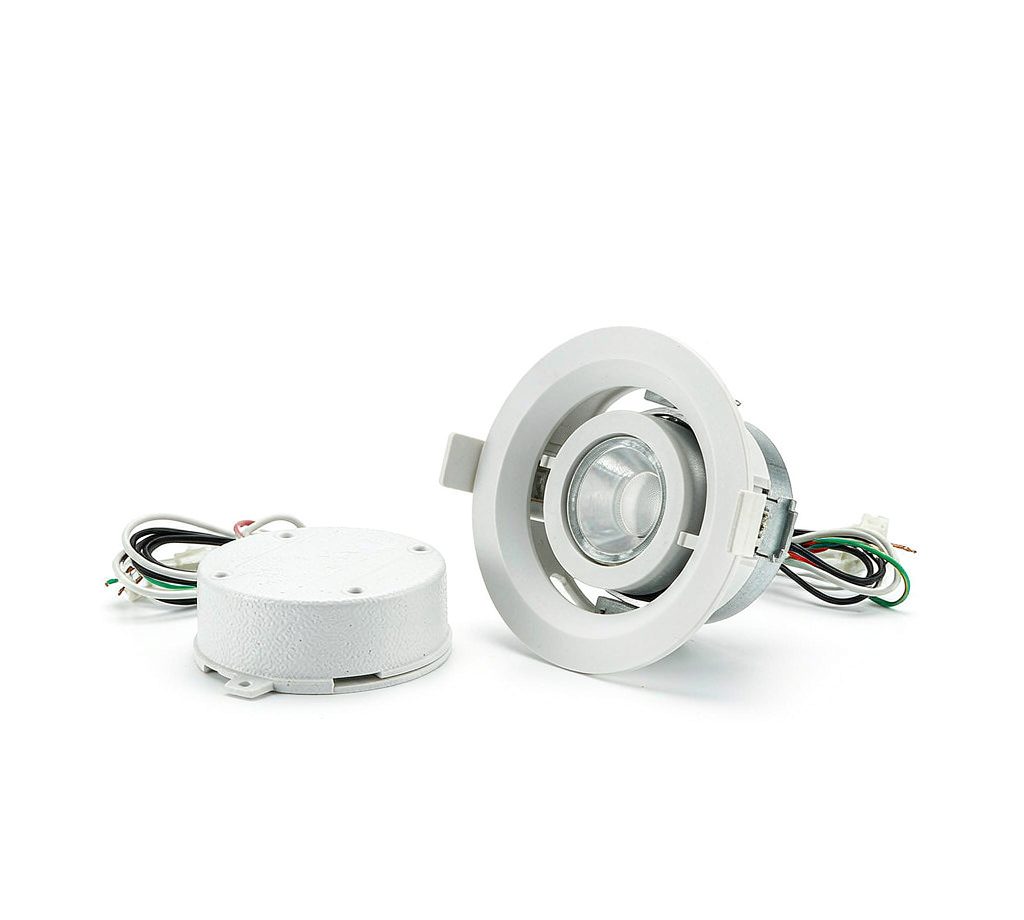 The photograph shows a representative fitting from the category. Cut-out size, trim finish and driver type follow the order sheet, and the image is illustrative rather than a picture of your goods.
We have sourced downlights out of Zhongshan and Jiangmen for five years. The same three failures come back. A heat sink sized to pass a bench test runs hot in an insulated ceiling and shortens the light’s life to a warranty claim. A spring clip that holds on the sample room ceiling falls out of a thick plasterboard one. And a fitting sold as dimmable stutters on the circuit it was never tested with.
This page covers what the thermal and optical words mean, what belongs on the order sheet, and the checks that catch a weak lot. The wider cluster picture is in our wholesale lighting overview.
Thermal design, optics and the cut-out
Heat is the design problem. An LED downlight converts most of its input into heat, and that heat has one way out: the heat sink behind the ceiling. Die-cast aluminium sinks spread heat far better than stamped steel, and the difference shows up as a temperature number after an hour of burning. A fitting that runs cool lasts; a fitting that runs hot dies early and takes the driver with it.
Insulated ceilings change everything. A fitting rated for free air can cook inside an insulated void, which is why some markets require an insulation-contact rating for fittings that touch insulation. If your market needs it, that rating belongs on the order sheet, because the build differs and the certificate follows the build.
The optics decide what the customer sees. A deep recessed reflector with a matte black baffle cuts glare and reads comfortable; a shallow fitting with the LED close to the trim is cheaper and harsher. Beam angle is the other variable: a narrow beam suits counters and artwork, a wide beam suits general rooms. Both belong on the order sheet as numbers.
Specifications and minimum order
Our minimum order is 1 piece, so you can start with a single unit and scale up once the sample is approved. Every line below changes what the factory builds. We do not print prices or schedules here, because driver and housing inputs move; send us the cut-out, the beam and the quantity, and we come back with a live quotation and a firm production slot.
| Specification | What to confirm before you order |
|---|---|
| Cut-out size | the hole diameter the fitting drops into, stated in millimetres |
| Thermal build | die-cast or stamped heat sink, and the insulation-contact rating if required |
| Driver | the driver type named, with dimmer compatibility listed if sold as dimmable |
| Beam angle | the beam in degrees, since it decides what the light is for |
| Anti-glare | deep recess or plain trim, which sets the glare the room feels |
| Trim finish | white, black or brushed, referenced to a physical sample |
| Pedido mínimo | stated per cut-out and finish, since each is its own die and run |
Minimums in this category track die ownership: a standard cut-out and finish runs from stock tooling, while a bespoke trim or size means new tooling. Our sourcing service covers the factory screening, the sample round and the thermal checks below.
What the dimming and rating words mean
Dimming is a pairing, not a feature. A dimmable downlight behaves on the dimmer types it was engineered against and misbehaves on others, which is why the compatibility list matters more than the word dimmable on the box. Ask which dimmer families the driver has been tested with, and put that list on the packaging if you sell to consumers.
Ratings follow the ceiling. Fire-rated fittings add a barrier that contains fire through the ceiling void, and they cost more because the build differs. Insulation-contact ratings decide whether the fitting can be buried in insulation. Both are market requirements rather than preferences, and both change the housing, so they belong at order time.
Two practical points finish the set. The spring clip is the part installers break first, and its wire gauge is worth a line in the specification. And the connector between driver and fitting is where electricians judge the product: a proper locking connector costs cents and reads as quality on every install.
What belongs in the purchase order
One page attached to the PO is what protects the reorder. Cover these points:
- Cut-out size and ceiling types the fitting is intended for
- Thermal build, including the insulation-contact or fire rating the market requires
- Driver type with the dimmer compatibility list, if sold as dimmable
- Beam angle and anti-glare build, stated as numbers
- Trim finish referenced to a sealed sample, with clip and connector spec
- A penalty clause if the bulk lot differs from the approved sample
Inspection points that catch a weak lot
These checks find what a product photograph cannot:
- Burn and measure. Run fittings for an hour and read the heat sink temperature. A hot fitting is a short life, whatever the box says.
- Test the clip. Fit the spring clip into a plasterboard sample of the stated thickness. Clips that slip are returns waiting to happen.
- Check dimming. Run dimmable samples on the dimmer types claimed. Stutter at low output is the most common complaint.
- Look at the beam. Light fittings against a wall and compare beam angle and glare against the sealed sample.
- Open one fitting. Check the driver label, the connector quality and the solder work inside a fitting from the bulk lot.
An independent inspection before loading catches all five at the cheapest point, and the thermal check is the one that decides whether the programme earns repeat business. Factory inspection covers this category, and the same verification method is set out in our pre-shipment guide.
Preguntas frecuentes
Which cut-out size covers most ceilings?
A small number of standard cut-outs covers most work, and it pays to hold to them across a programme: a standard hole is what electricians expect to find, and every non-standard size multiplies tooling and stock. Check what your market’s electricians already fit before choosing sizes.
Do I need fire-rated downlights?
It depends on the building regulations of the market and the ceiling the fitting goes into, not on the product. Where the regulation requires a barrier at the ceiling penetration, the fitting has to carry the rating and the certificate to match. Ask the question before the tooling, not after the container.
Why does the fitting flicker at low dimming levels?
Because the driver and the dimmer were never matched. Most dimming complaints sit at the bottom of the range, where the driver loses regulation. A compatibility list from the driver maker, tested against the dimmers actually installed, is the honest fix.
Request a quotation
Send the cut-out size, the beam angle, the finish and the quantity you need, plus the market you sell into. We come back with factory options and current bands within two business days.
