
Wholesale Countertop Blenders from China
The countertop blender is the small appliance with the biggest gap between its box and its bench test. The wattage on the carton, the material of the jug and the behaviour of the safety interlock are all claims, and all three are cheap to verify and expensive to discover in the customer’s kitchen.
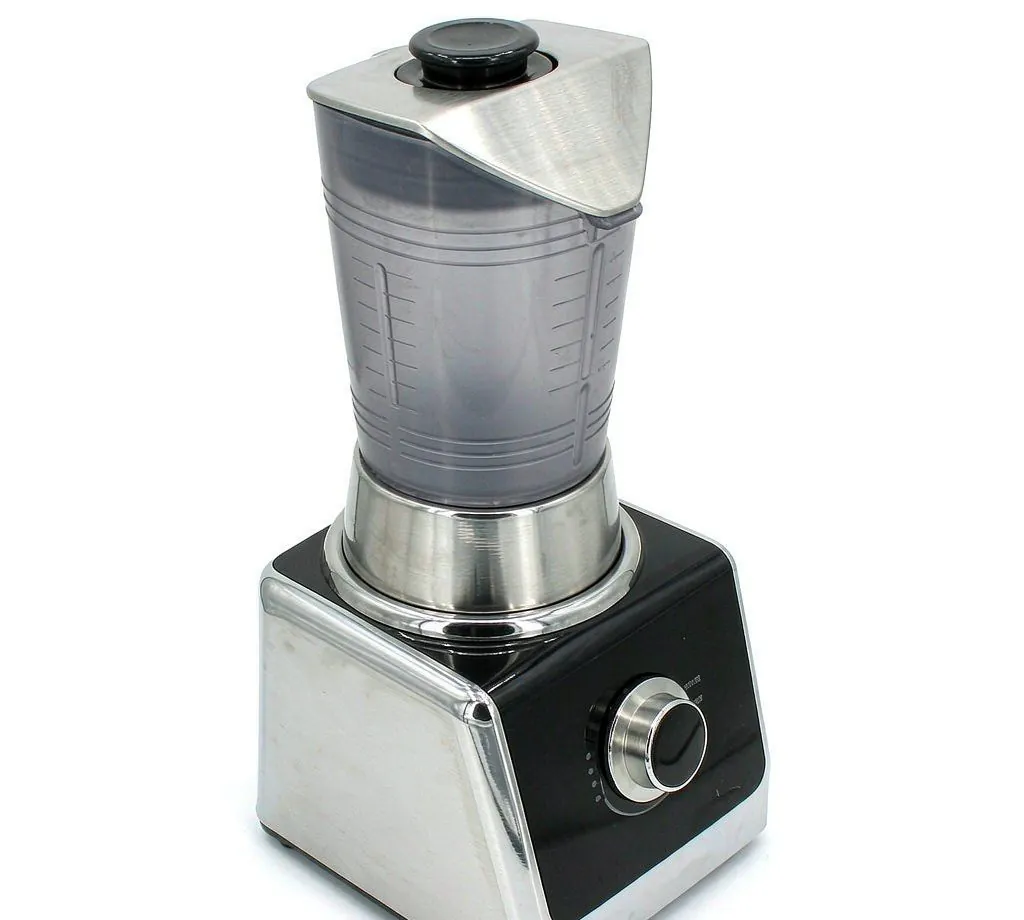 The photograph shows a representative blender from the category. Power rating, jug capacity and speed settings follow the order sheet, and the image is illustrative rather than a picture of your goods.
We have sourced blenders out of Shunde and Cixi for five years. The same three failures come back. A motor sold at one rating draws measurably less, because the figure on the box was aspirational. A jug sold as a premium copolymer is a generic polycarbonate that clouds and cracks within a season. And a safety lock that stopped the sample from running without the jug fitted is absent from the bulk run, which is a recall-shaped finding.
This page covers what the motor and jug words mean, what belongs on the order sheet, and the checks that catch a weak lot. The supply towns behind the category are in our wholesale kitchenware overview.
Motor, jug and the safety lock
The motor is specified by its rating, and the honest figure is the input power it actually draws under load. A wattage claimed without a load condition is marketing. The verification is a plug meter, and it takes seconds on bulk samples. The rating matters because it decides what the blender can crush, and the gap between the claim and the motor is the single most common quiet substitution in small appliances.
The jug is the part the customer touches. Premium copolymers stay clear and survive years of dishwashers; generic polycarbonate clouds, cracks and absorbs odours. The material belongs on the invoice by name, and the same logic applies to the blade assembly: a stamped blade holds its edge for a season, a forged one for years, and the difference is invisible in a listing photograph.
The safety interlock is the finding that changes a programme. A blender that runs with the jug off the base is a hazard in a house with children, and the markets that matter regulate it. The interlock costs little and it is the first thing removed from a build that is being squeezed, which is why the test belongs in every inspection.
Specifications and minimum order
Our minimum order is 1 piece, so you can start with a single unit and scale up once the sample is approved. Every line below changes what the factory builds. We do not print prices or schedules here, because motor and material inputs move; send us the capacity, the rating and the quantity, and we come back with a live quotation and a firm production slot.
| Specification | What to confirm before you order |
|---|---|
| Motor rating | the wattage claimed, stated as input power under load, verifiable on bulk units |
| Jug material | the copolymer named, with the food-contact report reference |
| Blade | stamped or forged, with the bearing and seal spec |
| Safety lock | the interlock requirement stated, and the test it must pass |
| Controls | speed settings and pulse, as a build detail the artwork names |
| Approvals | the electrical approval for each market, naming the exact build |
| Pedido mínimo | stated per rating and jug, since each is its own assembly run |
Minimums in small appliances track motor procurement and assembly line setups, and one rating in one jug capacity is the most consistent way to start. Our sourcing service covers the factory screening, the sample round and the verification tests below.
What the approval words mean in practice
Electrical approvals are build-specific. A certificate names the exact motor, wiring and switch configuration it was issued for, which is why a component substitution late in production can invalidate the paperwork that ships with the goods. The honest check is to read the certificate at the factory and match it to the units on the line, which is exactly what a pre-shipment inspection does.
Overheat protection is the quiet feature that decides returns. A motor that thermal-cuts during a long blend frustrates customers; a motor that fails without cutting out is a hazard. The continuous-run test at inspection, blending a real load until the motor settles, is the honest check on both.
Two practical points complete the set. Ice crushing is the test customers run on day one, so it belongs in the sample approval rather than in the hope that the rating is real. And the jug-to-base coupling is the part that wears first; a coupling that loosens after a handful of mounts generates the returns that reviews amplify.
What belongs in the purchase order
One page attached to the PO is what protects the reorder. Cover these points:
- Motor rating as input power under load, verifiable on bulk units
- Jug material named, with the food-contact report reference
- Blade type and the bearing and seal specification
- Safety interlock requirement and the test it must pass
- Electrical approval references matching the exact build shipped
- A penalty clause if the bulk build differs from the approved sample
Inspection points that catch a weak lot
These checks find what a product photograph cannot:
- Read the wattage. Plug bulk units into a power meter under a real load. The gap between the claim and the draw is the substitution.
- Test the interlock. Try to run each bulk unit with the jug off. A missing interlock is a hazard finding, not a quality note.
- Crush ice. Run the ice test the customer will run. A motor that stalls or overheats fails on day one.
- Run it long. Blend a real load continuously and check for thermal cutout or odour from the motor.
- Mount the jug. Work the jug onto the base repeatedly and check the coupling for looseness.
An independent inspection before loading catches all five at the cheapest point, and the interlock test is the one that protects the programme from a recall-shaped surprise. Factory inspection covers this category, and the supply towns behind it are mapped in our kitchenware hotspots guide.
Preguntas frecuentes
Does the wattage on the box matter?
The honest figure does, and it has to be read under load. A blender that claims a high rating and draws half of it stalls on ice, and the customer discovers the gap before the first smoothie is finished. The plug meter check at inspection is the whole solution.
Which jug material should a retail programme carry?
A named premium copolymer for anything sold on clarity and dishwasher life, with the food-contact report to match. Generic polycarbonate is the quiet substitution in this category, and it shows up as clouding within a season of use.
Are safety interlocks standard?
In the markets that regulate them, effectively yes, and in every market they are the right build. The interlock costs little at the factory and prevents a class of injury that no brand wants to own. Test it on the bulk lot, because it is also the first feature removed under cost pressure.
Request a quotation
Send the capacity, the motor rating, the jug material and the quantity you need, plus the market you sell into. We come back with factory options and current bands within two business days.
