
Wholesale PU Handbags from China
A handbag is bought on sight, which is why this category lives or dies on material and finish rather than on structure. Two bags can share a pattern and look like different products entirely because one used a PU with a convincing grain and a matched hardware finish and the other did not.
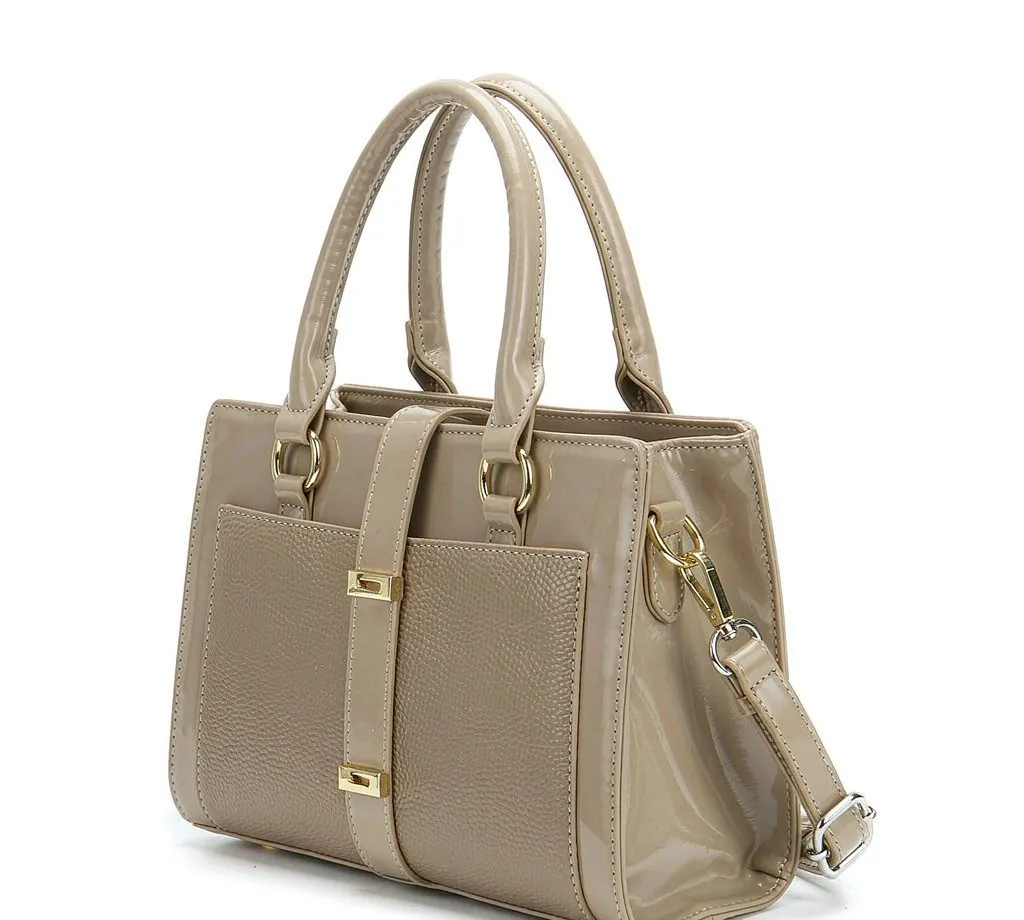 The photograph shows a representative handbag from the category. Colour, hardware finish and lining follow the approved sample, and the image is illustrative rather than a picture of your goods.
We have sourced PU and mixed material handbags out of the Guangdong and Zhejiang clusters for years. Three failures repeat. A PU sold at a stated thickness arrives thinner and cracks at the fold line within a season. Hardware delivered in one finish on the sample arrives in three slightly different golds across the bulk. And a lining that matched the sample in colour arrives a shade off, which shows the moment the bag is opened.
This page covers what the material and hardware words mean, what belongs on the order sheet, and the checks that catch a weak lot. The supply base behind the category is in our wholesale bags and luggage overview.
Material, hardware and the finish chain
PU is a coated fabric, so its quality is a question of the backing cloth, the coating thickness and the surface treatment that imitates a grain. Thickness in millimetres is the headline number, and it decides whether the material folds without cracking. Below the number, the backing decides how the bag holds a shape and how it behaves when stitched.
Hardware is the second half of the perceived quality, and it fails in a specific way: colour variation between batches. A bag with a zip pull, a ring and a clasp in three different golds looks cheap even when each part is well made. Matching the finish across every metal part is a specification, not a detail.
Linings and stitching carry the interior. A lining that is a shade off the sample, or thinner than the sample, is visible every time the bag is opened. Stitching at the top edge and along the strap joins is where a bag is judged by anyone who looks closely.
Specifications and minimum order
Our minimum order is 1 piece, so you can start with a single unit and scale up once the sample is approved. Every line below changes what the factory cuts and assembles. We do not print prices or schedules here, because material and hardware inputs move; send the shapes, the material grade and the quantity, and we come back with a live quotation and a firm production slot.
| Specification | What to confirm before you order |
|---|---|
| Material | PU thickness in millimetres, backing cloth and surface grain |
| Flex behaviour | how the material performs at the fold lines under repeated flexing |
| Hardware | every metal part named, in one matched finish |
| Zip | size, slider grade and whether the pull is metal or covered |
| Lining | fabric, weight and colour, referenced to the approved sample |
| Construction | reinforcement in the base, and how straps are attached |
| Pedido mínimo | stated per colour and per style, since material is ordered in rolls |
Minimums in handbags are driven by the material roll and the hardware order, which is why a tight colour range across a few shapes is the cheapest way to start. Our sourcing service covers the factory screening, the sample round and the inspections below.
What the material words mean in practice
Thickness and softness pull against each other. A thick PU holds a structured shape and resists creasing; a soft PU drapes and photographs beautifully but shows every fold. Neither is better in the abstract, and the choice belongs to the shape rather than to the price.
Crack resistance is the property customers discover late. PU fails by cracking along a fold line, and the fold at the top of a bag flexes every time it is opened. Repeated flexing of a bulk swatch at the fold line is a crude test that predicts the failure well.
Colour matching completes the picture. Material, lining and hardware are produced by three different suppliers, and matching them depends on a physical standard rather than a screen or a code. Keeping an approved set on file is what makes a reorder match a first order.
What belongs in the purchase order
One page attached to the PO is what protects the reorder. Cover these points:
- Material thickness, backing and grain, referenced to an approved swatch
- Every metal part listed, in one named finish
- Lining fabric, weight and colour
- Base reinforcement and how straps are attached
- Zip size and slider grade
- A penalty clause if the bulk run differs from the approved sample
Inspection points that catch a weak lot
These checks find what a product photograph cannot:
- Flex a swatch. Fold a bulk swatch along its grain and work it back and forth. Cracking shows at the fold before it shows on a bag.
- Line up the hardware. Put every metal part from one bulk bag side by side under a single light. Mismatched finishes are obvious in a group.
- Compare the lining. Hold the bulk lining against the approved sample, in daylight rather than under a shop lamp.
- Open and close a bag. Work the top fold and the closure repeatedly. This is the motion that finds thin material.
- Tug the strap anchors. Load a bulk bag and lift it by the strap, then inspect the stitching at both ends.
An independent inspection before loading catches all five at the cheapest point. Factory inspection covers this category, and the wider system is set out in our guide to pre shipment inspection.
Preguntas frecuentes
How do I keep hardware colours consistent?
Name one finish for every metal part and hold an approved physical sample. Variation comes from different plating batches and from parts supplied by different vendors, so the control is a standard both sides keep rather than a code on a drawing.
Will PU crack?
PU cracks at fold lines when the coating is thin or the material is flexed cold. Thicker material with a flexible backing lasts longer, and the useful test is repeated flexing of a bulk swatch along the fold rather than a visual check.
Should I order in one colour or several?
Material is ordered in rolls and priced accordingly, so a tight colour range costs less and matches more consistently. Several colours across one shape spreads the same setup across more stock, which is a decision about your market rather than the factory.
Request a quotation
Send the shapes, the material grade, the hardware list, the lining specification and the quantity you need, plus the market you sell into. We come back with factory options and current bands within two business days.
