
Wholesale Scented Candles in Glass from China
The scented candle in a glass vessel is the margin hero of the home fragrance shelf, and it is a system product: wax blend, fragrance load, wick, vessel and burn behaviour must agree, or the candle tunnels, soots or cracks its own glass. Buying the parts separately and hoping is how brands end up with a beautiful product that burns badly.
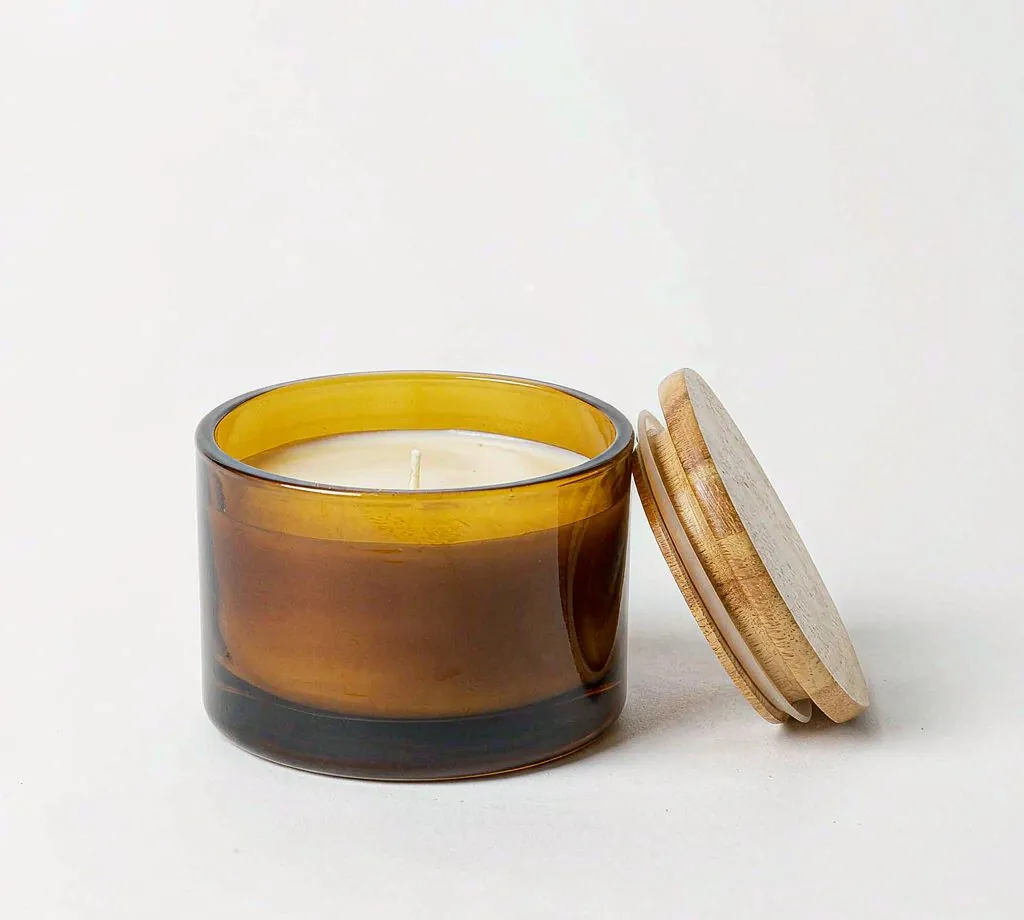
The failures: a fragrance load the wax cannot hold, so the oil sweats out or the scent throws weakly. A wick sized for a different wax, so the candle tunnels down the middle. Or a vessel that cracks on the first burn because it was a food jar, not a candle vessel, in a previous life.
All three are caught by a burn protocol. The category context is in our wholesale home goods overview.
Wax, fragrance and wick as one system
Wax divides into soy and soy blends, paraffin and coconut blends, each with its own melt point and fragrance carrying capacity. Fragrance load is a percentage, and every wax has a ceiling above which the oil separates. The wick is sized to the wax and the vessel diameter together, and changing any one of the three means re testing the other two.
The vessel is a thermal component. A candle vessel is annealed and tested for heat; a food jar of the same shape is not, and the difference shows as a crack running up the wall on the first or second burn. State the end use, because the same glass can be produced to either standard.
Specifications and minimum order
Wax and fragrance oil prices move with agricultural and petrochemical markets, so live figures come with the quotation. Fix these points.
| Specification | What to confirm before you order |
|---|---|
| Wax | Blend named, with the melt point |
| Fragrance | Load as a percentage, oil source and the IFRA compliance |
| Wick | Type and size, matched to the wax and vessel diameter |
| Vessel | Thermal standard for candle use, with the thickness named |
| Burn protocol | Full burns to the bottom, tunnelling and soot standards |
| Labels | Safety labelling to the destination market’s candle rules |
| Pedido mínimo | Moderate; the vessel mould and fragrance batching set the floor per scent |
Our minimum order is 1 piece, so a burned sample is approved before any production commitment. The production minimum follows the vessel and fragrance batching, and we confirm it against your scent list. Our sourcing service coordinates the filling plant, the vessel maker and the fragrance house.
The burn test is the product
A candle’s quality is invisible until it burns, which makes the burn protocol the acceptance test: burn full cycles to the bottom of the vessel, watch for tunnelling, soot and flame stability, and check the glass after each cycle. Factories that burn test per batch ship candles that perform; factories that trust the formula ship the complaints.
Fragrance compliance is the second paper trail. Fragrance oils carry their own safety standards, and the destination market’s candle labelling rules apply to the finished product. Our quality assurance service assembles the paper trail with the burn protocol.
What belongs in the purchase order
- Wax blend with melt point, and the fragrance load as a percentage
- Wick type and size, matched to the wax and vessel
- Vessel thermal standard for candle use, named
- Burn protocol with pass standards for tunnelling and soot
- IFRA and labelling compliance for the destination market
- Packing: lid, carton dividers and heat limits in transit
Checks that catch the repeat failures
- Full burn. Burn bulk candles through several full cycles; tunnelling and wick drown show by the third.
- Glass check. Inspect the vessel wall after each burn cycle; hairline heat cracks show before failure.
- Soot test. Check the vessel mouth and lid for soot; a wick too large is the usual cause.
- Cold throw and hot throw. Judge scent both unlit and burning; a weak hot throw means the load or wax pairing is off.
- Weight check. Weigh bulk candles against the fill specification; wax is the product and the cost.
These checks are standard work in a pre shipment inspection, and our factory inspection service covers candle filling plants. For the fuller method, see our pre shipment inspection guide.
Preguntas frecuentes
Why does my candle tunnel?
The wick is too small for the wax and vessel diameter, or the first burn was too short to reach the edge. The first is fixed at specification, the second by customer education on the label. Both are visible in the burn protocol before shipping.
Can I use any glass jar?
No. A candle vessel is annealed and thermally tested; a food jar of the same look is not, and it cracks in service. Buy the glass as a candle vessel and keep the certificate. Our minimum order is 1 piece for sampling the complete candle.
How much fragrance is right?
Whatever the wax blend can carry, expressed as a percentage and verified in the burn. More oil beyond the ceiling does not add scent; it sweats out or fouls the wick. We size the load to the wax, then verify the hot throw in the protocol.
Request a quotation
Send the vessel style, wax preference and scent direction. We come back with system options plus the workable minimum within two business days.
