
Wholesale Glass Jars with Lids from China
The glass jar is the container of choice where the product is the picture: honey, preserves, spices, candles, skincare and specialty drinks. Glass is inert, heavy and fragile in that order of importance, and every problem in the category comes from one of those three properties, from food contact compliance to cartons that arrive with a percentage of breakage.
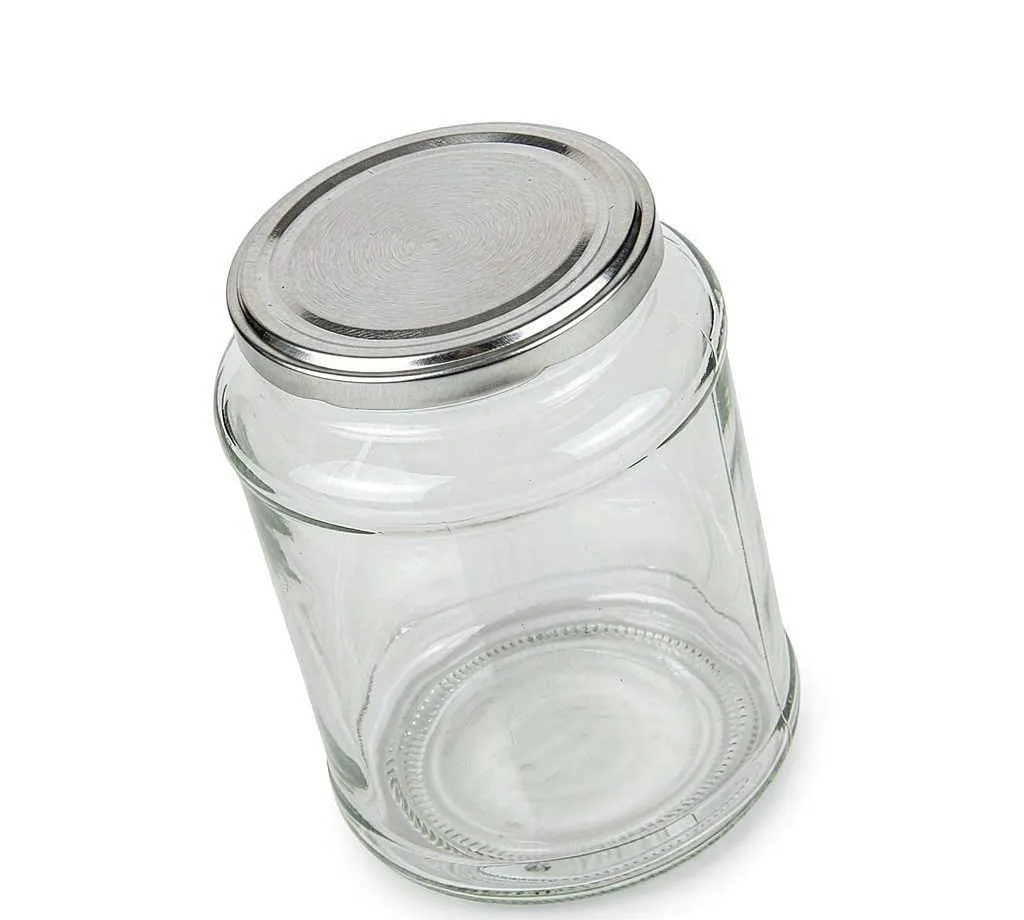
The recurring failures: the lid liner reacts with an acidic or oily product, the jar walls vary in thickness enough to break in filling lines, or the pallet arrives short because breakage inside the cartons was never counted at loading. All three are manageable at the factory, and all three are expensive to discover in your own warehouse.
This page covers the specification and the checks; the wider supply picture is in our wholesale packaging overview.
Glass, lid and the fit between them
Jars are made on a glass forming machine from flint (clear), amber or opal glass, and the colour is part of the recipe, not a coating. Capacity in millilitres and finish size, the threaded top diameter, are the two numbers that define a jar. The finish must match the lid exactly, and most lid suppliers are separate companies from the glass plant, so the pair is matched and tested rather than assumed.
Lids are tinplate or aluminium with a liner inside: plastisol for a vacuum seal in canning, foam for general use, or a specialist liner for essential oils. Candle brands care about a different set of properties again, mainly thermal shock, since a jar that cracks on the first burn is a returns generator.
Specifications and minimum order
Glass and tinplate prices track energy and raw material markets, so live figures come with the quotation. Fix these points on the PO.
| Specification | What to confirm before you order |
|---|---|
| Glass colour | Flint, amber or opal, named as the glass recipe |
| Capacity | Millilitres to the fill line, with the tolerance |
| Finish | Thread diameter and style, matched to the chosen lid |
| Wall uniformity | Distribution standard, because thin spots break in filling lines |
| Lid type | Tinplate or aluminium, with the liner named for the product |
| Food contact | Stated requirement and test for the jar and the liner separately |
| Pedido mínimo | Glass furnaces run continuously, so factories quote in the thousands per shape; stock shapes carry far lower minimums |
Our minimum order is 1 piece, so the jar and lid pair is sampled and approved before any production commitment. For the run, a stock shape keeps the minimum low; a bespoke mould is a different conversation, and we confirm both figures in writing. Our sourcing service coordinates the glass plant and the lid supplier as one package.
Thermal shock is the candle brand’s problem
A candle jar is a pressure vessel in slow motion: heat from the flame, a cool wall, and a thickness variation between the two. Jars sold as candle vessels are annealed and tested for thermal shock separately from food jars, and using a food jar for candles because the shape is nice is exactly how cracks happen. State the end use, because the same jar shape can be produced to either standard.
Breakage in transit is the second structural issue, and it is a packing specification as much as a glass one: divider material, carton strength and the pallet pattern decide what arrives. Our packing service handles this layer for clients who consolidate glass with other goods.
What belongs in the purchase order
- Glass colour and capacity with tolerances, and the finish size matched to the lid
- Wall distribution standard for filling line compatibility
- Lid material and liner, named for the actual product chemistry
- Food contact tests for jar and liner separately, if the use is food
- Thermal shock requirement, if the use is a candle
- Packing spec: dividers, carton compression strength and the maximum breakage rate agreed
Checks that catch the repeat failures
- Weight per jar. Weigh bulk jars against the sample; a lighter jar means thinner walls somewhere.
- Wall check. Hold a jar to the light and look for thin spots at the heel and shoulder, the two break points.
- Lid torque and seal. Fill with water, lid, invert and leave overnight. Seepage shows a liner or finish mismatch.
- Thermal test. For candles, burn one bulk jar down past half. A weak jar cracks before the bottom.
- Breakage count at loading. Count breakage in a sample of cartons during the loading inspection, not after the container arrives.
Glass is the category where a loading inspection pays for itself fastest, and our factory inspection service covers it. For the wider inspection method, see our pre shipment inspection guide.
Preguntas frecuentes
Can I get a custom jar shape?
Yes, through a mould, and the mould cost and the furnace commitment are why custom shapes carry higher minimums than stock shapes. A stock jar with custom lid colour and print is the standard first step. Our minimum order is 1 piece for sampling either route.
Which lid liner for honey or pickles?
Acidic and oily products each have their own liner families, and the wrong liner is what produces lid corrosion or taste transfer. Name the product on the PO, have the liner specified against it, and run a filled shelf life test before the bulk run.
How is breakage handled commercially?
It is agreed as a maximum rate in the packing specification and verified at loading. The factories that control it well pack to a pallet pattern with dividers; the ones that do not treat breakage as your freight problem. We write the rate into the order either way.
Request a quotation
Send the product, the capacity you need and the end use, food or candle. We come back with jar and lid options plus the workable minimum within two business days.
