
Wholesale 6205 Deep Groove Ball Bearings from China
The 6205 bearing is one of the most produced machine components on earth: a twenty five millimetre bore deep groove ball bearing that lives in motors, pumps, wheels and gearboxes. It is also the category where precision marketing meets a wide quality spectrum, because a bearing is a geometry product, and geometry tolerances at the micron level decide noise, heat and life.
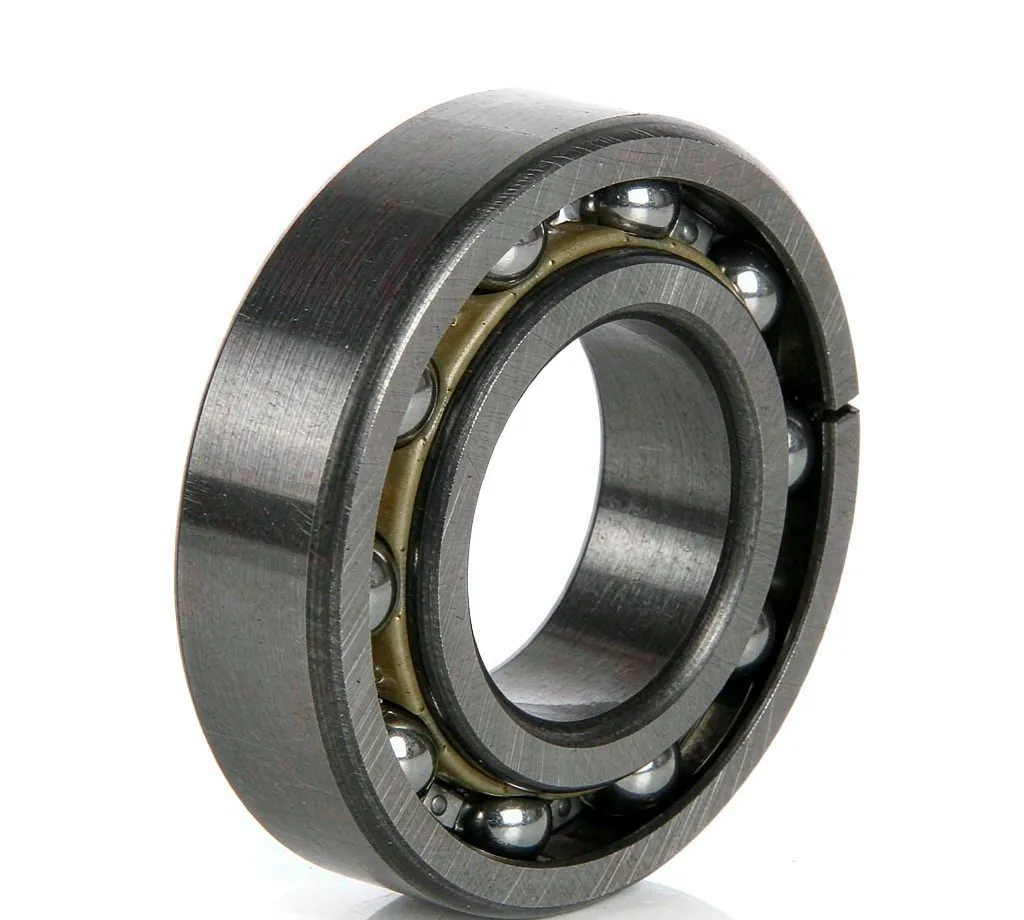
The failures: bearings that run loud because the raceway finish was skipped, clearance classes that do not match the application, seals that leak grease into the product, and steel whose cleanliness was a cost saving. A bearing complaint arrives as noise, and the diagnosis is a specification story.
All three are testable. The category context is in our industrial supplies overview.
Steel, geometry and clearance
Bearing steel is a clean, through hardened chrome steel, and its cleanliness and hardening are the invisible foundations. The geometry story is the raceway and ball finish, measured in micro inches, and the noise test, spinning the bearing by hand or on a rig, is its audible verdict. Clearance classes, C0 to C3, describe the internal fit between balls and races, and the right class depends on the fit and the temperature the application runs at.
Seals and shields close the design: metal shields for grease retention in clean service, rubber seals for contamination exclusion, open for lubricated housings. Cage material, pressed steel or polymer, is the remaining line, and it decides speed limits as much as price.
Specifications and minimum order
Steel prices move with the metals market, so live figures come with the quotation. Fix these points.
| Specification | What to confirm before you order |
|---|---|
| Steel | Through hardened chrome steel, with the hardness standard |
| Geometry | Raceway finish and the dimensional tolerances stated |
| Clearance | C0, C2 or C3, matched to the application fit and temperature |
| Sealing | Metal shield, rubber seal or open, per service condition |
| Cage | Pressed steel or polymer, with the speed expectation |
| Noise | Noise and vibration standard, tested on a rig |
| Pedido mínimo | Thousands per size in practice; the production line runs fast once tooled |
Our minimum order is 1 piece, so a spun, measured sample is approved before any production commitment. The production minimum follows the size and tooling, and we confirm it against your application. Our sourcing service screens the bearing plants, which separate sharply into measured production and catalogue assembly.
The noise test is the honest verdict
A bearing’s quality is audible before it is measurable: spin it on a rig and listen, or run the vibration meter across a batch. Raceway finish, ball grade and grease quantity all speak through the noise signature, and the test takes seconds per unit, which makes it the standard screening tool for bulk lots.
Clearance class is the second engineering decision. The wrong clearance shows as heat in a tight housing or as play in a loose one, and the application decides the class, not the price list. Our quality assurance service writes the noise and dimensional checks into the order.
What belongs in the purchase order
- Steel and hardness standard
- Dimensional tolerances and raceway finish expectations
- Clearance class matched to the application
- Seal or shield type per service condition
- Cage material and the speed expectation
- Noise and vibration standard tested on bulk units
Checks that catch the repeat failures
- Noise rig. Spin bulk bearings and listen or meter; raceway finish speaks immediately.
- Dimension check. Measure bore, outer diameter and width on bulk samples against the tolerance class.
- Clearance feel. Rock the inner ring and compare against the class expectation.
- Seal and grease check. Inspect seals and cut one open; grease quantity and fill answer the preservation question.
- Hardness spot check. Test bulk raceway hardness against the standard.
These checks are standard work in a pre shipment inspection, and our factory inspection service covers bearing plants. For the fuller method, see our pre shipment inspection guide.
Preguntas frecuentes
Which clearance class do I need?
The one the application’s fit and operating temperature call for: C0 for standard fits, C3 for tighter housings or hotter running. The application decides, and we match the class rather than defaulting to the cheapest. Our minimum order is 1 piece for sampling any class.
Why do cheap bearings run loud?
Raceway finish and ball grade. The noise is the audible trace of geometry that was never finished to spec, and the rig test on bulk units hears it before your customer does.
Seals or shields?
Seals for contamination and long life, shields for lower friction in clean service. Match the choice to where the bearing will actually live, and put it on the PO rather than the packaging.
Request a quotation
Send the size, clearance class and service conditions. We come back with factory options plus the workable minimum within two business days.
