
Wholesale Cutting Discs from China
A cutting disc is a consumable with a safety rating, and the two facts belong together. It is bought cheaply and in quantity, it disappears in minutes of use, and if it is built badly it fails at speed next to an operator’s hands. That combination makes this category one where the paperwork matters as much as the abrasive.
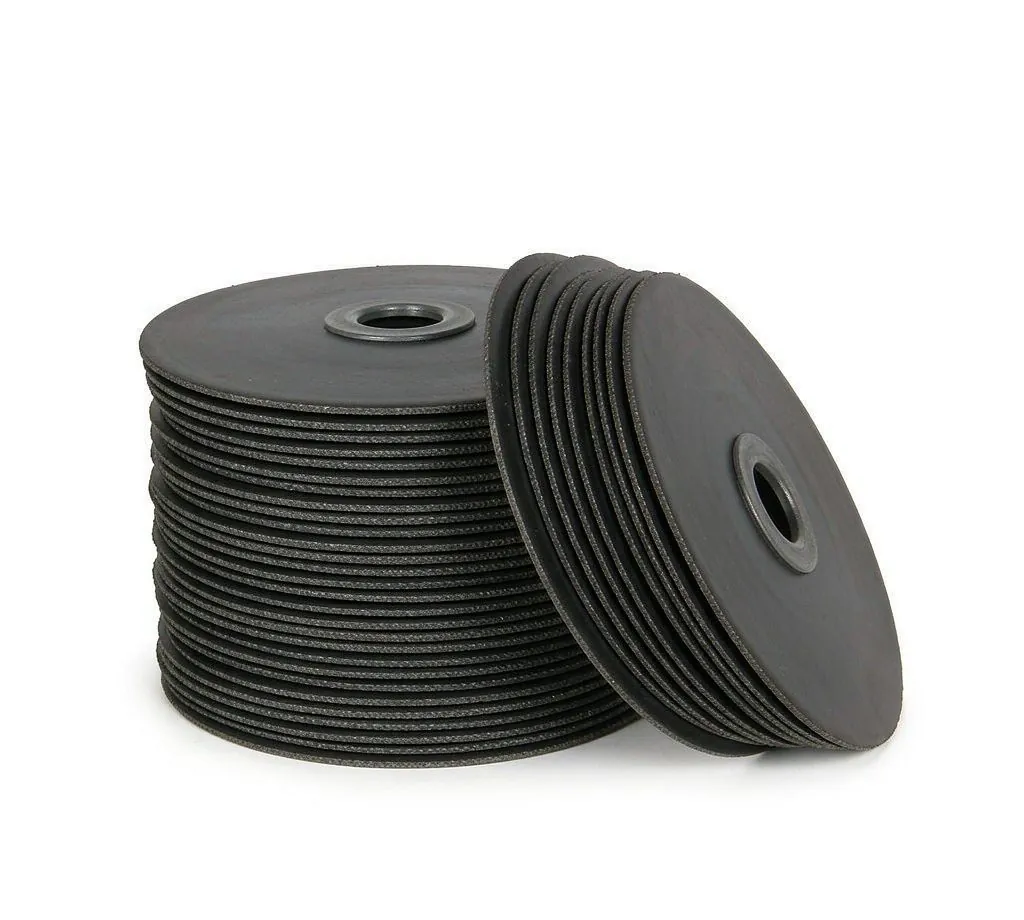 The photograph shows a representative disc from the category. Diameter, thickness and label follow the approved sample, and the image is illustrative rather than a picture of your goods.
We have sourced bonded abrasives out of the Henan and Zhejiang clusters for years. Three failures repeat. A disc sold at a stated thickness arrives thinner, which cuts faster and wears out sooner than the buyer expected. A speed rating printed on the label that the disc was not built or tested to. And a burst test that was run on a sample rather than on the production lot, which is exactly the gap a quality system exists to close.
This page covers what the grain, bond and rating words mean, what belongs on the order sheet, and the checks that catch a weak lot. The supply base behind the category is in our wholesale hardware and tools overview.
Grain, bond and rating
The abrasive grain is the cutting material, and its size and type decide how the disc behaves on a given metal. A coarser grain removes material quickly and leaves a rougher edge; a finer grain cuts more slowly and more cleanly. The grain specification is written as a grade, and it should match the metals the disc is sold for.
The bond holds the grain together and is the difference between a disc that wears and a disc that fails. A resin bond is the usual choice for cutting, and the bond strength, the curing and the reinforcement layers all contribute to how the disc behaves under load and at speed.
Reinforcement is the safety feature inside the disc. Fibreglass mesh layers give the disc its resistance to bursting, and the number and position of those layers is a specification rather than a detail. A disc with fewer layers is cheaper to make and more likely to fail.
Specifications and minimum order
Our minimum order is 1 piece, so you can start with a single unit and scale up once the sample is approved. Every line below changes what the factory presses and cures. We do not print prices or schedules here, because grain and resin inputs move; send the diameter, the application and the quantity, and we come back with a live quotation and a firm production slot.
| Specification | What to confirm before you order |
|---|---|
| Grain | the abrasive type and grade, matched to the metals the disc is sold for |
| Bond | the bond type, the cure and the reinforcement layer count |
| Dimensions | diameter, thickness and bore, with a stated tolerance |
| Speed rating | the maximum speed, and the test record that supports it |
| Marking | the safety marking on the disc, legible and matching the specification |
| Storage life | the shelf life, since a resin bond ages from the date of cure |
| Pedido mínimo | stated per size and per grade, since presses and curing runs are size specific |
Minimums in bonded abrasives are driven by the press and the curing batch, which is why a single size across a small grade range holds cost down. Our sourcing service covers the factory screening, the sample round and the inspections below.
What the rating words mean in practice
The speed rating is a safety limit and it is written on the disc for a reason. It has to be at or above the no load speed of the tool the disc is fitted to, and the two figures should be checked against each other rather than read separately. A disc rated below the tool speed is a hazard, not a bargain.
Thickness affects both speed and life. A thinner disc cuts faster with less material loss at the cut and wears out sooner, so a disc that arrives thinner than specified changes the economics of the purchase as well as the feel of the tool.
Shelf life is the property buyers forget. A resin bonded disc ages from the date of cure, and stock that sits for years before sale is a quality risk regardless of what the label says. The production date belongs on the record, not only on the box.
What belongs in the purchase order
One page attached to the PO is what protects the reorder. Cover these points:
- Grain type and grade, with the intended metals named
- Bond type, cure and reinforcement layer count
- Diameter, thickness and bore with tolerances
- Maximum speed, plus the test record supporting it
- Production date and shelf life
- A penalty clause if the bulk lot differs from the approved sample
Inspection points that catch a weak lot
These checks find what a product photograph cannot:
- Measure thickness and bore. Check a sample from the production lot, since the sample disc and the bulk are different events.
- Read the marking. Confirm the maximum speed on the disc is legible and matches the specification, then compare it against the tool speed.
- Check the layers. Where the contract allows a destructive check, count the reinforcement layers against the specification.
- Confirm the test lot. Make sure the burst test record refers to the production lot rather than to a development sample.
- Check the dates. Read the production date and confirm the remaining shelf life on the delivery.
An independent inspection before loading catches all five at the cheapest point. Factory inspection covers this category, and the wider system is set out in our guide to auditing Chinese suppliers.
Preguntas frecuentes
What does the speed rating on a disc mean?
It is the maximum speed the disc is built and tested for, and it must be at least the no load speed of the tool it is fitted to. The two figures belong side by side on the order sheet, because a mismatch is a safety problem rather than a performance one.
Do cutting discs expire?
A resin bonded disc ages from the date of cure, so it has a shelf life. Stock that sits before sale is a quality risk even when the disc is unopened, which is why the production date belongs in the delivery record.
Why does disc thickness matter so much?
Because it changes both the cut and the cost. A thinner disc removes less material and cuts faster, and it also wears out sooner. When bulk arrives thinner than the specification, the buyer gets a faster-feeling disc and a shorter working life.
Request a quotation
Send the diameter, the thickness, the application and the quantity you need, plus the market you sell into. We come back with factory options and current bands within two business days.
