
Wholesale Technical Daypacks from China
A technical daypack is sold on a specification, not on a look. The buyer for this category reads the volume in litres, the harness construction and the fabric grade, and compares them against packs costing several times more. That makes the honest factory conversation a technical one, and it makes the quiet substitutions more damaging than in most sewn goods.
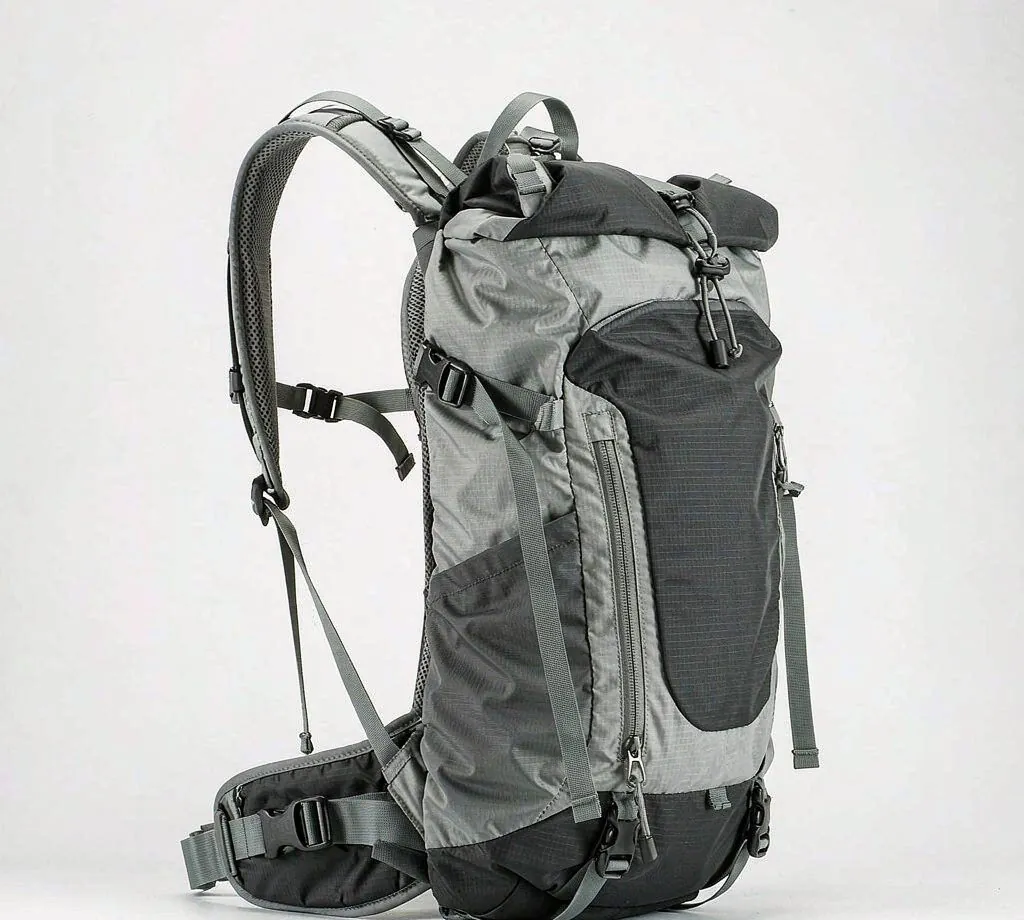 The photograph shows a representative daypack from the category. Colour, harness and trim follow the approved sample, and the image is illustrative rather than a picture of your goods.
We have sourced daypacks and travel packs out of the Fujian and Guangdong clusters for years. Three failures repeat. A pack sold at a stated volume arrives a size smaller, with the difference absorbed in the lid and the side pockets. A harness built with a foam of the right density on the sample arrives with a lighter foam that flattens in a season. And a fabric with a water resistant finish loses that finish after a handful of washes.
This page covers what the volume and harness words mean, what belongs on the order sheet, and the checks that catch a weak lot. The supply base behind the category is in our wholesale bags and luggage overview.
Volume, harness and the fabric specification
Volume is the number the whole category is priced on, and it is also the easiest to inflate. Packs are measured with the main body filled, and two packs with the same external dimensions can differ by several litres once the pockets and lid are counted differently. The defence is a physical test: fill a bulk pack with measured loose fill and see what it actually holds.
The harness decides whether the pack is worn or merely carried. A technical harness is a shaped back panel, a padded hip belt and load lifters that transfer weight onto the hips. Each of those parts can be simplified, and the simplifications are invisible in a photograph and obvious after a day on a trail.
The fabric specification has three parts that matter: yarn, coating and finish. A pack that must survive abrasion needs a tight weave at a sensible yarn count, a coating that keeps water out under flexing, and a durable water repellent finish that survives washing rather than sitting on the surface.
Specifications and minimum order
Our minimum order is 1 piece, so you can start with a single unit and scale up once the sample is approved. Every line below changes what the factory builds. We do not print prices or schedules here, because fabric and hardware inputs move; send the volumes, the harness type and the quantity, and we come back with a live quotation and a firm production slot.
| Specification | What to confirm before you order |
|---|---|
| Volume | litres, measured with the pack filled, not estimated from dimensions |
| Fabric | yarn count, weave and abrasion resistance at the base |
| Coating | water resistance under flexing, and whether seams are taped |
| Harness | back panel shape, hip belt padding and load lifter webbing |
| Frame | internal frame sheet, stays or none, and the load it is rated for |
| Zip and hardware | zip size and grade, buckles, and the adjusters on every strap |
| Pedido mínimo | stated per colourway and per volume, since patterns are cut in runs |
Minimums in technical packs are driven by the pattern set and the fabric dyeing, so a single volume across one colourway is the cheapest way to start. Our sourcing service covers the factory screening, the sample round and the inspections below.
What the harness words mean in practice
Load transfer is the whole point of a technical harness, and it is measurable without equipment. Load a pack to its rating, put it on, and loosen the shoulder straps: a harness that transfers weight properly stays up on the hips, and one that does not slides down onto the shoulders immediately.
Foam density is the second word buyers use loosely. A lighter foam at the same thickness feels identical in the hand and flattens under load within weeks, which is why the specification names the density and the thickness together rather than a single number.
Seam treatment completes the picture. Water reaches the inside of a pack through the needle holes along a seam, so an untaped or unsealed seam is the weak line in an otherwise water resistant body. A shower test on a loaded bulk pack shows it in a minute.
What belongs in the purchase order
One page attached to the PO is what protects the reorder. Cover these points:
- Volume in litres, with the measurement method agreed
- Fabric, coating and base abrasion requirement
- Harness construction, foam density and load rating
- Frame type and the load it must transfer
- Zip size, buckles and every adjuster on the harness
- A penalty clause if the bulk run differs from the approved sample
Inspection points that catch a weak lot
These checks find what a product photograph cannot:
- Fill and measure. Fill a bulk pack with measured loose fill and compare the working volume against the claim.
- Wear it loaded. Load to the rating and loosen the shoulder straps. Weight that stays on the hips is the proof of a real harness.
- Shower test it. Load a pack, run water over it for a few minutes and check the inside, especially along seams.
- Squeeze the foam. Compare bulk harness foam against the approved sample, since density is the quiet substitution.
- Drag the base. Pull a loaded pack across a hard surface and look for abrasion at the base panel.
An independent inspection before loading catches all five at the cheapest point. Factory inspection covers this category, and the wider system is set out in our guide to pre shipment inspection.
Preguntas frecuentes
How is pack volume actually measured?
Fill the pack with measured loose fill, close it as it would be carried, and read the volume used. Numbers taken from external dimensions overstate capacity, and the gap grows with the number of external pockets. Ask for the measurement method in writing.
Do I need a taped seam on a daypack?
Only if the pack is sold as water resistant rather than water repellent. Taping adds a step and a cost, and it is the seam rather than the fabric that lets water in. If the marketing claims weather protection, the tape is part of the claim.
How do I tell a real harness from a cosmetic one?
Load the pack and loosen the shoulder straps. A harness with a frame sheet and a proper hip belt holds the load on the hips and stays put. A cosmetic harness slides down onto the shoulders the moment the straps are slack.
Request a quotation
Send the volumes, the harness type, the fabric specification and the quantity you need, plus the market you sell into. We come back with factory options and current bands within two business days.
