
Wholesale Student Stationery Sets from China
A student stationery set is not one product; it is a small supply chain packed into a case. Pens, pencils, an eraser, a ruler, a sharpener and whatever else the artwork promises are sourced, often from different workshops, and assembled into one box that carries one brand and one price. That structure is where both the margin and the risk live.
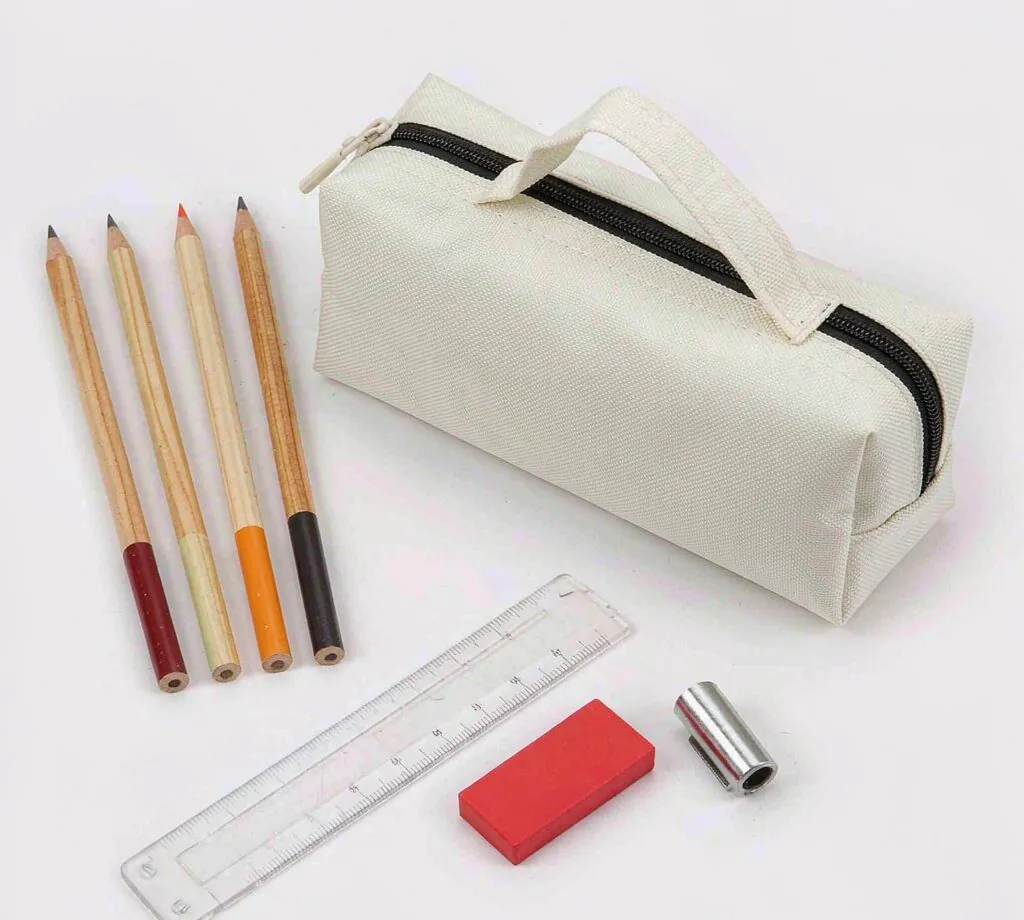 The photograph shows a representative set from the category. Component list, case material and artwork follow the order sheet, and the image is illustrative rather than a picture of your goods.
We have consolidated sets out of the Yiwu belt for five years, and the same three failures come back. One component is quietly downgraded to a cheaper version of itself, because the set artwork does not itemise it. A sharpener or a pair of scissors arrives with an edge or a point that fails the age grade on the box. And the magnet in a pencil case closure is stronger than the standard allows, which is a recall class of its own.
This page covers how to specify a set so nothing in it is interchangeable, what belongs on the order sheet, and the checks that catch a weak consolidation. The wider picture is in our wholesale stationery overview.
Why sets fail component by component
A set is only as good as its weakest component, and the weakest component is always the one nobody specified. A pen drawn from a good factory and an eraser drawn from the cheapest stall on the market floor can sit in the same case, and the buyer only hears about it in the reviews. The fix is unglamorous: itemise every component in the purchase order, name its supplier or its specification, and reserve the right to approve each one separately.
The second failure mode is assembly. Sets are packed by hand or by light automation, and a missing eraser in one box out of fifty is a customer complaint with no pattern. The count check at inspection exists for exactly this, and it works: open completed sets from different cartons and verify the contents against the component list.
The third is compliance, and in sets it compounds. Every component has to satisfy the toy and stationery rules of the destination market, and a component that is compliant on its own can still fail as part of a set aimed at a younger age grade. Magnets, sharp points and small parts are the three that do it.
Specifications and minimum order
Our minimum order is 1 piece, so you can start with a single unit and scale up once the sample is approved. Every line below changes what goes into the case. We do not print prices or schedules here, because component costs move with the raw material markets behind them; send us the component list, the age grade and the quantity, and we come back with a live quotation and a firm production slot.
| Specification | What to confirm before you order |
|---|---|
| Component list | every item named with its own specification, not described as a full set |
| Age grading | the band on the artwork, and the components that have to change to support it |
| Magnetic parts | any magnet’s flux index stated, or the magnet replaced with a mechanical closure |
| Sharp edges | scissors and sharpeners specified with rounded tips where the age grade requires |
| Case | material, zip or closure type, and the print method for the artwork |
| Packing | whether components are fixed in an insert, since loose components shift in transit |
| Pedido mínimo | stated per set and per component colour, since each variant multiplies consolidation |
Minimums in this category are modest per item but multiply across components, which is why a lean set ships more consistently than a sprawling one. Our sourcing service covers the component screening, the consolidation and the inspections below.
Magnets, points and the rules that matter
Magnetic closures are the single most dangerous comfort feature in stationery. Small high-strength magnets, if swallowed, cause injuries that regulators treat with the highest severity, and the standards set a flux index limit precisely for that reason. A set with a magnetic flap needs the magnet specified, measured and documented, or replaced with a snap or elastic closure that removes the question entirely.
Sharp points follow the age grade. A metal scissors with a pointed tip is a proper tool for an older student and a violation in a set aimed at young children. The artwork carries the age band, and the components have to be chosen for it, which is why the age grade belongs at the top of the component list rather than on the box as an afterthought.
Chemical limits run through the whole case. Inks, erasers, plastic rulers and coatings all carry restricted-substance requirements in the major markets, and a consolidation that mixes suppliers mixes their compliance too. The practical answer is to ask each component supplier for its test documentation and to keep it with the set’s own report.
What belongs in the purchase order
One page attached to the PO is what protects the reorder. Cover these points:
- Complete component list with a specification per line, not a description of the set
- Age grade on the artwork, and the component changes it requires
- Magnet specification or the explicit removal of magnetic closures
- Sharp tool treatment, rounded where the age grade requires it
- Insert and packing method that stops components migrating inside the case
- A penalty clause per component, not only for the set as a whole
Inspection points that catch a weak consolidation
These checks find what a product photograph cannot:
- Open and count. Open completed sets from several cartons and verify every component against the list. Missing items are the most common set claim.
- Grade each component. Write with the pen, erase with the eraser, sharpen with the sharpener. A set is judged one item at a time.
- Test the magnets. Check any magnet against the agreed flux specification, or confirm there are none to find.
- Look for points and edges. Run a finger over every metal edge, and check scissor tips against the age grade on the box.
- Check the case. Work the zip or closure repeatedly. A case that fails in hand fails on the shelf long before a review says so.
An independent inspection before loading is where a weak component can still be swapped, and it is far cheaper than discovering the downgrade in a customer review. Factory inspection covers consolidations of this kind, and the same component-level method is set out in our quality control walkthrough.
Preguntas frecuentes
Can I buy the components myself and have the set assembled?
Yes, and it is a common structure: quality components sourced directly, assembled and packed by a consolidator in the market belt. It gives you control of the parts that carry the brand, at the cost of one more relationship to manage. The set inspection then matters even more, because nobody else is watching the assembly.
What makes a set safe for younger children?
The age grade decides, and the components follow: no small detachable parts, no strong magnets, rounded tips on any cutting tool, and inks and plastics that meet the chemical limits for that band. A set designed honestly for a younger band is usually smaller and simpler, and it sells better than a large set with the wrong warnings on it.
How do I stop component substitution between orders?
Specify each component by specification and keep a sealed reference sample of each. Substitution happens where the artwork says “eraser” and nothing else. With a named spec and a retained sample, the factory has nothing to substitute without breaking the clause.
Request a quotation
Send the component list, the age grade and the quantity you need, plus the market you sell into. We come back with factory options and current bands within two business days.
