
Wholesale A5 Paper Notebooks from China
The A5 notebook is where stationery stops being a plastic product and becomes a paper one, and paper has its own way of hiding a cut. Nothing about a notebook can be judged from the outside: the cover hides the grammage, the spine hides the binding, and the page count is a number only the person counting pages ever verifies.
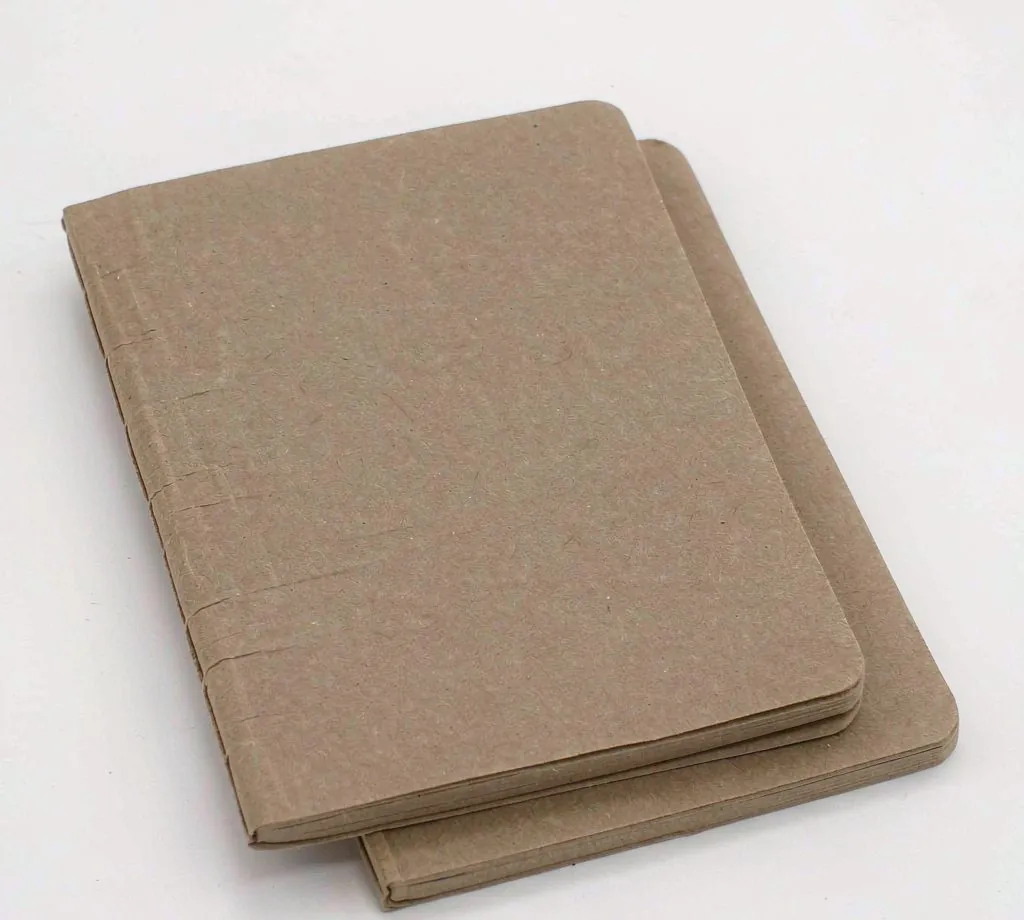 The photograph shows representative notebooks from the category. Paper weight, ruling and cover finish follow the order sheet, and the image is illustrative rather than a picture of your goods.
We have sourced notebooks out of the Dongguan paper belt and the Yiwu market belt for five years. The same three failures come back. Paper sold as one grammage arrives measurably lighter, which is invisible until a pen shows through the page. A binding that held at the sample stage loses pages in bulk because the glue line was shortened. And a cover finish matched on a screen prints two shades off from what the buyer approved.
This page covers what the paper and binding words mean, what belongs on the order sheet, and the checks that catch a weak lot before it ships. The wider sourcing picture is in our wholesale stationery overview.
Paper, binding and cover: the three decisions
Grammage, measured in grams per square metre, is the paper specification that decides everything else. Lighter sheets keep cost down and let a thicker notebook fit the same price, but they show through, tear at the perforation and buckle under a wet pen. The number on the invoice is a claim; the only reliable check is to weigh a sheet stack and calculate it, which is precisely why it belongs in the inspection plan.
Binding decides how long the notebook stays in one piece. Perfect binding glues the spine and is the standard for page-heavy notebooks; its failure mode is pages falling out from a short glue line or a cold glue application. Saddle stitching suits thinner books. Spiral and wire binding survive abuse best, but they add cost and their own transit problems. Whichever you choose, the pull test on bulk pages is what confirms it.
The cover is the surface a buyer actually designs. Coated paper covers print crisply and scuff; uncoated covers feel natural and show fingerprints less; PU and cloth covers raise the category into gift territory. Each finish takes a different decoration method, and each method has a curing or lamination step that can be shortened when a schedule tightens.
Specifications and minimum order
Our minimum order is 1 piece, so you can start with a single unit and scale up once the sample is approved. Every line below changes what the factory prints or binds. We do not print prices or schedules here, because pulp prices and press calendars both move; send us the size, the ruling and the quantity, and we come back with a live quotation and a firm production slot.
| Specification | What to confirm before you order |
|---|---|
| Paper grammage | gsm named per sheet, with the right to verify by weighing a counted stack |
| Page count | the exact number, stated as sheets or pages, since the two are half of each other |
| Ruling | lined, dotted, grid or blank, with the layout referenced to a physical sheet |
| Binding | perfect, saddle-stitched, spiral or wire, with the glue line width stated |
| Cover | coated, uncoated, PU or cloth, with the decoration method and a sealed sample |
| Ink and print | cover colours referenced to Pantone or a sealed proof, not a screen |
| Pedido mínimo | stated per cover design, since each new artwork is its own print setup |
Minimums in notebooks are driven by print setup, and they fall sharply when the cover artwork repeats across sizes. Our sourcing service covers the mill screening, the proof round and the inspections below.
What the paper words mean in practice
Show-through is the property buyers actually feel. It is governed by grammage and by opacity, and a cheap sheet at a higher grammage can perform worse than a good sheet one grade lighter. The practical check is to write on a bulk page with the pen types your customers use and look at the back. That single test kills more paper disputes than any certificate.
Glue quality is invisible and decisive. A perfect-bound spine applied cold, or applied thinly to save material, holds through the sample and fails in the carton. The pull test is simple: fan the pages and pull one firmly from the middle of the book. A page that releases clean from the spine will release on the customer’s desk.
Cover colour is the dispute that recurs most often, and it is almost always a proofing problem. Colour approved on a screen is not a specification. A wet proof or a sealed printed sample retained by both sides is, and it is worth the small extra step on the first order precisely because every reorder after it inherits the reference.
What belongs in the purchase order
One page attached to the PO is what protects the reorder. Cover these points:
- Grammage per sheet and page count, both stated as verifiable numbers
- Ruling layout referenced to a physical sheet retained by both sides
- Binding type with the glue line requirement stated in millimetres
- Cover material, decoration method and a sealed printed sample as the colour reference
- Shrink wrap and carton packing that keeps spine damage out of a sea container
- A penalty clause if the bulk book differs from the approved sample
Inspection points that catch a weak lot
These checks find what a product photograph cannot:
- Count and weigh. Count the pages of books from several cartons and weigh a counted stack of sheets to verify the grammage claim.
- Pull-test the binding. Fan and pull pages from the middle of bulk books. A page that releases from the spine is the failure customers report.
- Write-through test. Write on a bulk page with a gel pen and a ballpoint and check the back for show-through.
- Match the cover. Hold bulk covers beside the sealed sample in daylight. Colour drift shows up immediately side by side.
- Check the spine glue. Open a book flat and look at the glue line. A thin or patchy line is a binding that has not been built to last.
An independent inspection before loading is where all five cost the least to fix, and in paper goods it is the only point at which a grammage substitution can still be corrected before the container sails. Factory inspection covers this category, and the cost side of the same discipline is set out in our quotation guide.
Preguntas frecuentes
What grammage should a student notebook use?
A mid-range sheet with good opacity serves better than a heavier sheet with poor show-through, which is why the write-through test matters more than the number. For fountain-pen markets, ask for paper specified for ink resistance, because that requirement rules out more sheets than grammage does.
Perfect binding or spiral binding?
Perfect binding looks like a retail book and suits page-heavy notebooks; spiral survives a school bag. The decision usually follows the customer rather than the factory. If the notebook will be written in while held rather than laid flat, spiral wins; if it will sit on a desk or a shop shelf, perfect binding reads better.
How do I stop covers arriving scuffed?
Specify the packaging rather than hoping for it: individual poly bags or shrink wrap, spine protection in the carton, and a check on a carton from the middle of the stack at inspection. Scuffed covers are a transit and packing decision, not a printing one, and they are cheap to prevent and expensive to return.
Request a quotation
Send the size, the ruling, the binding and the quantity you need, plus the market you sell into. We come back with factory options and current bands within two business days.
