
Wholesale HD Lace Closures and Frontals from China
Closures and frontals are the finishing pieces of the hair trade. A closure is a small lace panel, typically square, that closes the top of an install; a frontal is an ear-to-ear panel that recreates the whole hairline. Both are ventilated by hand, both are sold by size and parting type, and both are the components most at risk of substitution in bulk orders, because a coarser mesh or a lighter fill is almost impossible to detect in a listing photograph.
We have sourced closures and frontals out of Xuchang and Guangzhou for five years. The same three failures repeat. The mesh arrives a gauge coarser than the sample, so the panel no longer melts against the skin. Knots arrive unbleached or over-bleached to the point the hair sheds at the base. The parting direction drifts between units of one batch, which ruins a middle-part look across a whole shipment. None of these survive a proper pre-shipment check.
This page explains the size and parting vocabulary, what belongs on the order sheet, and the checks that catch a substitution before loading. It sits inside our wholesale wigs programme next to our human hair bundles line, and the cluster structure behind the category is in our guide to the hairpiece hubs.
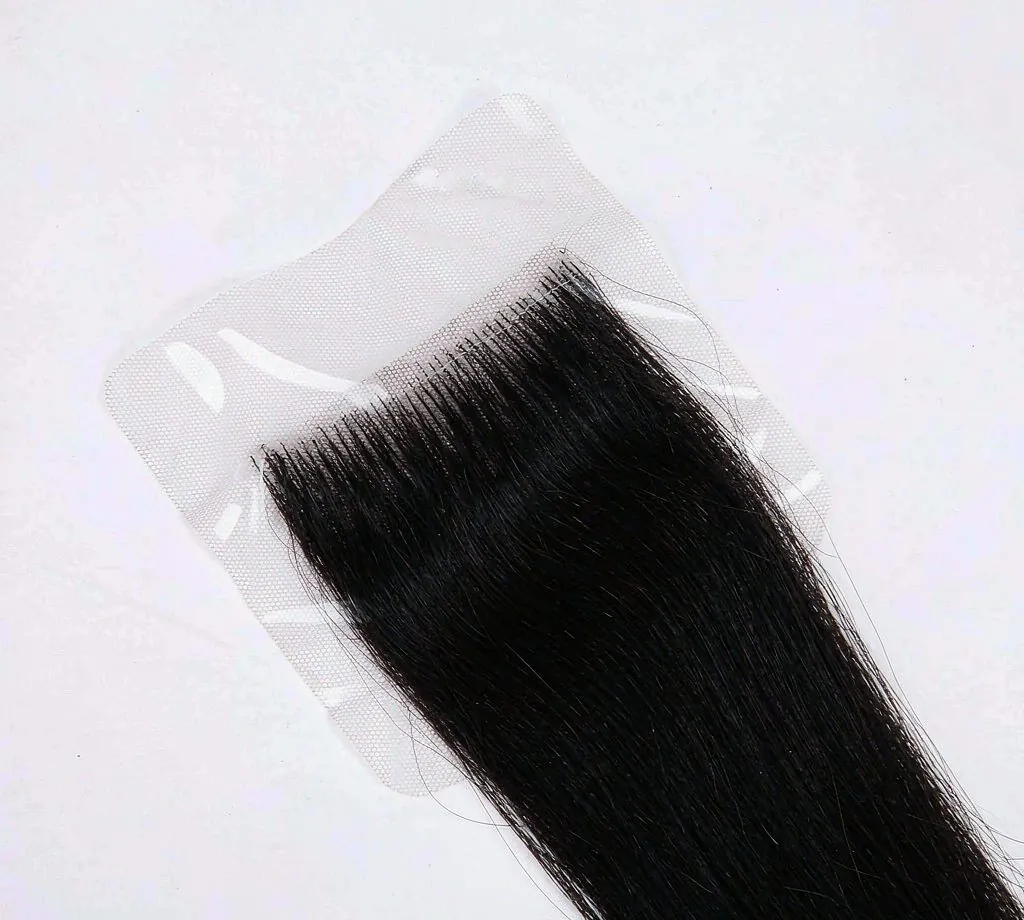 The photograph shows a representative panel of the category. Your size, mesh and parting follow the order sheet, and the image is illustrative rather than a picture of your goods.
Closure and frontal sizes, in plain language
Closures run in squares: four by four inches is the workhorse size, with five by five and six by six giving more parting room at higher cost. Frontals run ear to ear, described as thirteen by four or thirteen by six, where the second number is the parting depth front to back. The bigger the panel, the more ventilation labour it carries, which is why a frontal is not a big closure at the factory but a different build entirely.
Parting is the other axis. A middle part panel is ventilated in one direction and suits one look; a free part can be styled anywhere on the panel; a three-way part has predefined channels. Substituting parting types mid-batch is one of the most common bulk failures, and it only shows when the installer tries to style against the direction of the hair.
Specifications and minimum order
Our minimum order is 1 piece, so you can start with a single unit and scale up once the sample is approved. Each line below changes what the factory ventilates, so all of it belongs in writing. We do not print prices or schedules on this page, because hair supply and bench calendars both move; send us the sizes, mesh, parting and quantity, and we come back with a live quotation and a firm slot.
| Specification | What to confirm before you order |
|---|---|
| Panel size | 4×4, 5×5, 6×6 closure or 13×4, 13×6 frontal, stated per unit |
| Mesh | HD or standard Swiss, named on the invoice, with the gauge matched to the sample |
| Hair grade | remy or better, with the word defined in the contract |
| Parting | middle, free or three-way, stated per unit and consistent across the batch |
| Knots | bleached or natural, with the bleaching strength agreed so the base does not shed |
| Density | the fill percentage with a tolerance, checked against the sealed sample |
| Pedido mínimo | stated per size and parting, since each is a separate ventilation run |
Minimums track size and parting count rather than volume, because every combination is its own bench run. A launch order that holds to two sizes and one parting type ships far more consistently than one that spreads across the whole size chart. Our sourcing service covers the factory screening and sample rounds this category depends on.
What the mesh words mean in practice
HD describes a fine, translucent mesh that reads as skin across most complexions. It is genuinely finer than standard Swiss mesh and genuinely more fragile, so the honest factories pack it on rigid boards rather than folded in poly bags. If your shipment arrives with panels folded flat in bags, that handling decision alone has already shortened the mesh’s life.
Knot bleaching is where quality quietly lives. The knots that fix each hair to the mesh should be small and lightly bleached so they do not read as dark dots. Over-bleaching weakens the knot and the panel sheds from the base; no bleaching at all leaves a dotted hairline. Both extremes pass a photograph check and fail a customer. Ask which strength the factory bleaches to, and have the sealed sample judged against that answer.
What belongs in the purchase order
One page attached to the PO protects every reorder. Cover these points:
- Panel size and parting type per unit, stated in a batch list
- Mesh grade, named, with the sealed sample as the gauge reference
- Hair grade defined in the contract, not assumed from the word human
- Knot treatment and bleaching strength, agreed in writing
- Packing method: rigid boards for HD mesh, never folded flat in bags
- A penalty clause if the bulk differs from the approved sample
Inspection points that catch a switch
These are the checks that find what photographs hide:
- Mesh gauge. Hold panels from the bulk against the sealed sample in daylight. A coarser mesh is visible instantly.
- Knot pull. Gently tug hairs at the base. Over-bleached knots shed under a light pull; that weakness reaches the customer as a bald patch.
- Parting check. Lay the panel flat and trace the part. A free-part panel ventilated as a middle part cannot be styled back.
- Size check. Measure the panel. Half an inch lost on a thirteen-inch frontal shows on the install.
- Fill check. Weigh against the sealed sample. A lighter panel is a lighter fill, whatever the paperwork says.
An independent check before loading costs a small fraction of what a rejected batch costs, and in this category the mesh and knot checks are worth every visit. Factory inspection covers this work, and the cluster differences behind these panels are mapped in our hubs guide.
Preguntas frecuentes
Closure or frontal: which should a first order carry?
Closures are the safer first product: smaller panels cost less to ventilate, ship with less risk and suit most everyday installs. Frontals sell strongly in fashion-driven markets but carry more handling risk in transit and more variation in install skill. Many brands launch on closures and add frontals once their factory relationship is proven.
Does HD lace really make a difference?
On the right skin tones and with careful handling, yes: the finer mesh disappears against the skin better than standard Swiss. The trade-off is fragility, which makes packing and customer handling part of the product. If your supply chain cannot guarantee rigid-board packing, a good Swiss mesh often satisfies customers more than a mishandled HD one.
Can closures and bundles come from one factory?
They can, and ordering both from one source is the most reliable way to keep colour and texture matched across a finished install. Splitting the bundle order and the closure order across factories is how a set ends up visibly two-toned. Put the matching requirement in writing on both order sheets.
Request a quotation
Send the sizes, parting types, mesh grade and quantity you need, plus the market you sell into. We come back with factory options and current bands within two business days.
