
Wholesale Mesh Task Chairs with Headrest from China
The mesh task chair is the volume item of the office furniture trade, and it is a mechanical product wearing a textile: a mechanism, a gas lift, a five star base and a mesh back, each with its own grade. The silhouette is copied everywhere; the mechanism class and the gas lift are where a chair earns its price and its returns rate.
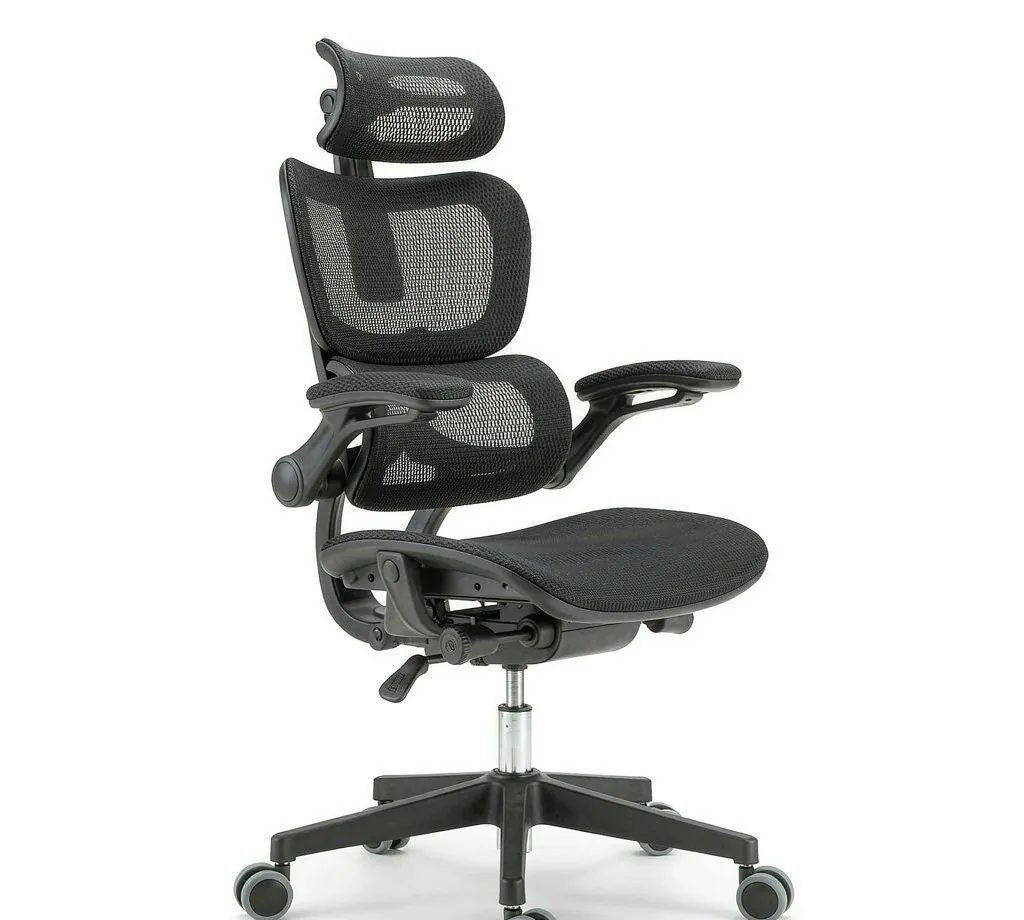
The failures: mechanisms that lose their tilt lock within months, gas lifts that sink slowly, bases that crack at the star junctions, and mesh that sags into a hammock. Each is a component grade decision, and each is testable before a container is booked.
The category context, including the Foshan cluster, is in our office furniture overview.
Mechanism, lift and mesh
The mechanism under the seat decides what the chair can do and how long it does it: tilt tension, tilt lock, synchro tilt and the travel range are the functions, and mechanism classes price accordingly. The gas lift carries the user and is graded by class; a name brand lift is a small cost against a slow sink complaint. The base is nylon or aluminium, and the junction casting is where cheap bases crack.
Mesh quality decides the back’s feel and life: elastomer blends with even tension keep their shape; cheap mesh stretches within a season. The headrest is a fitting, and its adjuster is the part users touch most, which makes it an inspection line rather than an accessory.
Specifications and minimum order
Steel, aluminium and mesh prices move with raw materials, so live figures come with the quotation. Fix these points.
| Specification | What to confirm before you order |
|---|---|
| Mechanism | Class and functions: tilt range, lock positions, synchro or not |
| Gas lift | Class rating, brand or certified equivalent |
| Base | Nylon or aluminium, and the junction reinforcement |
| Mesh | Blend and tension standard, with the sag expectation |
| Load test | The load and cycle standard the chair must pass |
| Packing | Flat packed carton, knock down structure, assembly tool included |
| Minimum order | Tens to hundreds per colourway in practice; container economics shape the number |
Our minimum order is 1 piece, so a sat in, cycled sample is approved before any production commitment. The production minimum follows the colourway and container fill, and we confirm it in writing. Our sourcing service screens the Foshan plants, where mechanism grades vary more than prices suggest.
Load testing is the category’s honesty test
Office chairs carry published load and cycle expectations in the destination standards, and the bench test, drop loads on the seat and back through thousands of cycles, separates the engineered chairs from the assembled ones. A chair that passes in the showroom and fails in month four was never tested, only priced.
Flat pack assembly is the second discipline. The chair ships knock down, and the factory’s hardware and instruction quality decide whether the end user assembles a chair or a complaint. Our quality assurance service writes the cycle test and the assembly audit into the order.
What belongs in the purchase order
- Mechanism class and function list
- Gas lift class and brand or equivalent
- Base material and junction reinforcement
- Mesh blend and tension standard
- Load and cycle test standard for the destination market
- Flat pack carton spec with hardware and instructions
Checks that catch the repeat failures
- Mechanism cycle. Tilt, lock and release a bulk chair fifty times; play and slipping locks show by then.
- Gas lift endurance. Cycle a bulk lift up and down with load; sinking lifts announce themselves.
- Base stress. Load the bulk chair and rock it; junction creaks and cracks show at the weak casting.
- Mesh tension. Press the bulk back firmly; spongy mesh was tensioned or blended cheaply.
- Assembly audit. Build a bulk flat pack from the instructions alone; the missing step shows in the first ten minutes.
These checks are standard work in a pre shipment inspection, and our factory inspection service covers furniture plants. For how furniture ships economically, see our container consolidation service.
Frequently asked questions
Which mechanism class should I buy?
The one your market position promises: simple tilt lock for value lines, synchro tilt with multiple locks for the ergonomic tier. The class is visible in the function list and testable on bulk units. Our minimum order is 1 piece for sampling any class.
Does the headrest matter to returns?
More than expected: the adjuster is a touched component, and loose or wobbly headrests read as a broken chair. Specify the adjuster tolerance and check it on bulk units.
Why do cheap bases crack?
Thin junction castings. The five arms meet at a hub, and the hub is where load concentrates. A reinforced hub is a small cost; a cracked base is a photo on a review page.
Request a quotation
Send the mechanism class, colourway and your market. We come back with factory options plus the workable minimum within two business days.
