
Wholesale Cut Resistant Work Gloves from China
The cut resistant glove is the safety product that industrial distributors reorder forever, and it is a textile that carries a legal test result: the cut level printed on the glove is a claim about the yarn, the knit and the coating, verified under a standard that the buyer’s market recognises. The category’s returns story is not defects; it is the wrong level for the job.
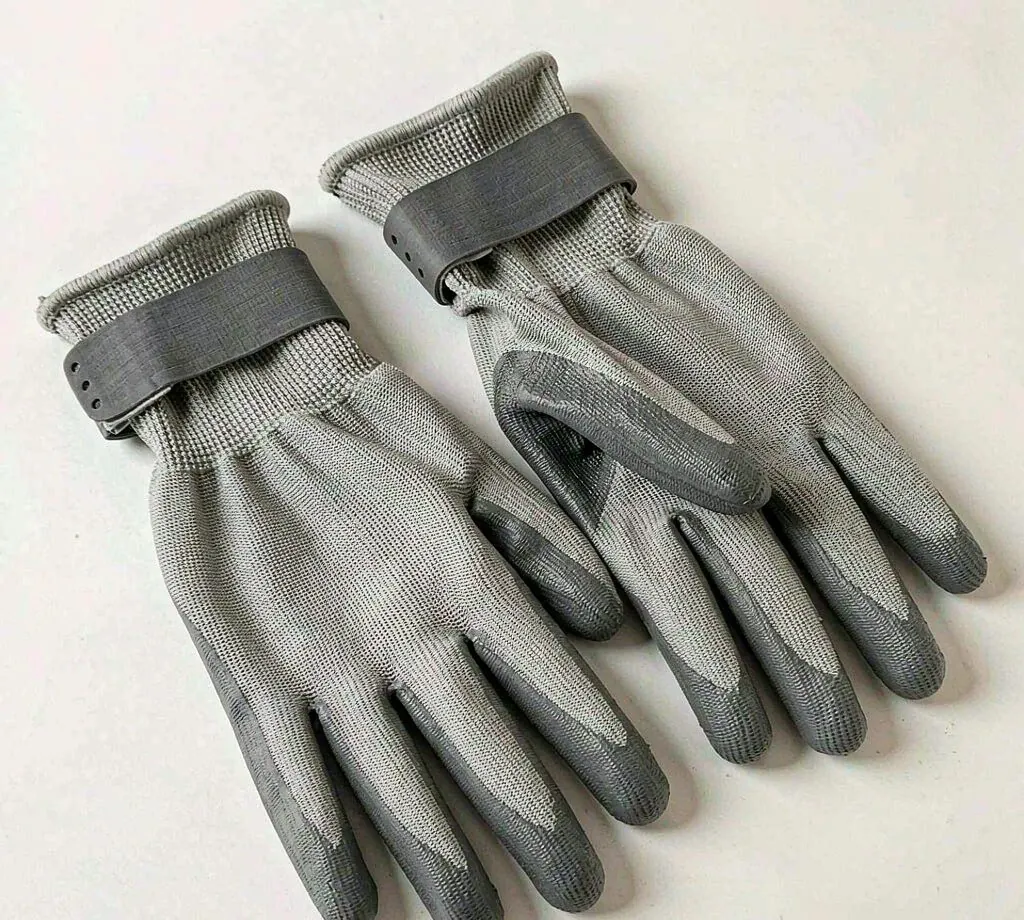
The failures: gloves marked one cut level above what the knit delivers, coatings that stiffen in cold stores or soak through with oils, and sizing that runs small enough to cause hand fatigue, which is how safety gloves end up in a pocket instead of on a hand.
All three are checkable. The category context is in our industrial supplies overview.
Yarn, coating and the cut level
Cut resistance is engineered into the yarn: HPPE and aramid fibres, often blended with glass fibre or steel, knitted into a shell whose gauge and construction decide the level. The standard test, EN 388 in Europe and the ANSI scale in North America, presses a blade across the palm and counts the load to cut through, and the level printed must trace to that test on the actual glove.
The coating is the working surface: polyurethane for dexterity and dry grip, nitrile for oil resistance, latex for grip in wet work. Coating choice is an application decision, and its cold and chemical behaviour is a specification line. Sizing completes the product: a glove that fits is worn, and a glove that is not worn protects nobody.
Specifications and minimum order
Yarn prices are stable compared with metals, so live figures come with the quotation. Fix these points.
| Specification | What to confirm before you order |
|---|---|
| Shell | Yarn family and blend named, gauge stated |
| Cut level | EN 388 or ANSI level, tied to a test on the actual glove |
| Coating | PU, nitrile or latex, with the chemical and cold behaviour |
| Size run | Full run with the measured tolerance per size |
| Cuff | Knit wrist or safety cuff, length stated |
| Labelling | Standard pictograms and level marking per your market |
| Minimum order | Thousands of pairs in practice; knitting and coating lines run continuously |
Our minimum order is 1 piece, so a tested, worn sample is approved before any production commitment. The production minimum follows the knit run, and we confirm it against your size plan. Our sourcing service screens the knitting and coating plants, which are separate trades under one roof only in the best factories.
The cut level must trace to the glove
Safety gloves live on their test paperwork, and the industry’s recurring problem is a level claimed from a yarn brochure rather than tested on the finished glove. The verification is the laboratory report tied to the production lot, plus a spot check of the marking against the report.
Wearability is the second discipline. Coating stiffness and sizing accuracy decide whether workers keep the gloves on, and both are testable: cold flex the coating, measure the size run against the chart. Our quality assurance service writes both into the order.
What belongs in the purchase order
- Yarn family, blend and gauge
- Cut level with the laboratory report tied to the lot
- Coating type with chemical and cold behaviour
- Size run with measured tolerances
- Cuff type and length
- Labelling to your market’s safety marking rules
Checks that catch the repeat failures
- Report match. Match the cut level report to the production lot and the marking on the glove.
- Size measurement. Measure bulk gloves against the size chart; running small shows across the run.
- Cold flex. Chill coated gloves and flex them; stiffening coatings show in cold storage work.
- Knit audit. Inspect the shell knit for gauge consistency; loose knits deliver lower levels than labelled.
- Coating adhesion. Flex and rub the coating; lifting coatings fail within days on site.
These checks are standard work in a pre shipment inspection, and our factory inspection service covers glove plants. For the fuller method, see our pre shipment inspection guide.
Frequently asked questions
Which cut level should I buy?
The level the actual task requires, verified by a report on the finished glove. Over specifying wastes money; under specifying is a safety gap. We match the level to the application and trace the report. Our minimum order is 1 piece for sampling any level.
PU or nitrile coating?
PU for dexterity and dry work, nitrile for oil and chemical resistance. The coating is the working surface, and its chemistry should match the job. Both are testable for cold flex before you commit.
Why do workers refuse to wear cut gloves?
Fit and stiffness. A glove that runs small or coatings that stiffen become pocket gloves within a week. Sizing checks and cold flex tests on bulk units are how the product earns its place on the hand.
Request a quotation
Send the cut level, coating preference and size plan. We come back with factory options plus the workable minimum within two business days.
