
Wholesale Travel System Strollers from China
A travel system stroller is the most complex product in the baby category: a folding aluminium frame, wheels, brakes, a reclining seat and an infant carrier that clicks into the same frame. It is also the most regulated, because the failure modes, a brake that does not hold, a fold that releases, a carrier that unlatches, are injuries waiting for a pavement.
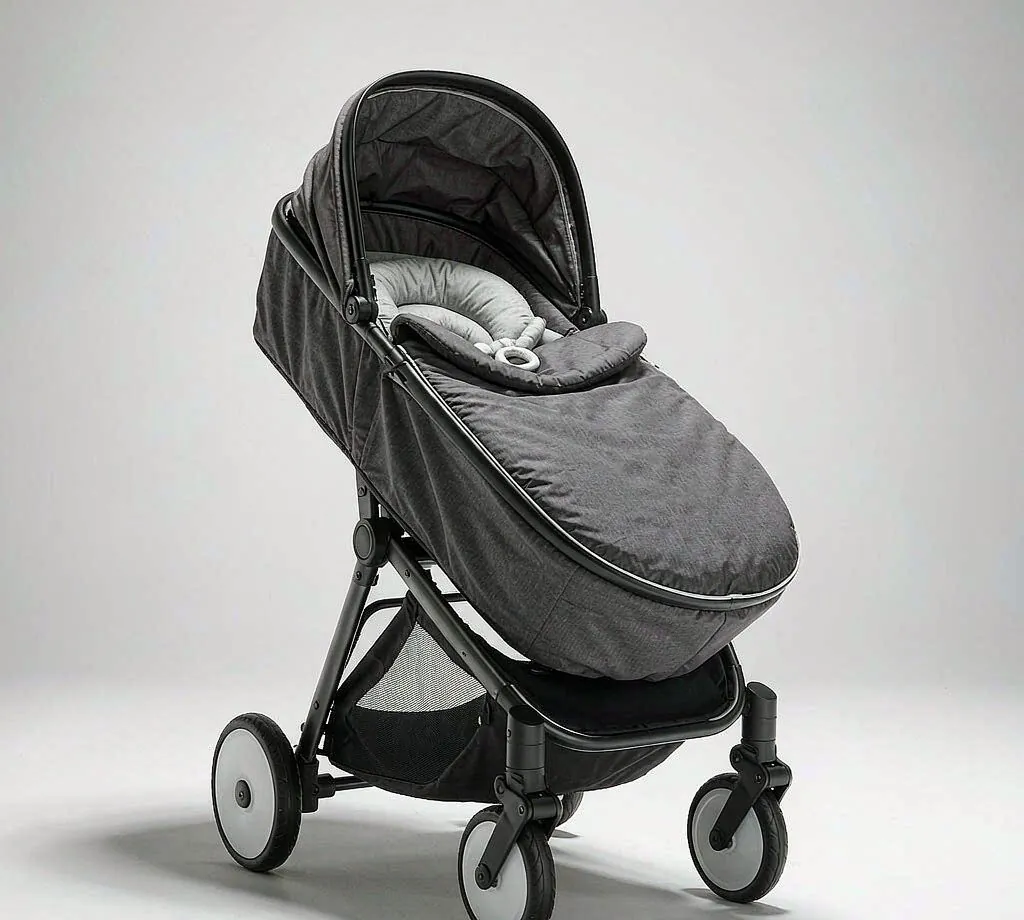
The failures are mechanical and cumulative. Hinge rivets loosen after a few hundred folds, the brake cable stretches, plastic wheel housings crack in cold weather, and the carrier latch wears to the point where the click stops meaning held. None of these appear in a factory walk through; all of them appear in a durability protocol.
This page sets out the specification and the tests. The category context is in our wholesale baby products overview.
Frame, wheels and the fold
Frames are aluminium tube, and the weight and wall thickness of that tube is the skeleton of both the price and the durability. Wheels separate into EVA foam, which is light and maintenance free, and air filled rubber, which rides better and punctures. The fold mechanism is the engineering centrepiece: a one hand fold that survives daily use needs stamped and machined parts, not bent sheet and rivets.
The travel system claim adds the carrier interface: a seat unit, an infant carrier and the adapters that click one into the other. That interface is a safety system with its own standard, and buying frame and carrier from different factories without testing the pair together is how latch failures happen.
Specifications and minimum order
Aluminium, plastics and fabric prices all move, so live figures come with the quotation. Fix these points.
| Specification | What to confirm before you order |
|---|---|
| Frame | Aluminium alloy and tube specification, with the weight budget |
| Wheels | EVA or air filled, bearing grade and the housing material |
| Fold | One hand or two, fold cycle count the mechanism must survive |
| Brakes | Linked or single side, and the hold test on a slope |
| Carrier interface | Adapter standard and latch cycle life, tested as a pair |
| Compliance | The destination market’s carriage standard, named before production |
| Minimum order | High for custom tooling, moderate on established platforms; platform choice decides the number |
Our minimum order is 1 piece, so the complete system is sampled and approved before any production commitment. For production, the minimum follows the platform and the tooling situation, and we confirm both routes in writing. Our sourcing service screens the stroller plants, which concentrate in a few clusters and vary widely in discipline.
Standards before tooling, not after
Carriage standards differ by market, and several requirements shape the tooling itself: the brake geometry, the harness release force, the stability angles. Choosing the platform before the standard is settled is the expensive order of operations, because a standard discovered late can invalidate parts that are already tooled. We fix the destination standard first, then the platform, then the price.
Durability is the second discipline. The difference between a stroller that sells well and one that returns well is usually the fold cycle count and the wheel bearing grade, both of which are choices made in the bill of materials. Our supplier audit guide covers how we separate the disciplined plants from the rest.
What belongs in the purchase order
- Frame alloy and tube spec, with the total weight budget
- Wheel type, bearing grade and housing material
- Fold mechanism cycle count, tested on bulk units
- Brake type and the slope hold test as a standard
- Carrier and adapter pair, with latch cycle life tested together
- Compliance standard for the destination market, named before tooling
Checks that catch the repeat failures
- Fold cycle. Fold and unfold a bulk stroller fifty times; hinge play and misalignment show by then.
- Slope brake. Set the brake on a slope with a loaded seat; a brake that creeps fails the standard.
- Latch cycle. Click the carrier in and out twenty times, then pull test; latch wear is a safety issue, not a comfort one.
- Wheel housing. Press a loaded wheel hard sideways; brittle housings crack at low temperatures, so ask for the cold test too.
- Harness and buckle. Work the buckle fifty times and check the release force stays inside the standard.
This is the baby category where a loading inspection plus a durability sample earns its cost many times over, and our factory inspection service covers stroller plants. For the fuller method, see our pre shipment inspection guide.
Frequently asked questions
Why are minimums higher than other baby products?
Tooling. A travel system carries moulds for the frame joints, wheel housings, seat shell and carrier, and the factory has to amortise them. Building on an established platform with your colours and fabrics keeps the entry point far lower than a full custom design. Our minimum order is 1 piece for sampling either route.
Can we mix our carrier with your frame?
Only after the pair is tested together, because latch geometry between brands is not interchangeable by dimension alone. Send us the carrier or its specification, and we build and test the interface before quoting the frame.
What should I check before signing with a stroller factory?
Three things: the standard testing they run in house, the fold cycle count their current platform is specified to, and whose name is on the laboratory reports. A plant that answers all three precisely is usually the plant that survives your durability testing.
Request a quotation
Send your market, the platform or features you want and the quantity. We come back with platform options and the workable minimum within two business days.
