
Wholesale Combination Wrenches from China
A combination wrench is a piece of steel with two ends, and its whole value sits in the steel and the heat treatment. A wrench that deforms under load is dangerous rather than merely disappointing, which is why this category is bought on material evidence rather than on appearance.
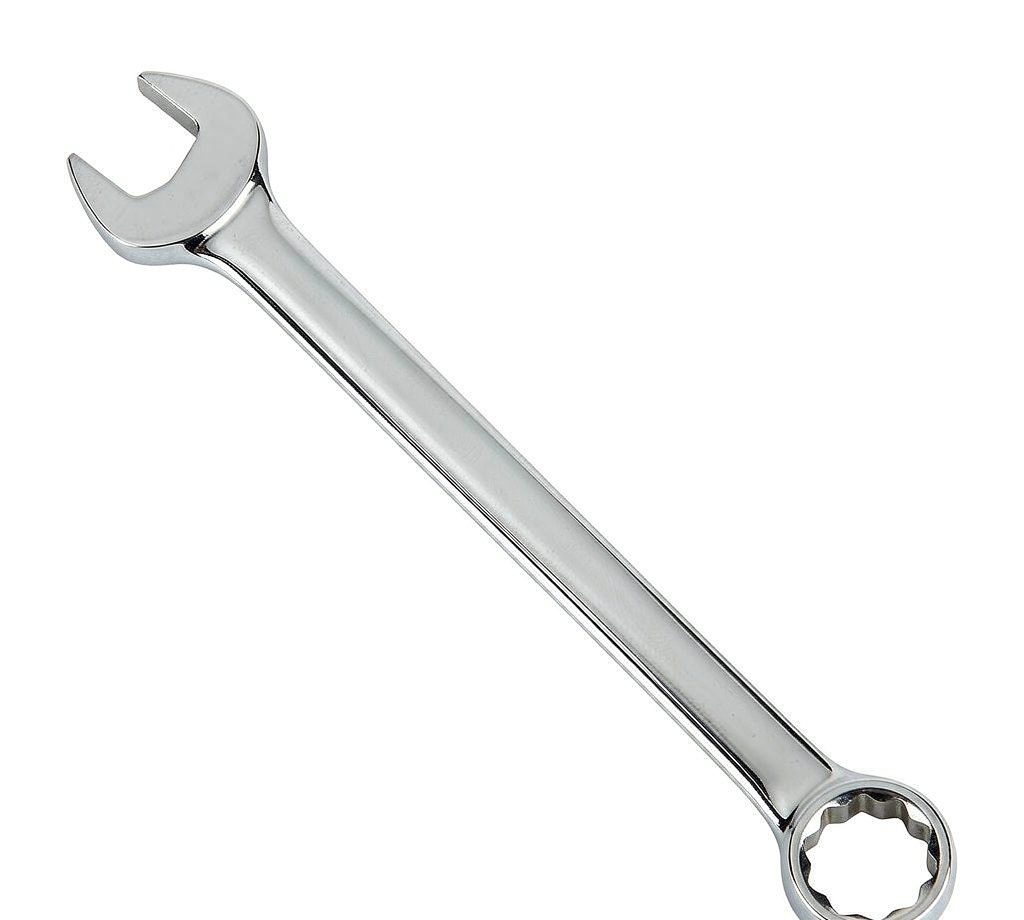 The photograph shows a representative wrench from the category. Size, finish and marking follow the approved sample, and the image is illustrative rather than a picture of your goods.
We have sourced hand tools out of the Zhejiang and Jiangsu clusters for years. Three failures repeat. A wrench sold as chrome vanadium arrives in a plain carbon steel that rounds off at the open end. A jaw that was machined to a tight tolerance on the sample arrives with a looser fit that slips on a nut. And chrome plating that looked even on the sample arrives with thin patches at the jaw, which is exactly where a plating failure starts to flake.
This page covers what the steel and hardness words mean, what belongs on the order sheet, and the checks that catch a weak lot. The supply base behind the category is in our wholesale hardware and tools overview.
Steel, heat treatment and jaw fit
The steel grade is the first specification and the most commonly mislabelled. Chrome vanadium and chrome molybdenum are the usual alloys for wrenches, and each behaves differently: one resists wear, the other resists shock. What matters is that the grade on the order sheet is the grade in the bar stock, and that is confirmed by a material certificate rather than by a description.
Heat treatment converts the steel into a tool. Hardness has to fall in a window: too soft and the jaw deforms, too hard and the wrench shatters under shock. Hardness is measured on a finished wrench at the jaw and at the beam, and both readings belong in the inspection record.
Jaw fit is the dimension a mechanic feels. The opening has to match the nominal size within a stated tolerance, and the surfaces have to be flat and parallel so the load spreads across the flats of a nut. A loose jaw rounds the fastener instead of turning it.
Specifications and minimum order
Our minimum order is 1 piece, so you can start with a single unit and scale up once the sample is approved. Every line below changes what the factory forges and finishes. We do not print prices or schedules here, because steel and plating inputs move; send the sizes, the steel grade and the quantity, and we come back with a live quotation and a firm production slot.
| Specification | What to confirm before you order |
|---|---|
| Steel grade | the alloy named, backed by a material certificate for the heat |
| Hardness | the target range, measured at the jaw and along the beam |
| Jaw tolerance | the opening tolerance against nominal size, and flatness of the faces |
| Torque rating | the load the wrench must hold without permanent deformation |
| Finish | chrome, black oxide or satin, and the coverage expected at the jaw |
| Marking | size stamping and brand marking, and how they survive use |
| Minimum order | stated per size and per set, since forging dies are size specific |
Minimums in forged hand tools are driven by the forging die and the plating run, which is why a full size range ordered together spreads the setup. Our sourcing service covers the factory screening, the sample round and the inspections below.
What the hardness words mean in practice
Hardness is quoted as a range because a single number is meaningless in a forged tool. The jaw and the beam are treated differently on purpose: a hard jaw resists wear while a slightly softer beam absorbs shock without cracking. A supplier who quotes one figure for the whole wrench is describing a shortcut rather than a process.
Torque performance is the property that matters to the user and it is measurable. Apply a defined load to the open end and check for permanent deformation afterwards. A wrench that returns to shape has done its job; one that stays open has been over-stressed or under-treated.
Plating completes the picture, and it is where a cheap wrench announces itself. Chrome protects the steel from corrosion, and a thin coat at the jaw flakes once the tool is used hard. The jaw is the area to inspect rather than the beam, because the beam is the easy surface to plate.
What belongs in the purchase order
One page attached to the PO is what protects the reorder. Cover these points:
- Steel grade with a material certificate for the production heat
- Hardness range for both the jaw and the beam
- Opening tolerance against nominal size, plus face flatness
- Torque rating with the test method named
- Finish type and the coverage expected in the jaw area
- A penalty clause if the bulk lot differs from the approved sample
Inspection points that catch a weak lot
These checks find what a product photograph cannot:
- Check the certificate. Match the material certificate against the heat numbers on the delivery, not against a generic sheet.
- Test hardness. Measure at the jaw and along the beam. A single reading across the whole tool hides the treatment the tool needs.
- Load the open end. Apply the rated torque to a nut and inspect the jaw afterwards for spread.
- Fit the jaw to a nut. A loose or non-parallel jaw rounds the fastener, and it is felt immediately in the hand.
- Look at the jaw plating. Thin chrome at the jaw is the start of a flaking failure.
An independent inspection before loading catches all five at the cheapest point. Factory inspection covers this category, and the wider system is set out in our guide to auditing Chinese suppliers.
Frequently asked questions
Is chrome vanadium always better than carbon steel?
They are different tools for different jobs. Chrome vanadium is the usual choice for hand tools that see repeated load, while carbon steel suits lighter applications and costs less. The grade matters less than whether the grade you bought is the grade that arrives.
How is wrench hardness verified?
By taking readings on the finished tool at defined points, usually at the jaw and along the beam. A single reading is not enough, because the two areas are treated differently and a shortcut in the process shows up in exactly one of them.
Why do jaws round off nuts?
Because the opening is oversize or the faces are not flat and parallel. Both let the load concentrate on a corner of the fastener instead of spreading across its flats, and both are measurable with a gauge on a bulk sample.
Request a quotation
Send the size range, the steel grade, the finish and the quantity you need, plus the market you sell into. We come back with factory options and current bands within two business days.
