Wholesale Training Jackets from China
The training jacket sits between knitwear and outerwear, and it inherits the failure modes of both. It stretches like activewear, fastens like outerwear, and gets judged by the two tests customers run immediately: does the zip run smoothly, and does the jacket breathe when they warm up. Both are build decisions that a product photograph cannot show.
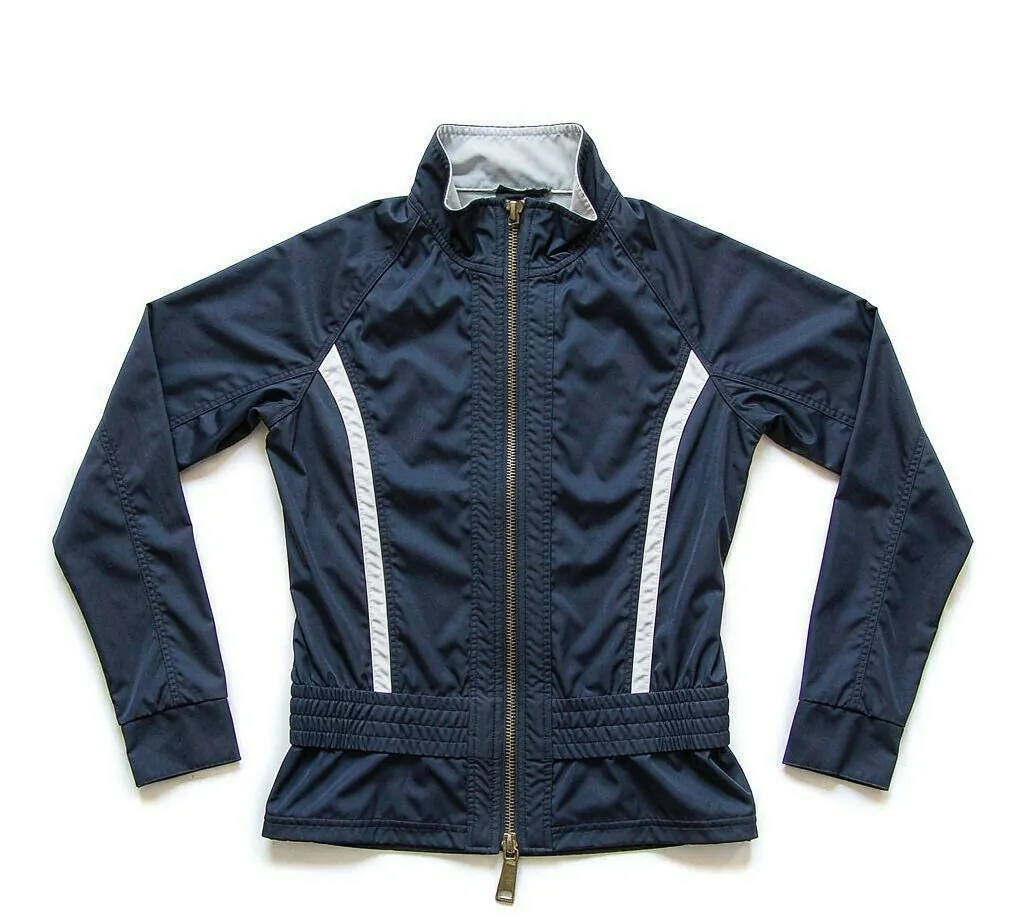 The photograph shows a representative jacket from the category. Fabric, lining and zip style follow the order sheet, and the image is illustrative rather than a picture of your goods.
We have sourced training jackets out of the Fujian and Guangdong belts for five years. The same three failures come back. A zipper that ran fine on the sample splits in bulk because the tape or slider grade was changed. A coating that kept the sample windproof carries a solvent smell in bulk, which is a curing shortcut. And a size run graded for a slim base excludes half the market.
This page covers what the fabric and zip words mean, what belongs on the order sheet, and the checks that catch a weak lot. The wider category is in our wholesale sportswear overview.
Fabric, coating and the zip
The face fabric is usually a woven polyester or a bonded knit, and its weight decides whether the jacket reads as a training layer or a windbreaker. Coatings and laminations add wind resistance, and the coating process is where shortcuts live: an under-cured coating smells, and a smell out of the carton is a return before the first wear. The fabric and the coating belong on the order sheet by name.
The zipper is the mechanical heart of the garment. A branded zip with a proper slider runs thousands of cycles; a cheap one splits at the top of the placket within weeks. The zip spec belongs in writing, and the cycle test on bulk pieces, zipping fully a few dozen times, is the honest check. The storm placket behind it, and the chin guard at the top, are the details that make the zip comfortable.
Breathability is the training test. A jacket that traps heat gets taken off and left behind, which is the commercial failure no review needs to explain. Mesh-lined backs, vent panels and membrane choices all decide it, and they are build decisions worth naming rather than hoping for.
Specifications and minimum order
Our minimum order is 1 piece, so you can start with a single unit and scale up once the sample is approved. Every line below changes what the factory builds. We do not print prices or schedules here, because fabric and trim inputs move; send us the fabric, the zip and the quantity, and we come back with a live quotation and a firm production slot.
| Specification | What to confirm before you order |
|---|---|
| Fabric | woven or knit, weight named, with the coating or lamination specified |
| Zip | the zip grade named, with the placket and chin guard construction |
| Breathability | the vents, mesh panels or membrane that decide the training test |
| Pockets | positions and closures, itemised |
| Sizes | the range with the measurement chart, graded to fit the extremes |
| Trim | elastic, cord and label details, itemised |
| Minimum order | stated per colour and fabric, since each is its own cutting run |
Minimums in this category track cutting and assembly setups, and one fabric in one colourway is the most consistent way to start. Our sourcing service covers the factory screening, the sample round and the inspections below.
What the grading and smell words mean
Grading for outer layers has to leave room for layering underneath, and a jacket graded to skin measurements excludes the customer who wears it over a midlayer. The ease decision belongs in the specification, and the extreme sizes of the run get checked against it, because that is where grading shortcuts surface.
Smell is the defect that photographs worst in reviews. Solvent coatings that are not fully cured release odour inside a sealed carton, and by the time the customer opens it the judgement is made. The sniff test on a carton from the middle of the stack is part of any honest inspection, and a factory with nothing to hide welcomes it.
Two practical points complete the set. Hoods and packs-away features add construction complexity, and each belongs in the specification if the packaging claims them. And reflective details are a safety claim on running styles, so their placement and quality belong on the order sheet rather than in the artwork alone.
What belongs in the purchase order
One page attached to the PO is what protects the reorder. Cover these points:
- Fabric, weight and coating, named, with the curing requirement
- Zip grade, placket and chin guard construction
- Breathability features: vents, mesh or membrane, itemised
- Pocket positions and closures, hood and pack-away behaviour
- Size chart with the layering ease agreed, checked at the extremes
- A penalty clause if the bulk run differs from the approved sample
Inspection points that catch a weak lot
These checks find what a product photograph cannot:
- Run the zip. Zip bulk jackets fully, dozens of cycles, and stress the top stop. A cheap zip shows itself quickly.
- Smell the carton. Open a carton from the middle of the stack. Solvent odour means an under-cured coating.
- Check the extremes. Measure the largest and smallest sizes against the chart, with layering ease in mind.
- Inspect the seams. Pull the shoulder and sleeve seams by hand on bulk pieces.
- Test the claims. Try every pocket, hood and pack-away feature the packaging names.
An independent inspection before loading catches all five at the cheapest point, and the zip cycle test is the one that predicts the returns. Factory inspection covers this category, and the same verification method is set out in our quality control walkthrough.
Frequently asked questions
Coated or laminated fabric?
Coating is cheaper and fine for wind resistance; lamination costs more and breathes better. For a training jacket that customers wear while warm, breathability is the feature they judge, so the decision belongs in the specification rather than in the hope that the fabric behaves.
Which zip spec is worth paying for?
A named, branded zip with a tested slider is the honest answer for anything sold as activewear, because the zip is the part that fails first and loudest. The spec costs a fraction of the retail impact of a zip that splits at the top stop.
How much ease should a training jacket carry?
Enough for a midlayer underneath, agreed as a decision rather than left to the factory’s block. Outer layers graded to skin measurements exclude half their market, and the extreme sizes check at inspection is what keeps the ease honest.
Request a quotation
Send the fabric, the zip spec, the size range and the quantity you need, plus the market you sell into. We come back with factory options and current bands within two business days.