Wholesale Leggings from China
Leggings are the product where a garment meets physics in public. The fabric stretches four ways, the seams have to survive it, and the customer’s first deep squat in front of a mirror is the test the whole category is built around. Everything a buyer specifies, the weight, the stretch, the seam type, answers that test.
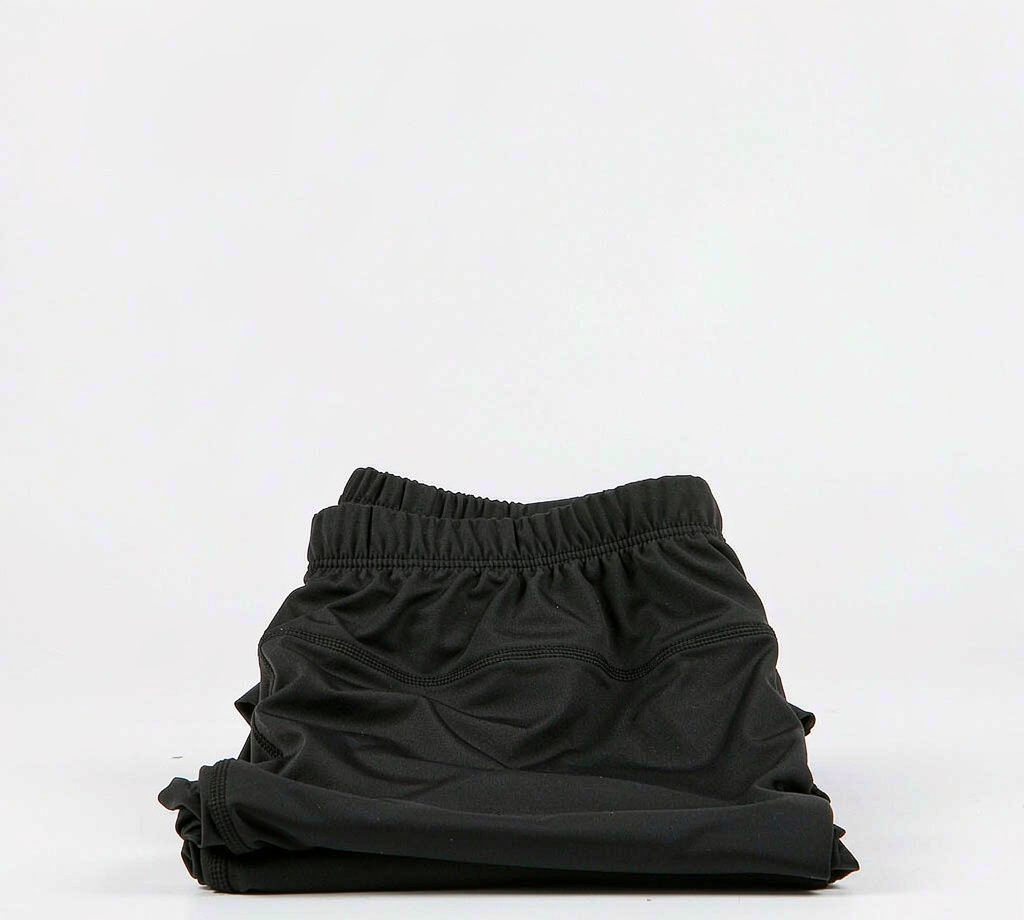 The photograph shows a representative pair from the category. Fabric weight, rise and colour follow the order sheet, and the image is illustrative rather than a picture of your goods.
We have sourced leggings out of the Dongguan and Guangzhou knit belts for five years. The same three failures come back. A fabric sold at one weight arrives lighter and turns sheer under stretch, which is the review that ends a brand. A seam sewn without the right flatlock construction splits at the inner thigh. And a waistband that rolled down on the sample rolls down on every pair in the carton.
This page covers what the fabric and seam words mean, what belongs on the order sheet, and the checks that catch a weak lot. The wider category is in our wholesale sportswear overview.
Fabric, opacity and the waistband
The fabric is a nylon-spandex or polyester-spandex knit, and its weight in grams per square metre is the number that predicts opacity under stretch. Lighter weights cost less and test the limit of decency in a squat; heavier weights are opaque and read premium. The weight belongs on the order sheet, and the honest check is the squat test on bulk pieces in the lightest colourway of the run.
Stretch and recovery are the pairing that matters. A fabric that stretches but does not recover bags at the knee by lunchtime. Recovery is specified as a stretch percentage with a return requirement, and the pull test on bulk pieces, stretched and released, is how it is verified. A knit that passes the pull test passes the changing room.
The waistband is the comfort decision. A wide, high-rise band with internal support stays put through a workout; a narrow one rolls. Construction details, whether the band is folded, elasticised or sewn into the body, decide the behaviour, and each belongs on the specification because the difference is invisible on a hanger.
Specifications and minimum order
Our minimum order is 1 piece, so you can start with a single unit and scale up once the sample is approved. Every line below changes what the factory cuts. We do not print prices or schedules here, because fabric inputs move; send us the weight, the rise and the quantity, and we come back with a live quotation and a firm production slot.
| Specification | What to confirm before you order |
|---|---|
| Fabric | fibre blend and weight in grams per square metre, named |
| Opacity | squat-proof requirement, tested in the lightest colourway shipped |
| Stretch and recovery | the stretch percentage and the return behaviour, stated |
| Seams | flatlock construction at stress points, stated as a requirement |
| Waistband | construction type, rise and internal support, itemised |
| Sizes | the size range with the measurement chart per size |
| Minimum order | stated per colour and fabric, since each is its own dye and cut run |
Minimums in this category track dyeing and cutting setups, and one fabric in a tight colour set is the most consistent way to start. Our sourcing service covers the factory screening, the sample round and the inspections below.
What the seam words mean in practice
Flatlock is the seam construction that lies flat against the skin and spreads stress across a wide stitch. It is the difference between a seam that survives the inner thigh for a year and one that opens in a month. The stitch type belongs on the order sheet, and the pull test on bulk pieces, pulled hard along the seam, is what verifies it.
Chafe is the comfort failure that follows. A raised seam in the wrong place turns a good legging into a return, and the crotch gusset is the detail that solves it. Whether the pattern includes a gusset, and what shape, is a design decision worth writing down, because patterns get substituted as readily as fabrics.
Two practical points complete the picture. Colour consistency across a size run matters more in leggings than in most garments, because sets are sold as matching outfits, and a size large in a slightly different shade is a customer service case. And care instructions have to match the fabric, because a spandex knit washed hot loses recovery and the complaint lands on the brand.
What belongs in the purchase order
One page attached to the PO is what protects the reorder. Cover these points:
- Fibre blend and fabric weight, named
- Squat-proof opacity requirement, tested per colourway
- Stretch percentage and recovery behaviour
- Flatlock requirement at named stress points, plus the gusset decision
- Waistband construction, rise and support, itemised
- A penalty clause if the bulk run differs from the approved sample
Inspection points that catch a weak lot
These checks find what a product photograph cannot:
- Run the squat test. Stretch bulk pieces in the lightest colour over a hand in daylight. Sheerness is the review that ends brands.
- Weigh the fabric. Weigh a cut swatch against the grammage claim on bulk pieces.
- Pull the seams. Stretch the inner thigh and seat seams hard by hand. A weak stitch opens.
- Test the recovery. Stretch the waistband and knee and watch the return. Bagging is the half-day complaint.
- Compare shades. Hold leggings from different cartons side by side, especially within a set colourway.
An independent inspection before loading catches all five at the cheapest point, and the opacity test is the one that protects the brand. Factory inspection covers this category, and the same verification method is set out in our quality control walkthrough.
Frequently asked questions
What fabric weight is squat-proof?
Heavier weights are reliably opaque, but the honest answer is the test rather than the number: stretch the lightest colourway of the run in daylight. Weight and shade interact, and a light grey in a mid-weight can behave differently from black in the same knit.
Why do leggings bag at the knee?
Recovery, not stretch. A fabric can stretch far and return poorly, and the knee is where it shows. The recovery requirement belongs on the order sheet, and the pull-and-release test on bulk pieces verifies it in seconds.
Is a gusset worth specifying?
Yes, for anything sold as activewear. The gusset removes the seam from the highest-stress point, which solves both chafe and the seam-failure complaint at once. It is a pattern decision, so it belongs in writing before the sample is cut.
Request a quotation
Send the fabric weight, the colourways, the size range and the quantity you need, plus the market you sell into. We come back with factory options and current bands within two business days.