
Wholesale Folding Cartons from China
A folding carton is the box a customer opens first: single wall board, die cut, printed, folded flat and shipped that way. Cosmetics, supplements, electronics accessories and food brands all run on it, which is why the category moves in thousands of pieces and the price per box lives or dies on the board specification.
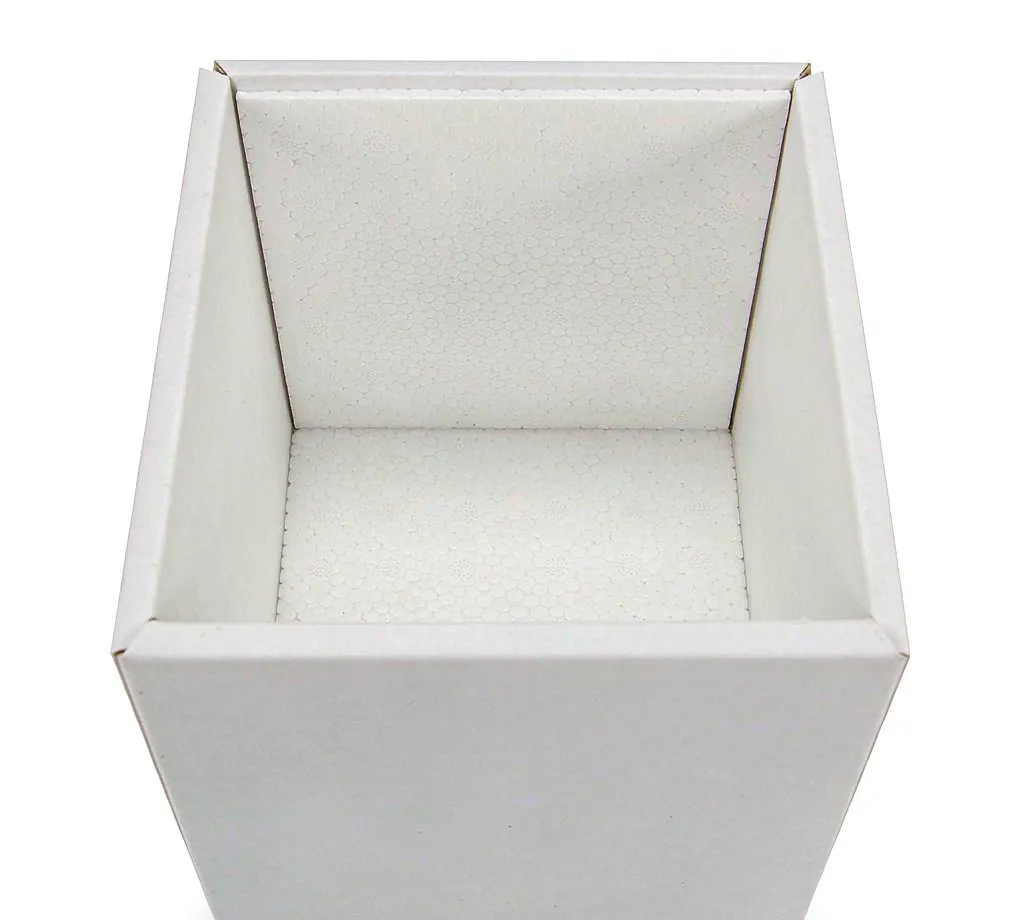
Three failures repeat in this category. The board arrives lighter than the sample, and the box crushes on a retail shelf. The colour drifts between the first run and the reorder, because the factory matched the second run to a new proof instead of the approved one. Or the die line was never tested with a real product inside, and the fit is wrong on ten thousand finished boxes.
All three are preventable before the run starts, and none of them show up in a quotation. This page sets out what to fix on the specification, and the wider cluster context sits in our wholesale packaging overview.
What a folding carton specification decides
The board is the first decision. Greyboard lined with white, folding boxboard and kraft board each behave differently on the folding and gluing line. Weight is quoted in grams per square metre, and a box specified at 350 gsm that arrives at 300 gsm loses stiffness in exactly the place a shopper notices: the lid.
Print comes next. Offset printing on sheet, then coating, then die cutting, then folding and gluing are four separate steps, and each one has a tolerance. Food and supplement brands add a food contact layer or a grease resistant treatment, and that requirement must be named in the contract rather than assumed, because the same carton structure can be produced with or without it.
Specifications and minimum order
Board prices, ink and the factory booking book all move from month to month, so we do not print figures here; they would be stale by the time you read them. What holds still is the list of things to fix before a run.
| Specification | What to confirm before you order |
|---|---|
| Board type | Folding boxboard, greyboard lined white or kraft, named on the PO |
| Board weight | Grams per square metre, with the tolerance the factory will hold |
| Number of colours, inside print or outside only, and the colour standard | |
| Finish | Matte or gloss lamination, spot UV, hot foil or none |
| Die line | A structural sample folded with your actual product inside |
| Food contact | Stated requirement with the relevant test, not an assumption |
| Minimum order | Carton runs are governed by make ready on the press, so factories quote in the thousands; confirm the figure against your exact die line |
Our minimum order is 1 piece, so you can start with a single unit and scale up once the sample is approved. For production the factory minimum follows the die line and the print run, and we confirm that figure against your specification before you commit. Our sourcing service covers the factory screening and the sample coordination described below.
Where the cost actually moves
Board weight is the largest lever, because the material is the majority of the cost of a simple carton. The number of print colours sits second: each additional pass costs make ready time, and a design that reads well in two colours prices far below the same design in six. Finishes are the visible splurge, and hot foil is the one buyers most regret when they see it per thousand pieces.
Quantity changes the shape of the quote as well. Below a certain run size the factory prices the make ready, not the boxes, which is why small runs feel expensive per piece. If your volume sits in that zone, a stock die line with your print on it is the standard way to cut the entry price, and our design service can rework artwork to fit a stock structure without losing the shelf look.
What belongs in the purchase order
- Board type and weight, with the tolerance written as a range rather than a single number
- Colour standard: a physical swatch or a drawn proof kept by both sides, referenced by code
- The approved die line drawing, with the revision number on it
- Finish and lamination, stated per panel if it differs
- Food contact or grease resistance, if the box touches food, with the test named
- Packing: flat folded, nested, carton count and the pallet pattern
A reorder clause matters more in printing than almost anywhere else. State that repeat runs are matched against the retained colour standard from the first order, not against a new proof, and a whole class of drift disappears.
Checks that catch the repeat failures
- Board weight. Weigh a cut sheet and calculate back to grams per square metre; it takes a minute and settles any dispute.
- Crush and fold test. Fold and unfold a sample twenty times, then stand a filled box on it. A light board shows here first.
- Colour against the retained standard. Judge the second run under the same light as the first, side by side, never from memory.
- Glue seam. Pull the glued edge apart on a finished box from the bulk lot. A starved glue line opens in transit.
- Fit test. Insert your actual product into boxes pulled at random from the bulk, not from the sample batch.
An inspection at the press or at packing catches all five points for a small fraction of the cost of a rejected run, and our factory inspection service covers this category. For the wider method, our guide to pre shipment inspection explains how the checks are organised.
Frequently asked questions
Can I print a small first run?
Yes, but the arithmetic changes. On a short run the make ready and plate charges dominate, so the price per box is higher and the factory may suggest a stock die line to remove the tooling cost. Our minimum order is 1 piece, so the sampling step carries almost no commitment; the production minimum is what you should negotiate against your exact design.
Can you match a box I already buy elsewhere?
Send us the physical box rather than a photograph. We measure the board, read the die line off the flat, and have a structural sample made before quoting. Matching from a photo is how board weight quietly drops a grade.
Do food brands need anything special?
Two things: a stated food contact requirement with a named test, and a migration consideration if the product is fatty or acidic, because that changes which coatings are acceptable. Put both in the contract. The same carton structure can be built to two very different standards, and the invoice looks identical.
Request a quotation
Send the product, its dimensions, the board you have in mind and your market. We come back with factory options and the workable minimum for your exact die line within two business days.
