
Wholesale Folding Camping Chairs from China
The folding camping chair is the item everyone uses and nobody reads a datasheet for, which is why the quality spectrum inside one silhouette runs from a season of use to a chair that folds the wrong way under a guest. Frame, fabric and the joints between them decide which side you land on, and all three are specification items.
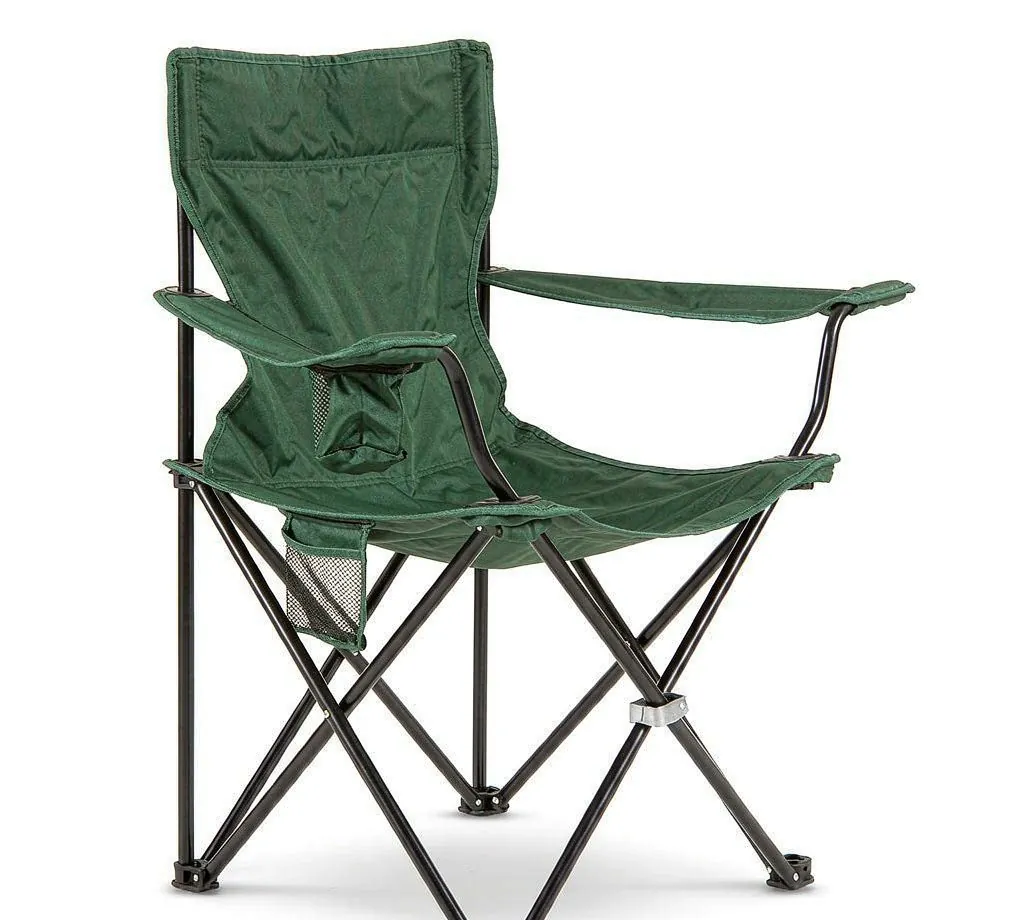
The failures: a rivet shears at a joint because the joint was the cheap point of the frame, the seat fabric tears at the sleeve where the tube passes through, or the chair folds involuntarily when someone shifts their weight, which is a design failure in the locking geometry and not a material one.
All three are testable in minutes. The cluster context is in our wholesale outdoor products overview.
Frame, fabric and joints
Frames are steel or aluminium tube, and the wall thickness of the tube matters more than the diameter; a fat tube with a thin wall is the classic false economy. Joints are riveted or bolted, and the rivet is the point that shears, so joint design and rivet grade belong on the PO, not just the word steel.
Seat fabric is polyester or oxford weave, judged by tear strength and UV stability as much as denier. The stress point is the sleeve where the fabric wraps the tube, and a reinforced sleeve or a double stitch line is what separates a chair that lasts from one that opens up along the seam mid season.
Specifications and minimum order
Steel and fabric prices move with raw material markets, so live figures come with the quotation. Fix these points.
| Specification | What to confirm before you order |
|---|---|
| Frame | Steel or aluminium, tube diameter and wall thickness |
| Joints | Rivet or bolt grade, and the joint reinforcement design |
| Load rating | The static load the chair is rated to, and the test behind it |
| Fabric | Polyester denier, tear strength and UV stability |
| Sleeves | Reinforcement and stitch pattern at the tube pass throughs |
| Locking | The geometry that prevents involuntary folding, agreed on sample |
| Minimum order | Hundreds per colourway in practice, set by tube cutting and sewing runs |
Our minimum order is 1 piece, so a sat on, folded, loaded sample is approved before any production commitment. The production minimum follows the frame and fabric runs, and we confirm it against your spec. Our sourcing service screens the frame shops and sewing lines.
The load rating needs a test behind it
A load rating printed without a test is marketing, and this category prints more untested ratings than any other outdoor line. The honest version is a static load test with a margin, plus the geometry check that the chair cannot fold under a shifting load, because that is the injury scenario regulators care about and returns departments hear about.
UV is the second quiet failure. Fabric that looks identical in the showroom fades and weakens across a summer of weekend use; a UV stability requirement and a bulk fabric check keep the second season from becoming a warranty season. Our quality assurance service writes both into the order.
What belongs in the purchase order
- Tube material, diameter and wall thickness, joints and rivet grade
- Load rating with the test method, and the fold prevention geometry
- Fabric denier with tear strength and UV stability
- Sleeve reinforcement and stitch pattern at stress points
- Cup holder, armrest and accessory fittings, if any, with their fixings
- Packing: folded size, carry bag spec and carton count
Checks that catch the repeat failures
- Static load. Load a bulk chair above the rating briefly; frame deflection that does not recover means thin tube.
- Shift test. Sit, lean side to side and forward; involuntary folding shows in the first minute.
- Rivet check. Work each joint through twenty fold cycles; a loose rivet clicks or shifts visibly.
- Sleeve pull. Pull the fabric sleeve hard along the tube; a single stitch line tears where a reinforced one holds.
- Fabric tear. nick test the seat fabric; oxford weaves with low tear strength propagate a nick instantly.
All five checks fit inside a standard pre shipment inspection, and our factory inspection service covers outdoor furniture plants. For the fuller method, see our pre shipment inspection guide.
Frequently asked questions
What load rating should I buy?
One with a test behind it and a margin above your market expectation, because the rating is printed on the product and the injury scenario is real. We verify the test on bulk units rather than accepting the box print. Our minimum order is 1 piece for sampling any rating.
Steel or aluminium frames?
Steel for value and weight capacity, aluminium for carry weight. The wall thickness decision matters more than the material choice, and it is the specification line that false economies hide behind.
Why do chairs fail at the sleeve?
Because the fabric bears load exactly where it wraps the tube, and a single stitch line there is a tear waiting for a hot afternoon. Reinforced sleeves cost a little more per unit and remove the single most common failure in the category.
Request a quotation
Send the load rating, fabric preference and your market. We come back with frame options plus the workable minimum within two business days.
