
Wholesale Upholstered Bed Frames from China
An upholstered bed frame is bought for how it looks in a bedroom and judged on the two things the photograph cannot show: how it sounds and whether it creaks. A bed that creaks is a product that gets returned regardless of how good the fabric looks.
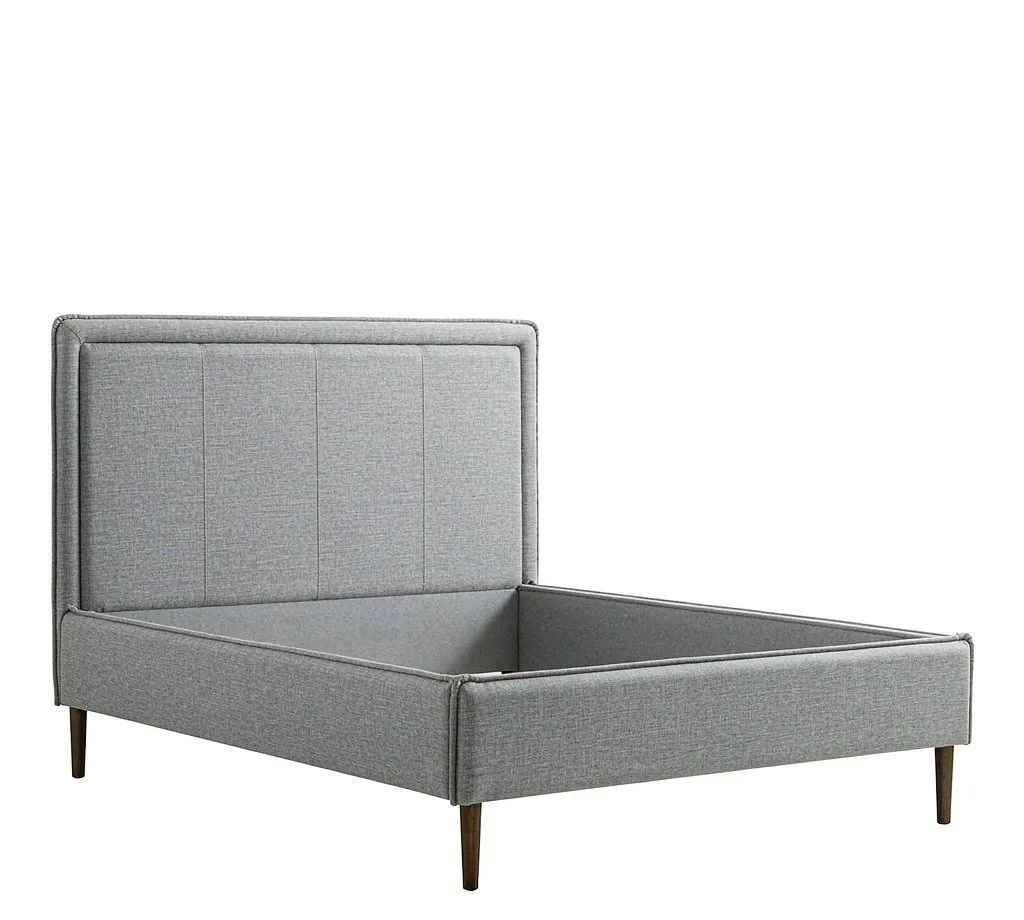 The photograph shows a representative bed frame from the category. Fabric, headboard height and leg finish follow the approved sample, and the image is illustrative rather than a picture of your goods.
We have sourced upholstered beds out of the Guangdong and Zhejiang clusters for years. Three failures repeat. A frame built from softer timber arrives and starts creaking within weeks as the joints work. A slat pack at a stated thickness arrives thinner and bows under a mattress. And a headboard that was solid on the sample arrives with fixings that loosen, so the headboard rocks against the wall.
This page covers what the frame and slat words mean, what belongs on the order sheet, and the checks that catch a weak lot. The supply base behind the category is in our wholesale furniture overview.
Frame, slats and headboard
The frame is a timber or metal structure under upholstery, and its quality is decided by the timber, the joinery and the way the parts are fixed together. A bed takes a moving load every night, so joints that are merely stapled loosen, and the creak that follows is the most common complaint in the category.
The slat pack carries the mattress and the customer. Slat thickness, the number of slats and the centre rail under a wide bed together decide whether the base sags. A bed that dips in the middle has a slat specification problem rather than a mattress problem.
The headboard is the visible half and the part that moves. It is fixed to the frame at two points, and both the fixing method and the rigidity of the headboard panel decide whether it rocks. A headboard that wobbles under a hand traces back to the fixing rather than to the upholstery.
Specifications and minimum order
Our minimum order is 1 piece, so you can start with a single unit and scale up once the sample is approved. Every line below changes what the factory builds. We do not print prices or schedules here, because timber, foam and fabric inputs move; send the size, the fabric and the quantity, and we come back with a live quotation and a firm production slot.
| Specification | What to confirm before you order |
|---|---|
| Frame timber | species and moisture content, with the joinery method named |
| Slat pack | slat thickness and count, plus the centre rail for wider sizes |
| Headboard | panel construction, height and the fixing method to the frame |
| Padding | foam density and thickness across the headboard and the rails |
| Fabric | composition, rub cycles and how it behaves at the corners |
| Packing | carton construction, edge protection and how panels are stacked |
| Minimum order | stated per size and per fabric, since covers are cut and sewn in runs |
Minimums in upholstered beds are driven by the fabric run and the frame jig, so one fabric across a small size range holds cost down. Our sourcing service covers the factory screening, the sample round and the inspections below.
What the frame and slat words mean in practice
Moisture content is the specification that prevents most creaks. Timber that was not dried to the right level moves after assembly as the bedroom humidity changes, and a frame that moves lets its joints work loose. Because it cannot be seen in a finished bed, it belongs on the record rather than in a visual inspection.
Slat specification is a load calculation, not a cosmetic choice. A wide bed needs a centre rail because the span is too long for a slat to carry alone, and slat thickness decides how much the pack deflects under a mattress and two people. A slat pack that arrives thinner than the specification is the substitution that produces a dip.
Headboard fixings complete the picture. The panel is heavy, and the fixing has to resist a load that pulls away from the wall rather than pressing into it. A fixing that relies on a small screw into the frame is the one that loosens.
What belongs in the purchase order
One page attached to the PO is what protects the reorder. Cover these points:
- Frame timber species, moisture content and joinery method
- Slat thickness, slat count and the centre rail requirement
- Headboard construction and the fixing method, itemised
- Foam density for the headboard padding
- Fabric composition and rub cycles
- A penalty clause if the bulk lot differs from the approved sample
Inspection points that catch a weak lot
These checks find what a product photograph cannot:
- Assemble and load one. Build a bulk bed, load the slat pack and move on it. Creaks and dips reveal themselves in a minute.
- Press the slats. Push a slat down by hand and judge the deflection against the approved sample.
- Rock the headboard. Pull the headboard away from the wall and check both fixings for movement.
- Open the frame. Where the contract allows, check the timber under the upholstery for species and moisture marks.
- Inspect the corners. Look at how the fabric sits at the corners, which is where a cover wears first.
An independent inspection before loading catches all five at the cheapest point. Factory inspection covers this category, and the wider system is set out in our guide to pre shipment inspection.
Frequently asked questions
Why do upholstered beds creak?
Because the joints are working. A frame that takes a moving load needs proper joinery and timber that has been dried to the right moisture content, and a frame built with staples or green timber loosens over the first months of use. The fix is a specification, not a repair.
What slat thickness should a bed frame use?
It depends on the width of the bed and on whether a centre rail is fitted. A wider bed spreads the load over a longer span, so it needs either thicker slats or a rail carrying the middle. Slat thickness is the first thing reduced when a supplier works to a lower cost.
How do I check the headboard before shipping?
Assemble the frame and pull the headboard away from the wall. The fixing has to resist that pull, and both fixings should be checked rather than one. A headboard that moves under hand pressure will rock against a wall in a customer’s bedroom.
Request a quotation
Send the size, the fabric, the headboard style and the quantity you need, plus the market you sell into. We come back with factory options and current bands within two business days.
