Wholesale Mesh Office Chairs from China
A mesh office chair is a mechanical product with a cushioning story on top. The customer reads the mesh, but the parts that decide whether the chair survives a real office are the gas lift, the base and the mechanism that reclines.
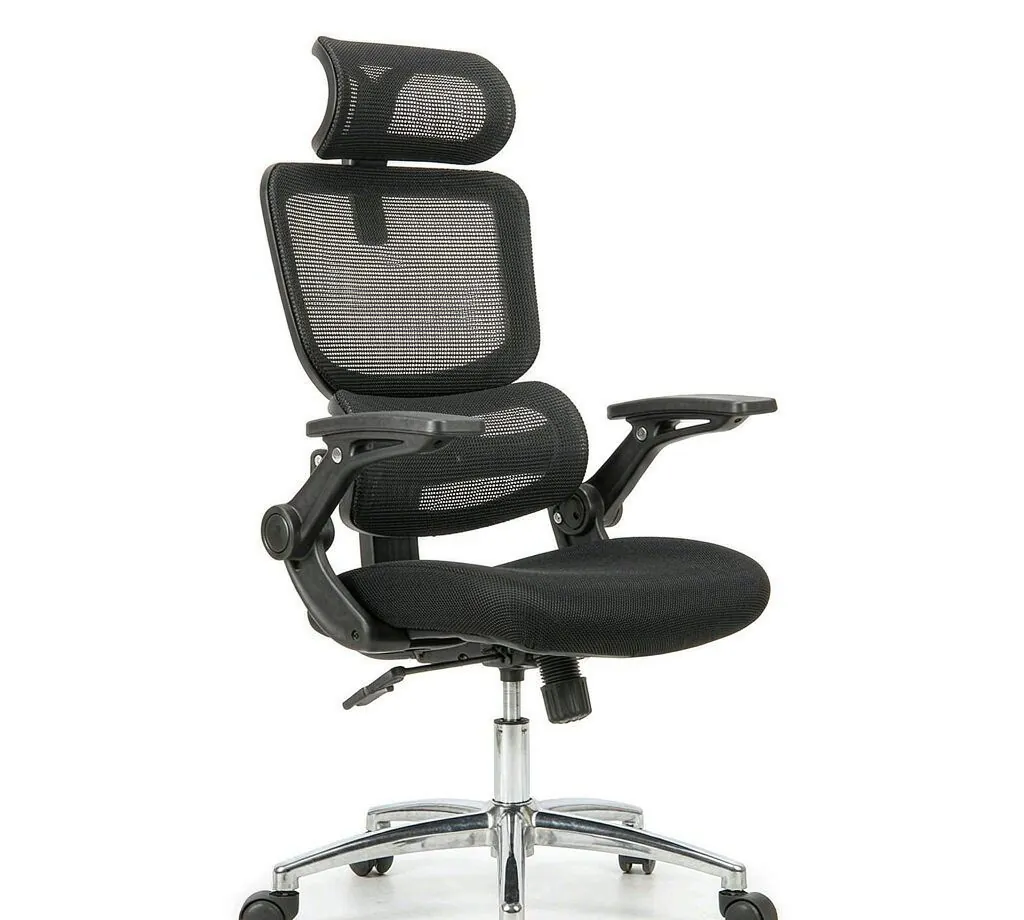 The photograph shows a representative chair from the category. Colour, mesh style and base finish follow the approved sample, and the image is illustrative rather than a picture of your goods.
We have sourced seating out of the Guangdong and Zhejiang clusters for years. Three failures repeat. A gas lift of a named class arrives with an unmarked cylinder, which matters because the class behind the figure is a safety category. A five star base that took the sample load arrives in a thinner section that flexes under a heavy user. And mesh that had the right tension on the sample arrives slack, so the back sags rather than supporting.
This page covers what the lift, base and mesh words mean, what belongs on the order sheet, and the checks that catch a weak lot. The supply base behind the category is in our wholesale furniture overview.
Gas lift, base and mechanism
The gas lift is the safety critical part of any swivel chair. Lifts are supplied in classes that describe the cylinder wall and the internal pressure, and the class is a real distinction rather than a marketing label. A lift of the correct class carries a marking, and that marking is what an inspection checks.
The base carries the whole load through five legs and their joints. Section thickness, the material and the way the legs are joined to the hub decide whether the base flexes, and a base that flexes eventually cracks at a leg or loosens at the hub.
The mechanism is what the user adjusts, and it is where feel becomes a specification. Tilt tension, tilt lock positions and the height of the armrests are all adjustable, and each adjustment point is a place where a cheaper build is felt immediately.
Specifications and minimum order
Our minimum order is 1 piece, so you can start with a single unit and scale up once the sample is approved. Every line below changes what the factory assembles. We do not print prices or schedules here, because steel and cylinder inputs move; send the mesh type, the mechanism and the quantity, and we come back with a live quotation and a firm production slot.
| Specification | What to confirm before you order |
|---|---|
| Gas lift | the class named, with the marking visible on the cylinder |
| Base | material, section thickness and how the legs are joined to the hub |
| Castors | type, diameter and the floor surfaces they are rated for |
| Mesh | yarn and weave, plus the tension the back must hold |
| Mechanism | tilt type, lock positions and the load it must hold |
| Armrests | adjustment directions and the material of the pads |
| Minimum order | stated per colour and per model, since mesh is ordered by the roll |
Minimums in seating are driven by the mesh roll and the mechanism order, so one colour across a small model range holds cost down. Our sourcing service covers the factory screening, the sample round and the inspections below.
What the chair words mean in practice
The gas lift class is a safety specification and it is not interchangeable with a similar looking part. A cylinder of a lower class carries a lower pressure and a thinner wall, and it is the component most likely to be substituted because the change is invisible once the chair is assembled. The marking on the cylinder is the evidence.
Base test standards describe a load cycle rather than a single weight. A base is tested by dropping a load onto the chair repeatedly, and a base that survived one static load on a sample has not been tested for the cycle. Both the standard and the cycle belong in the specification.
Mesh tension is the property the user feels. A back that is slack does not support, and a back that is over-tensioned feels rigid. Tension depends on the yarn, the weave and how the panel is fixed to the frame, and a loose fixing is the substitution that shows up as sag.
What belongs in the purchase order
One page attached to the PO is what protects the reorder. Cover these points:
- Gas lift class, with the cylinder marking required on the bulk
- Base material and section thickness
- Castor type and diameter
- Mesh yarn and weave, with the tension the back must hold
- Mechanism type, lock positions and load requirement
- A penalty clause if the bulk lot differs from the approved sample
Inspection points that catch a weak lot
These checks find what a product photograph cannot:
- Read the cylinder. Check the class marking on every lift in a sample of bulk chairs, because substitution is invisible after assembly.
- Load the base. Apply a load at the seat edge and watch the base and the leg joints for flex.
- Drop test a chair. Drop a loaded chair onto its base repeatedly and inspect the hub and the castors afterwards.
- Press the back. Push into the mesh panel and compare the give against the approved sample.
- Work the mechanism. Cycle the tilt and the height adjustment and check for play or noise.
An independent inspection before loading catches all five at the cheapest point. Factory inspection covers this category, and the wider system is set out in our guide to auditing Chinese suppliers.
Frequently asked questions
What does the class of a gas lift mean?
It describes the construction of the cylinder and the pressure it holds, and it is a safety category rather than a marketing term. A higher class means a thicker wall and a stronger cylinder, and the class is marked on the part, which is how it is checked.
How should an office chair base be tested?
By a load cycle rather than a single weight. A base is dropped onto a defined load repeatedly, and the joint at the hub and the castor mounts are the places that fail. One static test on a sample does not describe how a base behaves in service.
Why does the mesh panel sag?
Because the panel is fixed too loosely or the yarn has stretched. Tension is set when the panel is fitted to the frame, and a fixing method that allows movement lets the back sag under load. The comparison is a physical press against the approved sample.
Request a quotation
Send the mesh type, the mechanism, the colour and the quantity you need, plus the market you sell into. We come back with factory options and current bands within two business days.