
Wholesale Fabric Sofas from China
A sofa is the one product in a furniture order where the customer can feel whether money was saved, and they feel it within a week. The frame, the foam and the fabric are all hidden under a cover, and all three decide whether the sofa still feels like a new sofa after a year.
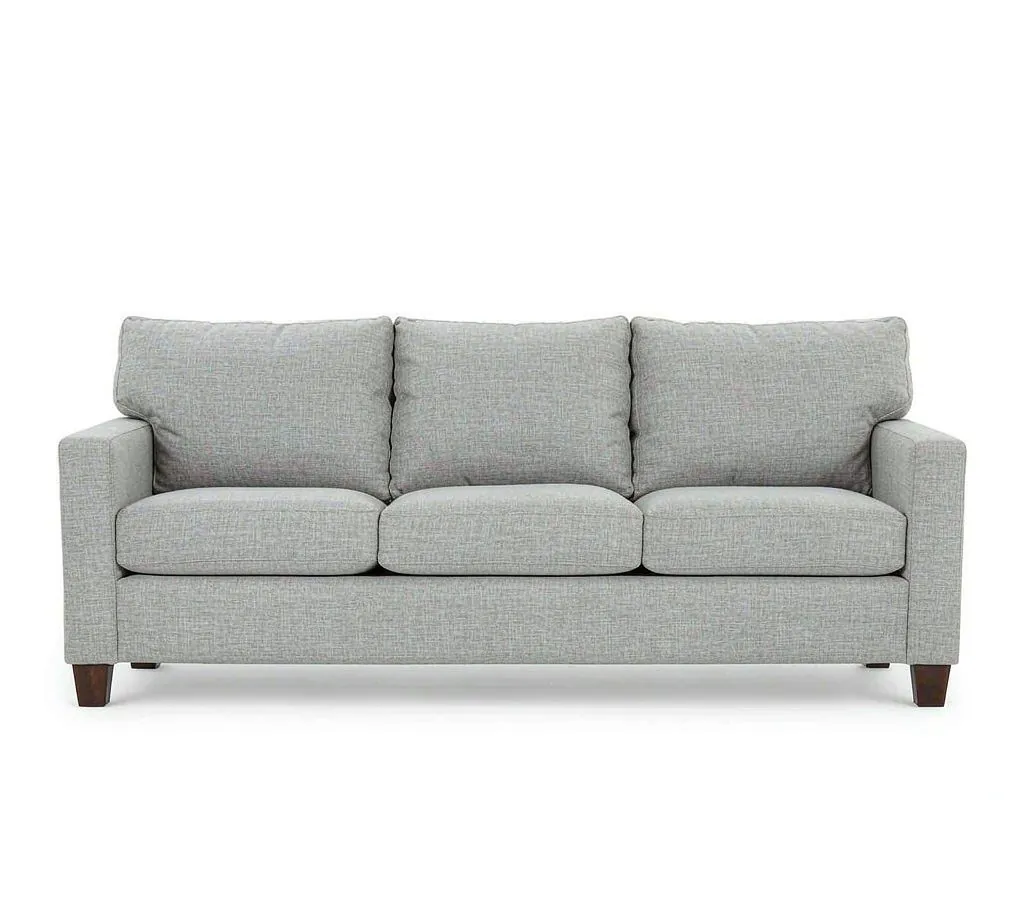 The photograph shows a representative sofa from the category. Fabric, leg finish and proportions follow the approved sample, and the image is illustrative rather than a picture of your goods.
We have sourced upholstered furniture out of the Guangdong and Zhejiang clusters for years. Three failures repeat. A frame sold as kiln dried hardwood arrives in a softer timber that creaks at the joint within months. A seat cushion built at a stated foam density arrives lighter and collapses into the frame. And a fabric that passed a rub test on a sample cushion arrives with a weave that pills on the bulk.
This page covers what the frame, foam and fabric words mean, what belongs on the order sheet, and the checks that catch a weak lot. The supply base behind the category is in our wholesale furniture overview.
Frame, foam and fabric
The frame is the part nobody sees and the part that decides the life of the piece. Kiln dried hardwood is the standard because it resists movement as humidity changes; softer timbers and unseasoned wood creak, and a frame that has not been dried properly can move enough to distort a cover. The joinery matters as much as the timber, since a stapled joint and a dowelled joint behave differently under a load that shifts.
Foam is the part the customer judges first. Density is the specification that decides whether a seat holds its shape, and it is separate from firmness: a seat can feel firm because it is thin, and collapse anyway. The density of the seat core and of the back padding should be named separately.
Fabric is the third variable and the easiest to substitute. Rub resistance is the standard measure of how a cover wears, and it is quoted as a cycle count. Pilling is a separate property, driven by the fibre and the weave rather than by the rub figure alone.
Specifications and minimum order
Our minimum order is 1 piece, so you can start with a single unit and scale up once the sample is approved. Every line below changes what the factory builds. We do not print prices or schedules here, because timber, foam and fabric inputs move; send the dimensions, the fabric and the quantity, and we come back with a live quotation and a firm production slot.
| Specification | What to confirm before you order |
|---|---|
| Frame timber | species and moisture content, with the joinery method named |
| Seat core | foam density and thickness, stated separately from the back padding |
| Suspension | webbing, springs or elastic belts, and how the seat is supported |
| Fabric | composition, rub cycle count and pilling behaviour |
| Dimensions | overall size, seat height and depth, measured on a finished piece |
| Packing | carton construction, corner protection and how the piece is loaded |
| Minimum order | stated per fabric and per configuration, since covers are cut in runs |
Minimums in upholstery are driven by the fabric run and the frame jig, so one fabric across a small configuration range holds cost down. Our sourcing service covers the factory screening, the sample round and the inspections below.
What the foam and fabric words mean in practice
Density and firmness are routinely confused and they answer different questions. Density is how much material is in the foam and it sets how long a seat lasts; firmness is how the seat feels on the first day. A seat that is firm because it is thin feels supportive in a showroom and collapses in a year.
Rub cycles describe abrasion and not comfort. A fabric with a high rub figure can still pill, and a pilling cover looks worn long before it abrades through. Both properties belong in the specification, and both are testable on a bulk cushion.
Frame moisture is the quiet failure in this category. Wood that was not dried to the right moisture content moves after assembly, which shows as a creak at the joint, a cover that no longer sits square, or a crack at a rail. The moisture content belongs on the record, because it cannot be seen in a finished piece.
What belongs in the purchase order
One page attached to the PO is what protects the reorder. Cover these points:
- Frame timber species, moisture content and joinery method
- Seat foam density and thickness, separately from the back
- Suspension type and how the seat is supported
- Fabric composition, rub cycles and pilling behaviour
- Overall and seat dimensions, measured on a finished piece
- A penalty clause if the bulk lot differs from the approved sample
Inspection points that catch a weak lot
These checks find what a product photograph cannot:
- Sit and stand repeatedly. Work one bulk seat through repeated loading and watch for creaks, movement and foam recovery.
- Open a frame. Where the contract allows, inspect the frame under the dust cover for timber species, moisture marks and joinery.
- Feel the seat core. Press the seat to judge thickness and density, and compare against the approved sample rather than against a brochure.
- Rub the fabric. Rub a bulk cover in one spot until it shows wear, then check for pilling as well as abrasion.
- Drop a carton. Handle a packed carton as a freight handler would and check corner protection and whether the frame inside has moved.
An independent inspection before loading catches all five at the cheapest point. Factory inspection covers this category, and the wider system is set out in our guide to pre shipment inspection.
Frequently asked questions
What foam density should a sofa seat use?
It depends on the use and on the price point, and the useful move is to fix a density on the sample and hold it on every reorder. Density is what decides how long a seat lasts, and it is invisible once the cover is on, which makes it the first thing to be quietly reduced.
How do I check a frame I cannot see?
Ask for the timber species and moisture content on the record, and inspect the frame under the dust cover at production. Where a full inspection is not practical, the moisture figure and the joinery method in writing are the controls that remain.
Does a higher rub count mean a better sofa?
It means a more abrasion resistant cover, which is not the same thing. Pilling turns a cover shabby well before it wears through, and pilling comes from the fibre and the weave. Both properties belong in the specification and both should be tested on bulk.
Request a quotation
Send the dimensions, the fabric, the configuration and the quantity you need, plus the market you sell into. We come back with factory options and current bands within two business days.
