
Wholesale Makeup Sponges from China
A makeup sponge is a piece of foam, and almost everything that decides whether customers buy it again is invisible in a product photograph. The sponge that sells is the one that swells evenly when wet, gives the product back when pressed and stays soft after a month of washing.
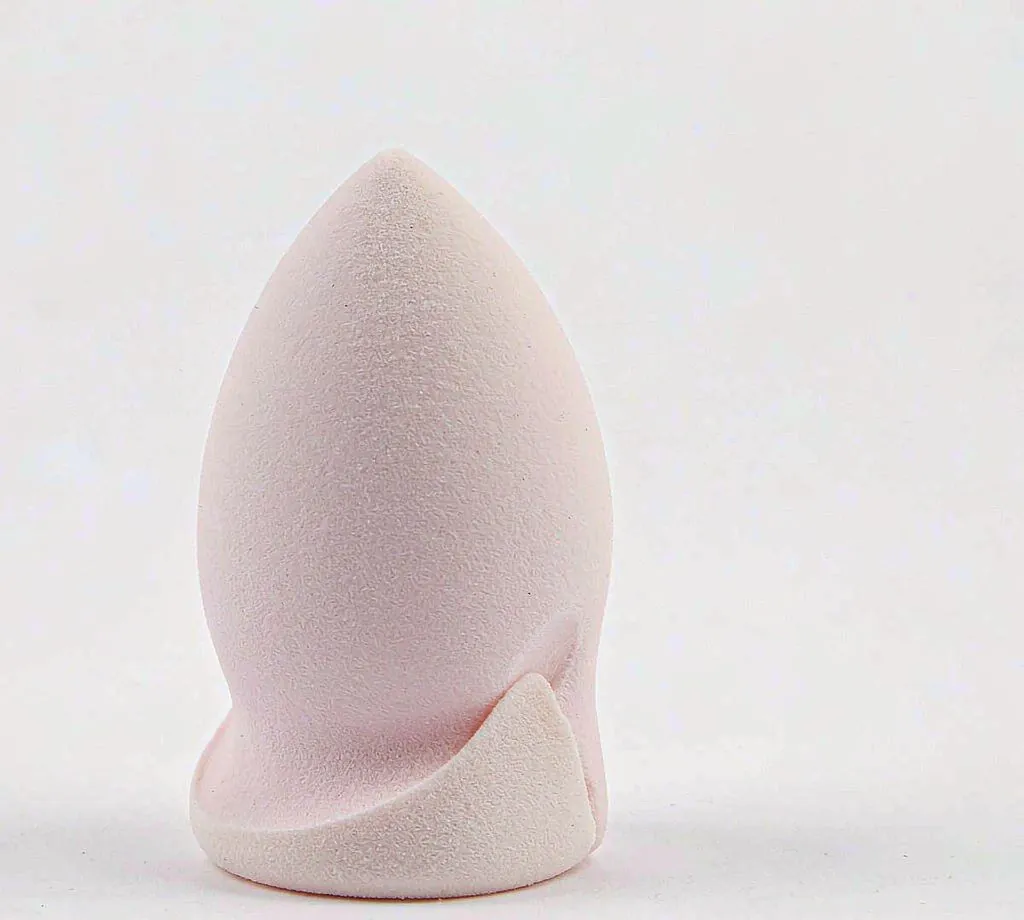 The photograph shows a representative sponge from the category. Colour, shape and foam grade follow the approved sample, and the image is illustrative rather than a picture of your goods.
We have sourced blending sponges and applicator foam out of the Guangdong and Zhejiang clusters for years. Three failures repeat. A foam sold as latex free arrives with a latex content that only appears on a declaration. A sponge that expanded evenly on the sample arrives with a denser skin on the outer face, which makes it soak product instead of releasing it. And a grade that felt soft when new stiffens after a few washes.
This page covers what the foam words mean, what belongs on the order sheet, and the checks that catch a weak lot. The supply base behind the category is in our wholesale beauty and cosmetics overview.
Foam grade, cell structure and shape
The foam is the product. Two families dominate: a polyurethane foam, which can be made without latex, and latex based foam, which is springier and cheaper and carries a declared allergen for some users. Which family a sponge belongs to is a safety and a marketing question, so it belongs in writing rather than in a sample.
Cell structure decides how the sponge behaves when wet. An open cell foam absorbs water quickly, expands evenly and releases product when pressed. A closed or skinned outer face traps product at the surface and feels slick, which is why the same shape can perform completely differently across two grades.
Shape and cut are the last variables. Teardrop, round and angled shapes each suit a different application, and the cut quality shows at the edges: a torn or ragged edge holds product and feels rough.
Specifications and minimum order
Our minimum order is 1 piece, so you can start with a single unit and scale up once the sample is approved. Every line below changes what the factory produces. We do not print prices or schedules here, because foam inputs move; send the shapes, the foam family and the quantity, and we come back with a live quotation and a firm production slot.
| Specification | What to confirm before you order |
|---|---|
| Foam family | polyurethane or latex, with the latex content declared in writing |
| Density | the foam density named, since it decides spring and wash life |
| Cell structure | open cell rather than skinned, checked on a cut face |
| Expansion | how much the sponge swells when wet, and whether it recovers |
| Shape and size | dimensions dry and wet, and the cut quality at the edges |
| Colour | pigment type, and whether it bleeds when wet |
| Minimum order | stated per shape and per colour, since foam is mixed in batches |
Minimums in foam are driven by the batch mix and by the cutting die, so a small number of shapes across one colour holds cost down. Our sourcing service covers the factory screening, the sample round and the inspections below.
What the foam words mean in practice
Density and softness are not the same thing, and a soft sponge is not automatically a good one. Low density foam feels soft when dry and collapses under pressure; a firmer, denser foam holds its shape, springs back and lasts through more washes. The distinction is the one buyers most reliably get wrong.
Latex content belongs in writing because the consequences are not cosmetic. A customer with a latex sensitivity reacts to the sponge, and the claim on the packaging has to match the material in the box. A declaration from the supplier, kept on file, is the control.
Colour fastness is the quiet one. A dyed sponge that bleeds when wet leaves colour in the water and on the skin, which is a complaint with a photograph attached. A soak test in warm water shows it in minutes and costs nothing.
What belongs in the purchase order
One page attached to the PO is what protects the reorder. Cover these points:
- Foam family and the latex content declaration
- Density and cell structure, referenced to an approved sample
- Dry and wet dimensions, plus the expansion behaviour expected
- Shape list with cut edge quality
- Colour, with a soak test pass level attached
- A penalty clause if the bulk lot differs from the approved sample
Inspection points that catch a weak lot
These checks find what a product photograph cannot:
- Soak and expand. Soak a bulk sponge, measure it and squeeze it. Expansion should be even across the face, not concentrated at the edges.
- Press and release. Squeeze the wet sponge and watch how it recovers. A sponge that stays compressed has the wrong density.
- Cut one open. Cut a bulk sponge through the middle and look at the cell structure. A skinned outer face is visible in section.
- Soak for colour. Leave a sponge in warm water and check the water for pigment.
- Wash and repeat. Run a bulk sponge through several wash cycles and compare softness against a new one.
An independent inspection before loading catches all five at the cheapest point. Factory inspection covers this category, and the wider system is set out in our guide to the sample versus bulk gap.
Frequently asked questions
How do I confirm a sponge is latex free?
Ask for the declaration in writing and keep it on file, because the claim on the packaging has to match the material in the box. A latex sensitivity is a safety question rather than a preference, so the control is documentation plus a consistent supplier.
Why does the same shape perform differently?
Because shape is a small part of the story. Cell structure and density decide how the sponge takes up water and releases product, and the same teardrop cut from two foam grades behaves like two different products. Fix the grade, not just the shape.
Should the sponge be sold dry or pre wet?
Dry, unless the packaging is designed to hold moisture. A sponge sold wet needs a sealed container and a preservative conversation, which turns a simple foam product into a different category of packaging problem.
Request a quotation
Send the shapes, the foam family, the density and the quantity you need, plus the market you sell into. We come back with factory options and current bands within two business days.
