
Wholesale Freshwater Pearl Strands from China
Freshwater pearls are the cultured pearl of the volume trade, and the farming regions around China’s lakes supply most of the world. The strand is sold by grade, and the grade is a set of judgments about lustre, surface and shape that a buyer either understands or overpays for. This page translates the grading into checks you can run with a lamp and a loupe.
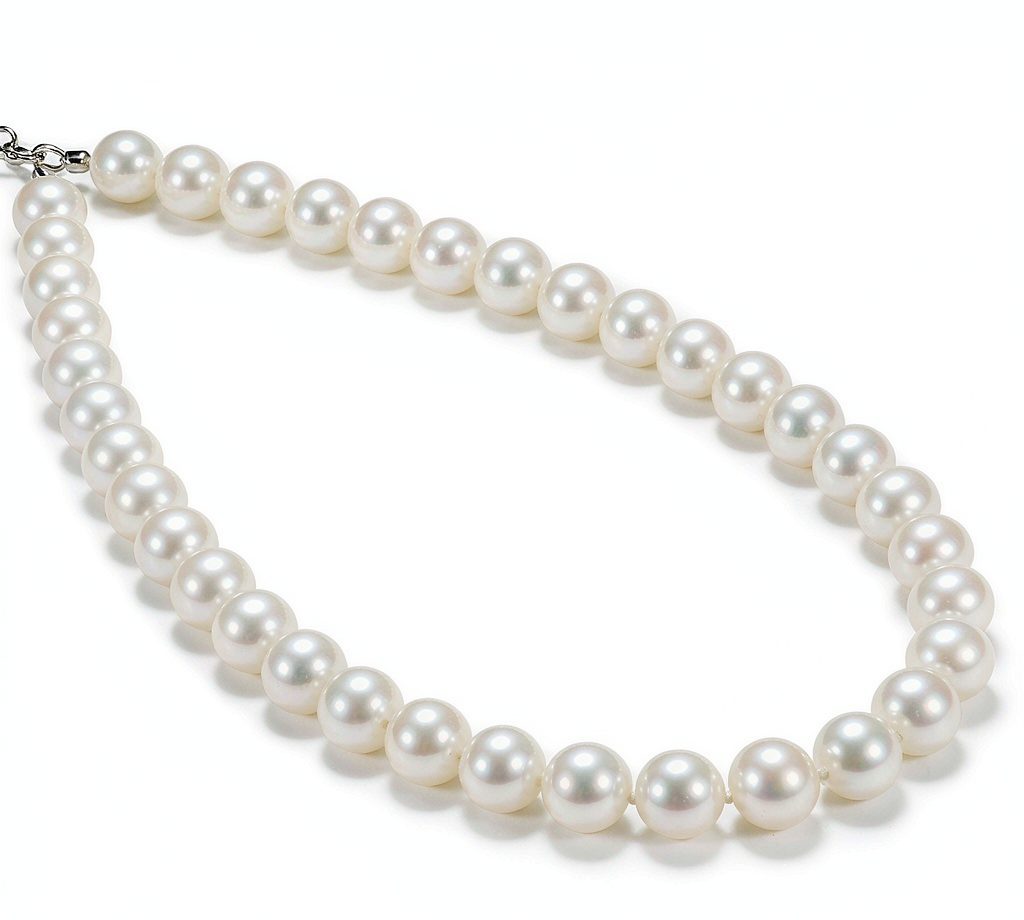
The failures: strands sold one grade above what is in the bag, pearls drilled off centre so the strand will never hang straight, and knotting skipped to save labour, which means one broken thread loses the whole necklace.
All three are visible in minutes. The category context is in our wholesale jewelry overview.
Lustre, surface and the grade ladder
Lustre is the pearl’s value: light reflected sharply from the nacre reads as quality, and a dull, chalky surface reads as cheap at any size. Surface grading counts blemishes; shape grades run from round to baroque, and freshwater pearls are rarely perfect rounds, so the price ladder rewards honesty about shape.
Matching is the strand’s craft: colour, size and lustre across a strand should read as one necklace, not a collection. Drill quality decides whether the strand hangs true and whether the thread is protected. Knotting between pearls is the traditional construction, and it is labour, which makes it the first thing dropped on cheap strands.
Specifications and minimum order
Pearl prices move with harvests and grade demand, so live figures come with the quotation. Fix these points.
| Specification | What to confirm before you order |
|---|---|
| Size | Millimetre range, measured, not labelled |
| Lustre | Grade defined by comparison against a physical standard |
| Surface | Blemish allowance stated as a grade, verified under a lamp |
| Shape | Round, near round or baroque, named honestly |
| Drill | Centred and full drilled, with the hanging test as standard |
| Construction | Knotted between pearls, thread and clasp quality named |
| Minimum order | Strands by the hundred in practice; matching labour sets the pace per grade |
Our minimum order is 1 piece, so a graded, knotted sample strand is approved before any production commitment. The production minimum follows the grade and matching labour, and we confirm it against your spec. Our sourcing service buys at the farming and trading hubs, where grades are separated before export.
Grading is a comparison, not a label
Every grade word in the pearl trade, AAA, AA+, and their cousins, means what the comparison says it means and nothing more. The reliable method is a physical standard strand kept with the order: bulk is graded against the standard under the same lamp, by the same protocol, every time.
Drill and knotting are the mechanical checks. A strand hangs straight only if every pearl is drilled centred; a knotted strand survives a broken thread; a glued or unknotted strand does neither. Our quality assurance service writes the grading protocol and the mechanical checks into the order.
What belongs in the purchase order
- Size range and the measured tolerance
- Lustre and surface grades defined by comparison to a retained standard
- Shape named honestly, with the mix allowed per strand
- Drill standard and the hanging test
- Knotting, thread and clasp specification
- Packing: individual pouches, and carton limits that protect the pearls
Checks that catch the repeat failures
- Lamp grading. Grade bulk strands against the retained standard under one lamp; lustre and surface differences show immediately.
- Hanging test. Hang a bulk strand; waviness means off centre drills.
- Knot check. Look between pearls under a loupe; knots are visible or absent, there is no halfway.
- Match audit. Compare colour and size across each bulk strand; mismatch shows as a staircase from clasp to clasp.
- Measure, do not read. Measure a sample of pearls per strand; labels drift more than calipers do.
These checks are standard work in a pre shipment inspection, and our factory inspection service covers pearl trading and stringing workshops. For the fuller method, see our pre shipment inspection guide.
Frequently asked questions
What grade should I buy?
The grade your market can verify, defined by a physical standard rather than a letter. Freshwater pearls trade on the comparison, so the standard strand is the only grade that cannot be inflated. Our minimum order is 1 piece for sampling any grade.
Is knotting really necessary?
For anything sold as a finished necklace, yes: knotting protects every pearl from its neighbours and from a broken thread. It is the labour line that cheap strands cut first, and it is visible under a loupe in seconds.
Why do strands from one supplier vary?
Harvests and matching labour vary. The retained standard strand and the grading protocol are what keep the second order looking like the first; without them, a supplier grades to whoever is asking.
Request a quotation
Send the size range, grade expectation and your market. We come back with strand options plus the workable minimum within two business days.
