
Wholesale 4 Person Dome Tents from China
The dome tent is the volume engine of the camping trade: festival goers, family campers and retail own brands all buy in the same shape, and the factory price range inside that one shape is wider than most buyers expect. The difference is not the silhouette. It is the fabric coating, the seams and the poles, and every one of those is a specification decision.
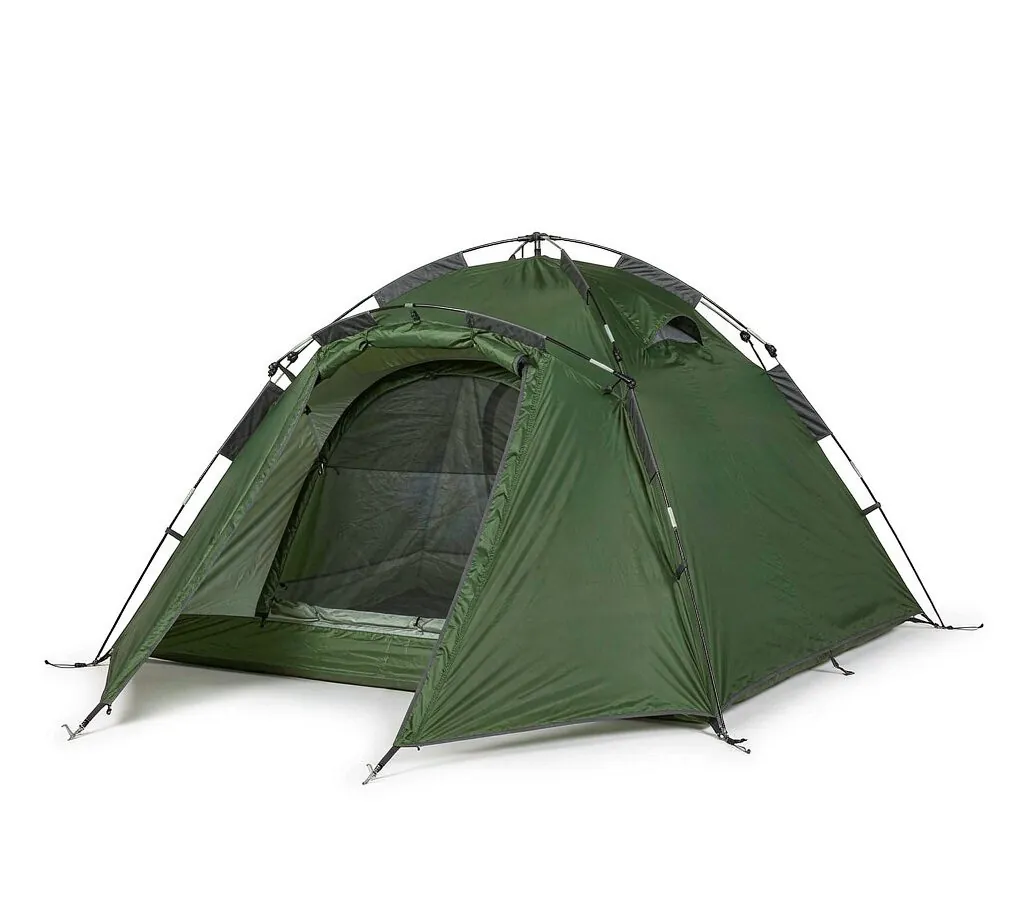
The failures are wet ones. Water enters through the stitching because seam taping was skipped on the bulk run. The waterproof coating flakes after one season because it was applied thin. Or a fibreglass pole splits at the ferrule on the second pitch, which turns a family holiday into a warranty claim.
All three are testable in the factory, and two of them are visible in a photograph. The cluster context is in our wholesale outdoor products overview.
Fabric, coating and poles
Tent fabric is polyester, judged by its denier and its polyurethane coating, quoted as a hydrostatic head in millimetres. The number describes how much water pressure the fabric holds, and it is the most abused figure in the category: a coating applied thin can be labelled high and fail low. The flysheet, the bathtub floor and the mesh each carry their own rating, and the floor needs the highest because it takes the standing water.
Poles come as fibreglass, the budget standard, or aluminium alloy, which bends and recovers where fibreglass splinters. Seam taping is the third leg: a taped seam is a strip of waterproof tape heat bonded over every stitch line, and it is labour, which is why it is the first thing dropped when a run needs to get cheaper.
Specifications and minimum order
Fabric and coating prices move with the petrochemical market, so live figures come with the quotation. Fix these points instead.
| Specification | What to confirm before you order |
|---|---|
| Flysheet | Polyester denier, PU coating and the hydrostatic head per part |
| Floor | Separate, higher hydrostatic head, welded or taped |
| Seams | Taped on fly and floor, stated per panel |
| Poles | Fibreglass or aluminium, diameter and the ferrule joint type |
| Zips | Door zip grade, the component that fails first in the field |
| Pitch test | The rain and wind conditions the finished tent must pass |
| Minimum order | Hundreds per colourway in practice, set by cutting runs and pole production |
Our minimum order is 1 piece, so a pitched, rained on sample is approved before any production commitment. The production minimum follows the cutting run, and we confirm it against your colourway. Our sourcing service screens the sewing plants and pole suppliers.
The rain test decides the order
Everything in a tent specification converges on one question: does it stay dry. The factory test is a rain room or a hose protocol over a pitched tent, and the difference between a factory that runs it on bulk production and one that runs it on samples only is the difference between a dry container and a returns season. We write the rain protocol into the order with a pass standard.
Volume is the other structural issue in this category. Tents are bulky and light, which means freight cost per unit is driven by packed size, not weight. Compression packing and pole design decide the packed volume, and a centimetre off the packed bag moves the landed cost across an ocean. Our consolidation service packs tents with your other suppliers’ goods to keep that cost down.
What belongs in the purchase order
- Flysheet and floor fabric with denier and hydrostatic head, stated per part
- Seam taping coverage, panel by panel
- Pole system, material and ferrule type
- Zip grade and the replacement part supply for repairs
- Rain and wind protocol with a pass standard, run on bulk production
- Packing: compressed size, bag spec and carton count
Checks that catch the repeat failures
- Rain test on bulk. Pitch and hose a bulk tent, not the sample batch; missed seam taping shows in minutes.
- Coating rub. Rub the flysheet inside surface; a coating that powders off was applied thin.
- Pole flex. Flex a bulk pole set fully ten times; a splintering fibreglass pole shows at the ferrule.
- Zip cycle. Run the door zips fifty times; cheap zips fail before that.
- Seam daylight test. Pitch the tent against the light inside and look for pinpoints; stitch holes without tape glow.
A pre shipment inspection that pitches and wets a bulk sample catches all five, and our factory inspection service covers outdoor textile plants. For the cluster map, see our travel gear hubs guide.
Frequently asked questions
What hydrostatic head do I need?
Enough that the coating is real, not a number on a label. Retail categories have expectations by price tier, and the floor and flysheet carry different figures. We size the coating to the market position you are buying for, and verify it with a bulk rain test rather than trusting the print.
Are aluminium poles worth the upgrade?
For any product pitched more than a few nights, yes: aluminium bends and straightens, fibreglass splinters, and splintered poles are the top warranty claim on family tents. The upgrade cost is visible and the returns saving is larger. Our minimum order is 1 piece for sampling either option.
Why is packed size part of the negotiation?
Because freight is billed by volume on light goods, and a tent is the lightest bulky item in the trade. Packed size is set by the compression bag, the pole design and the fabric, all of which are specification items. Buyers who fix packed size in the PO control their landed cost; buyers who discover it at shipping do not.
Request a quotation
Send the season rating, the size and your market. We come back with fabric and pole options plus the workable minimum within two business days.
