
Wholesale Makeup Brush Sets from China
A brush set is judged twice: once in the hand, and once on the face. The hand notices weight, handle finish and whether the ferrule feels solid. The face notices only one thing, which is whether the brush sheds, and shedding is the failure that decides whether a set is reordered.
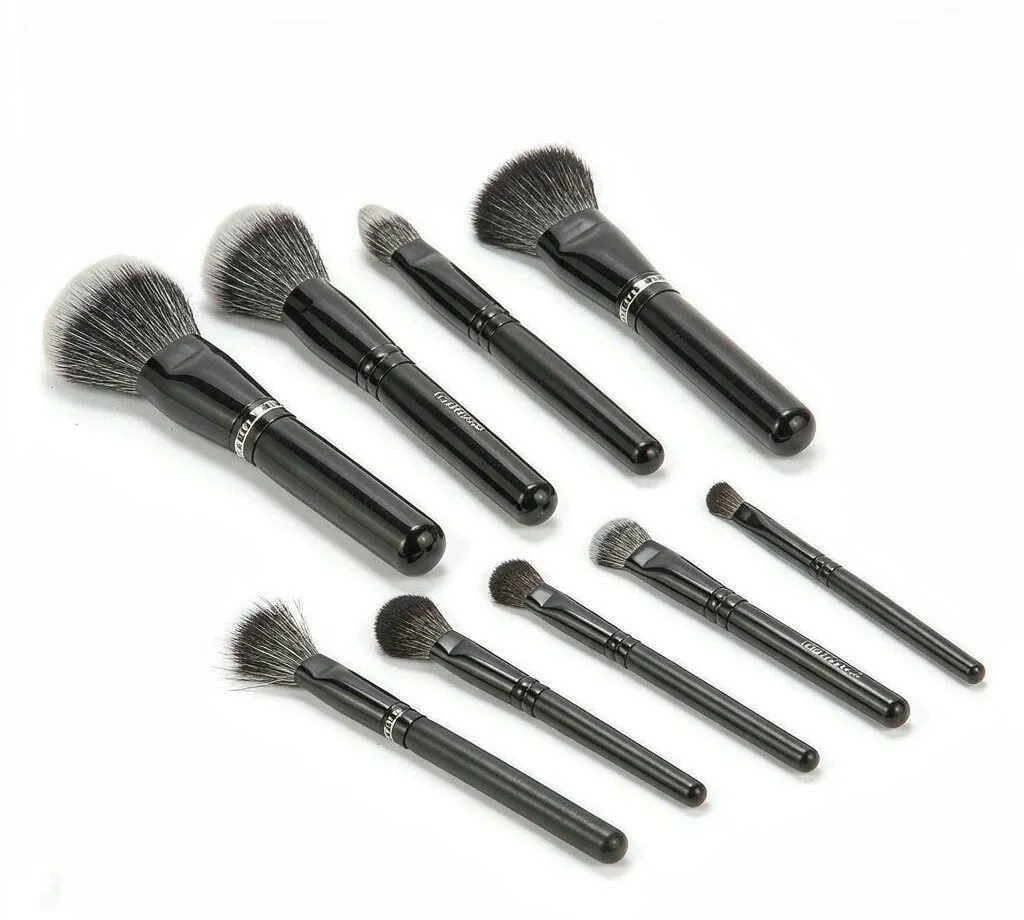 The photograph shows a representative set from the category. Handle colour, ferrule finish and brush count follow the approved sample, and the image is illustrative rather than a picture of your goods.
We have sourced synthetic and mixed brush sets out of the Guangdong and Jiangxi clusters for years. Three failures repeat. A fibre sold as soft synthetic arrives with a coarser grade that scratches. A ferrule crimped at the sample stage arrives loosely fixed on the bulk, and the head comes away in the customer’s hand. And a set that passed a gentle pull test at the factory sheds across a face once it is used in earnest.
This page covers what the fibre and ferrule words mean, what belongs on the order sheet, and the checks that catch a weak lot. The supply base behind the category is in our wholesale beauty and cosmetics overview.
Fibre, ferrule and handle
The fibre decides how the brush feels and how it performs. Synthetic fibre dominates the category because it works well with cream and liquid products, cleans easily and carries no animal welfare question. Within synthetic fibre, the variables are the diameter of each strand, the taper along its length and the density of the head.
The ferrule is the metal band that joins head to handle, and it is the structural part of a brush. It has to be crimped or glued so that the head cannot rotate or pull free, and the quality of that join is invisible until it fails. A ferrule is checked by gripping the head and the handle and twisting.
The handle is where the set is judged as a product. Wood, plastic and metal handles behave differently in the hand and under a logo, and printing or engraving a handle is a separate step with its own setup and its own adhesion question.
Specifications and minimum order
Our minimum order is 1 piece, so you can start with a single unit and scale up once the sample is approved. Every line below changes what the factory assembles. We do not print prices or schedules here, because fibre and handle inputs move; send the brush count, the fibre grade and the quantity, and we come back with a live quotation and a firm production slot.
| Specification | What to confirm before you order |
|---|---|
| Fibre | synthetic grade, strand diameter and taper, named rather than described |
| Head density | how tightly the head is packed, which decides pickup and fall out |
| Ferrule | material, finish and the crimp or glue method that holds the head |
| Handle | material, length, weight and how any logo is applied |
| Set composition | which brush shapes are in the set, itemised by shape and size |
| Shedding | the pull and wash test the bulk lot must pass |
| Minimum order | stated per set and per packaging option, since cases are printed in runs |
Minimums in brush sets are driven by the case and the printed insert rather than by the brushes themselves. Our sourcing service covers the factory screening, the sample round and the inspections below.
What the fibre words mean in practice
Softness is not a single property, and two fibres described as soft behave differently on the skin. The relevant variable is the tip, which is either rounded or tapered, and a coarse tip feels scratchy regardless of how much the head is packed. Testing means using one, not squeezing one.
Fall out is the second word buyers use loosely. Every brush loses a fibre or two on a first wash. A brush that continues to shed after that has a head that was cut short of the ferrule or packed too loosely, and neither fault is visible in a photograph.
Density and pickup complete the picture. A densely packed head picks up and blends powder well; a loose head feels floppy and delivers product unevenly. Density is set at assembly and is not something a customer can compensate for, so it belongs in the specification.
What belongs in the purchase order
One page attached to the PO is what protects the reorder. Cover these points:
- Fibre grade, strand diameter and taper
- Set composition, listing every brush shape and size
- Ferrule material and finish, with one finish named across the set
- Handle material, length and logo application method
- The pull and wash test the bulk must pass, with the pass level stated
- A penalty clause if the bulk lot differs from the approved sample
Inspection points that catch a weak lot
These checks find what a product photograph cannot:
- Pull the head. Grip the head and the handle of a bulk brush and twist. A weak crimp shows as rotation before it shows as separation.
- Wash and count. Wash a bulk brush, dry it and count the fibres that came loose. A brush still shedding after one wash has a packing fault.
- Use one on skin. Drag a bulk brush across the back of a hand. Coarse tips are felt immediately.
- Squeeze the head. Judge how much the head gives. A loose head is the density substitution no photograph shows.
- Check the logo. Rub a printed handle with a damp cloth and look for lift at the edges.
An independent inspection before loading catches all five at the cheapest point. Factory inspection covers this category, and the wider system is set out in our guide to pre shipment inspection.
Frequently asked questions
Is synthetic fibre or natural hair better?
They suit different products rather than different budgets. Synthetic fibre works well with cream and liquid formulas and cleans easily; natural hair holds powder differently. For most private label ranges, a synthetic set is easier to keep consistent across reorders.
How many fibres should a brush lose?
One or two on the first wash is normal. Continued shedding after that is a fault, and it comes from a head cut short of the ferrule or packed too loosely. Set a pass level in the PO and check it on the bulk rather than on the sample.
Can the handles be engraved with a brand?
Yes. Printing, hot stamping and laser engraving all work on the common handle materials, and they differ in durability and in setup. Agree the method on the sample and check adhesion with a damp rub at inspection.
Request a quotation
Send the brush count, the fibre grade, the set composition and the quantity you need, plus the market you sell into. We come back with factory options and current bands within two business days.
